Home / Puffballs & earthballs / TM0002
Earthballs in leaf litter
Scleroderma sp. Genus
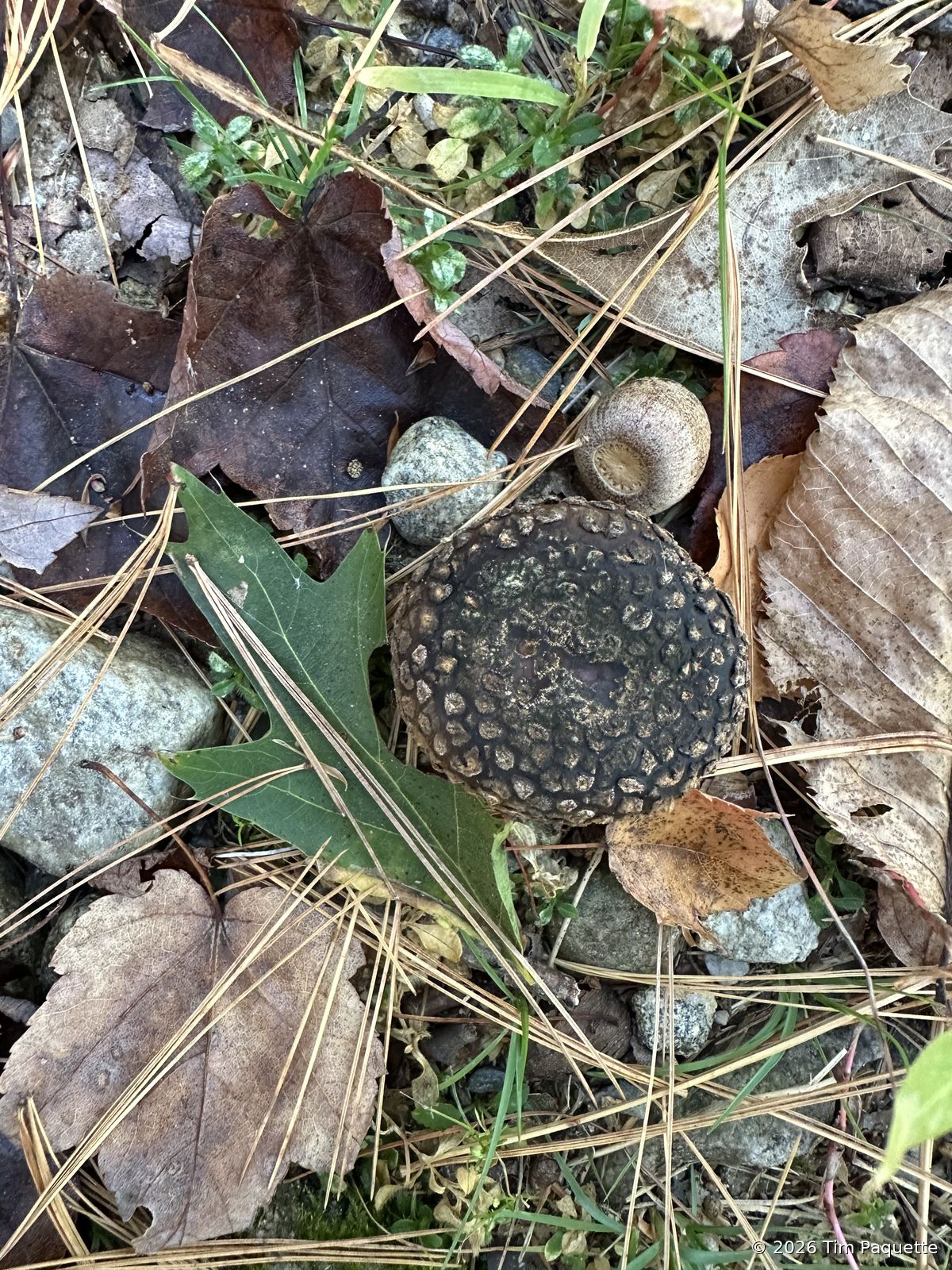
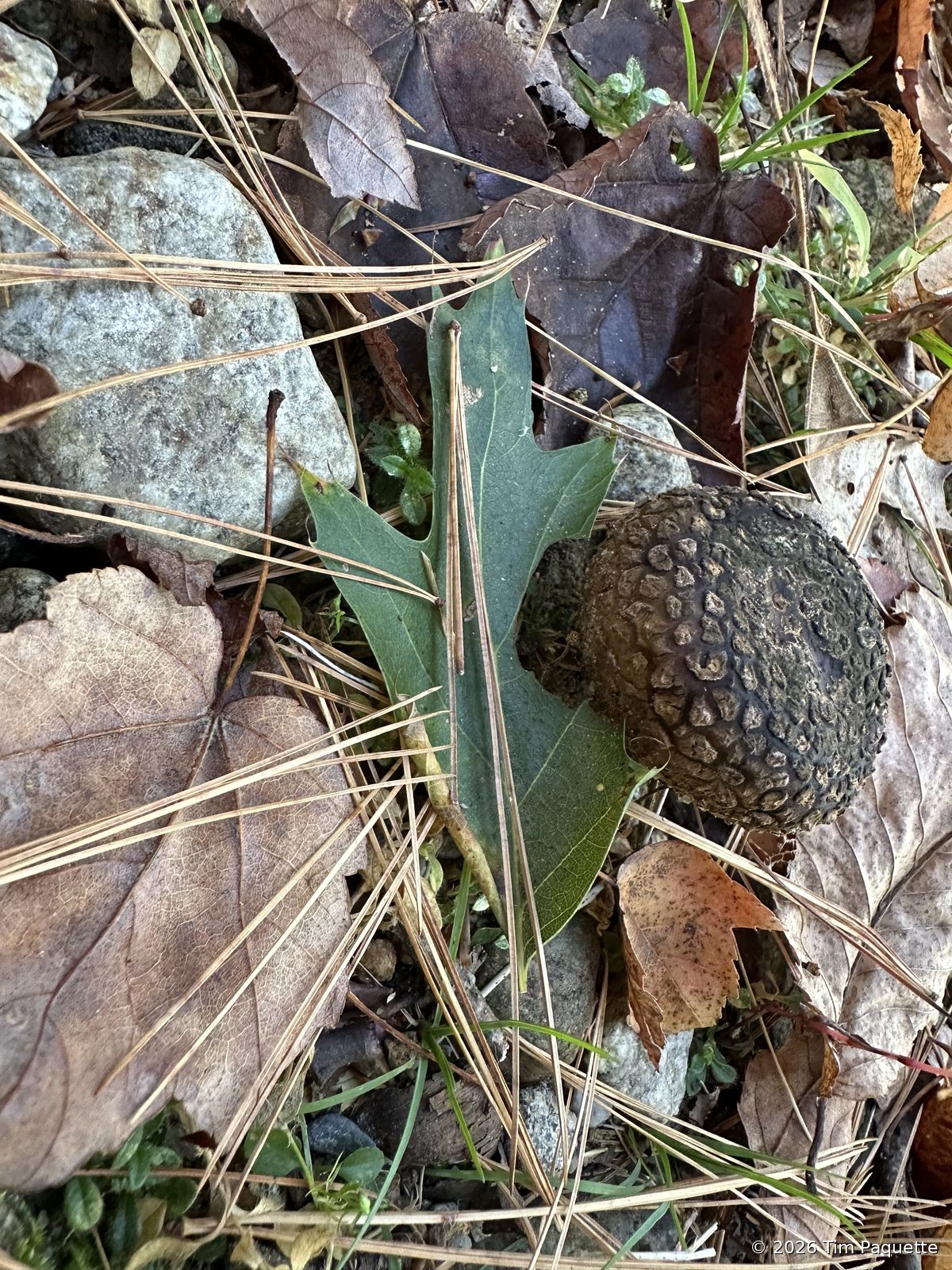
Angles captured. Two frames from above, the second showing a second fruitbody alongside the first.
Morphology
Roughly spherical fruitbodies 4–5 cm across sitting directly on the ground with no stalk. Surface dark olive-brown to near-black, and conspicuously broken into coarse polygonal warts and scales — a thick, tough, cracked rind rather than a soft skin. The second is paler and browner, showing the same coarse warting. Both look weathered and mature.
Habitat & substrate
Oak leaf litter with pine needles and scattered stones, on level ground.
Lookalikes & what rules them out
The thick warted rind and stalkless habit are Scleroderma, not a true puffball. Lycoperdon has a thinner skin with fine spines and usually a sterile stalk-like base.
To confirm this identification
Cut one in half. Scleroderma shows a thick rind around a solid purple-black interior — the same test that identified TM0056 at Leominster.
Notes
Poisonous. Earthballs cause gastrointestinal illness and are regularly mistaken for edible puffballs. This is the earliest of three earthball or puffball records in the guide (TM0002, TM0019, TM0056) — a useful comparison set.
Found at Massasoit Rd area, Worcester, MA on Saturday, 11 October 2025 at 09:02. See the full walk for that day's weather and everything else recorded.
Others in this group
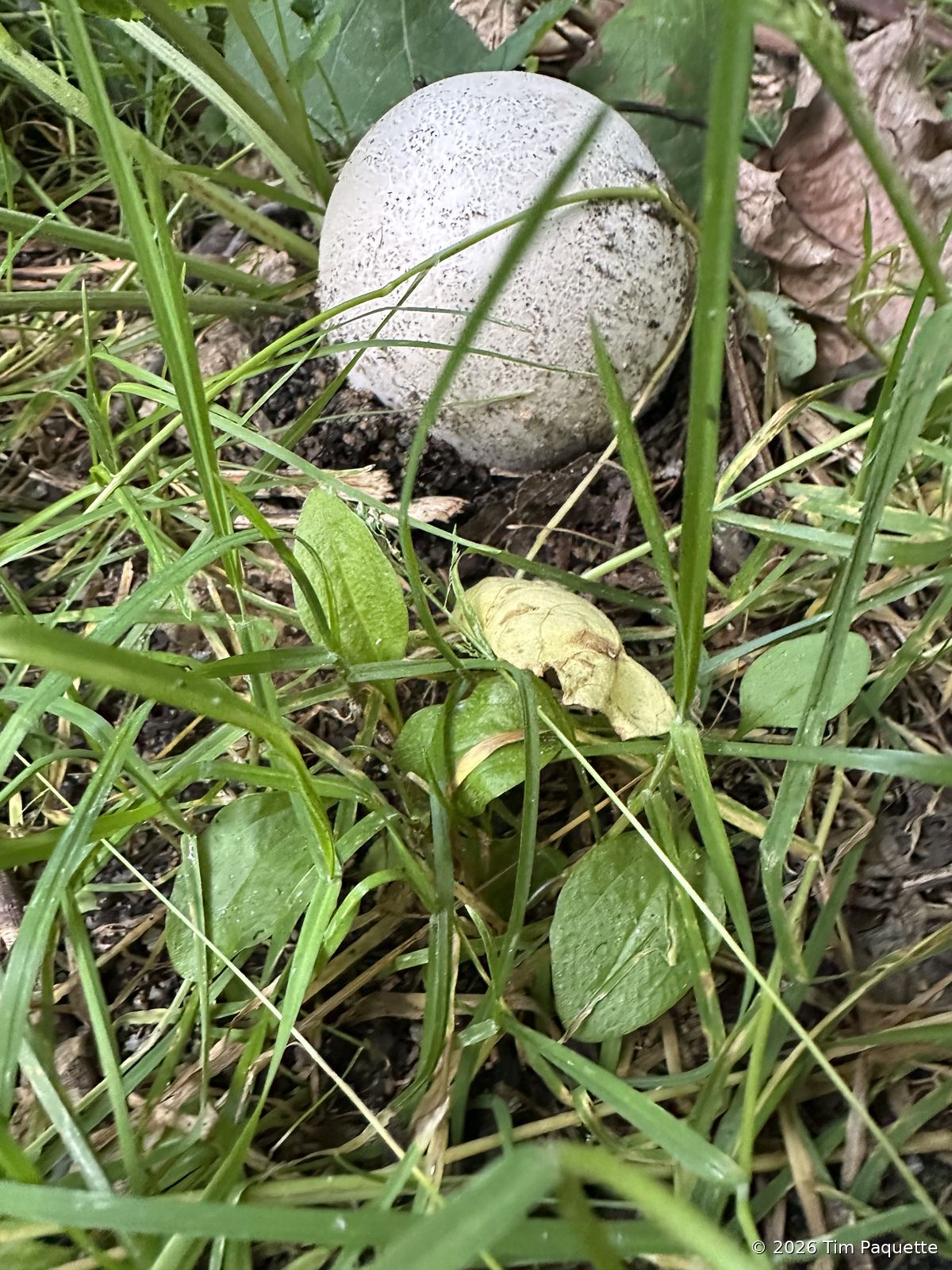 Puffball in grassLycoperdon or Calvatia · Jul 31Moderate–high
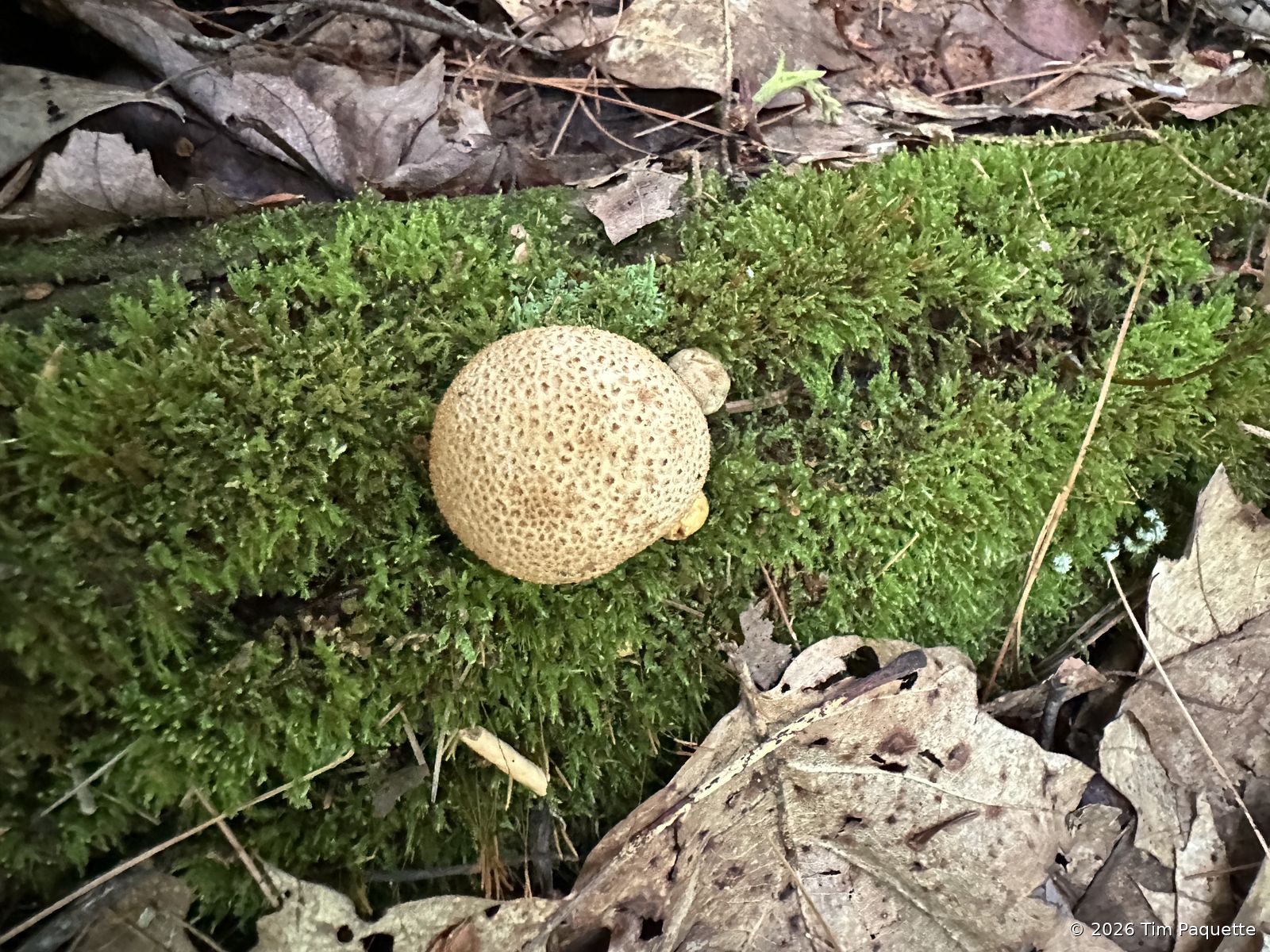 Earthball, cut openScleroderma sp. · Aug 6High
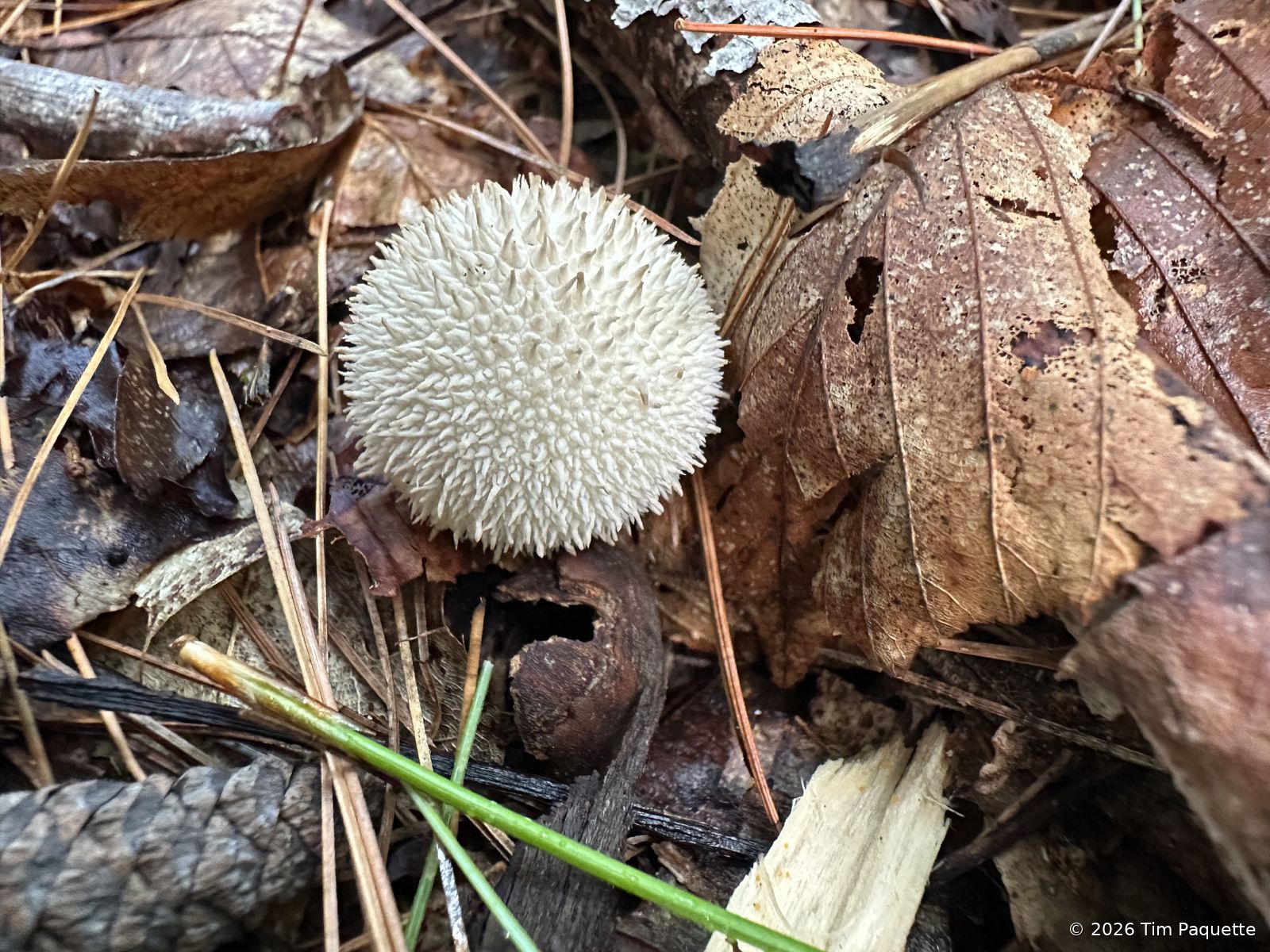 Common puffballs in litterLycoperdon perlatum · Aug 8Moderate–high
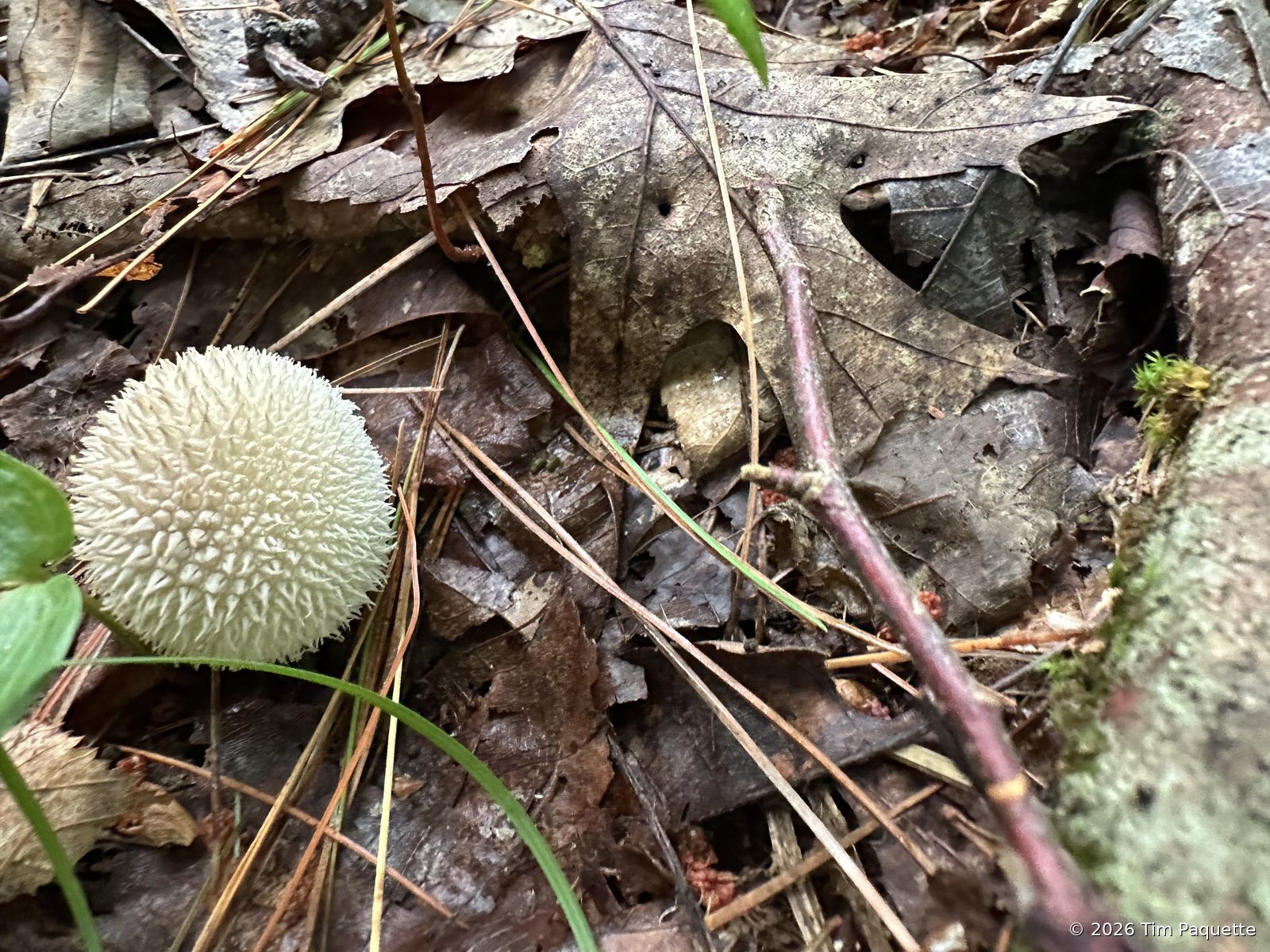 Common puffball — mossy bankLycoperdon perlatum · Aug 8Moderate–high
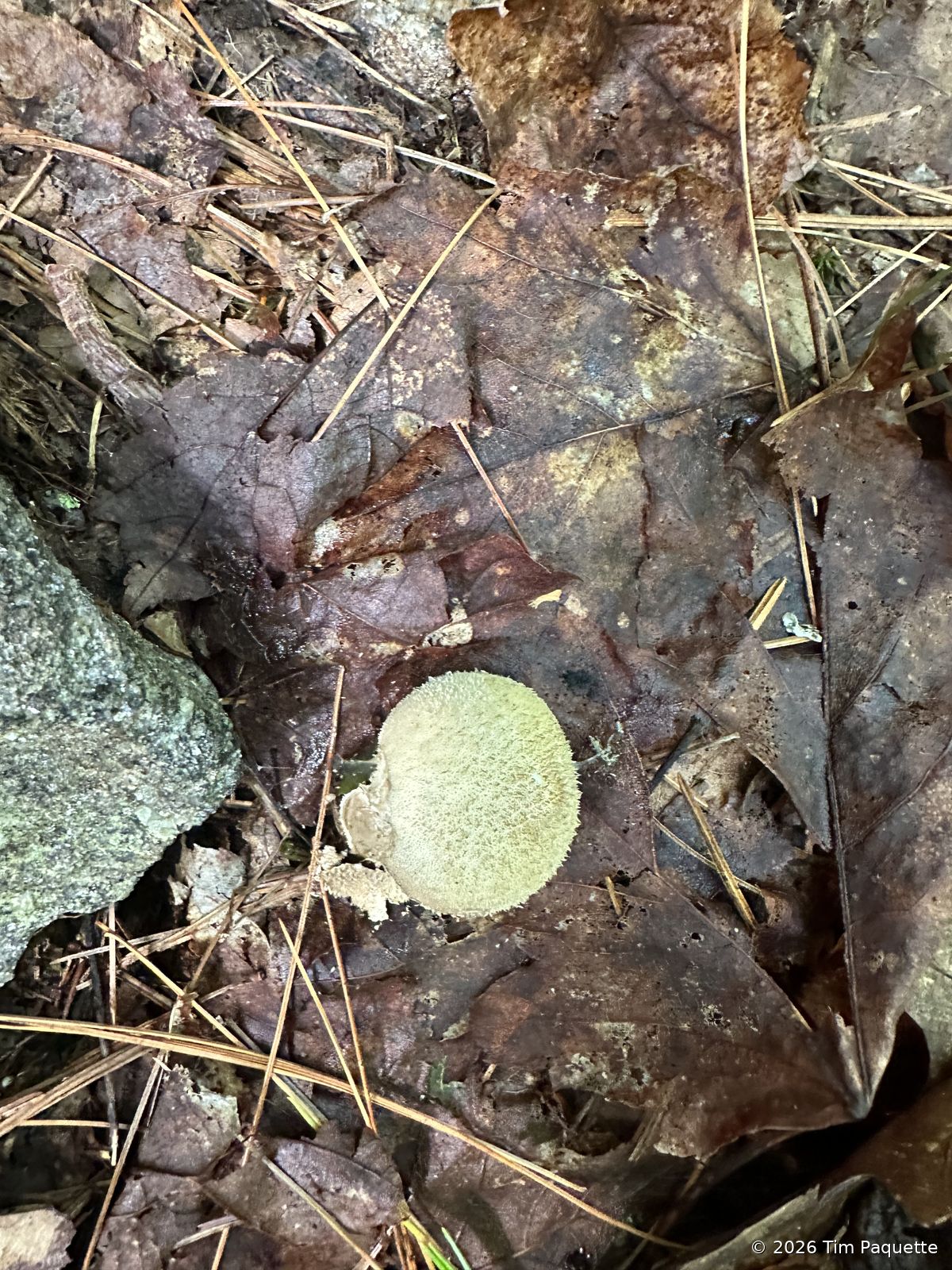 Common puffball — by the boulderLycoperdon cf. perlatum · Aug 8Moderate
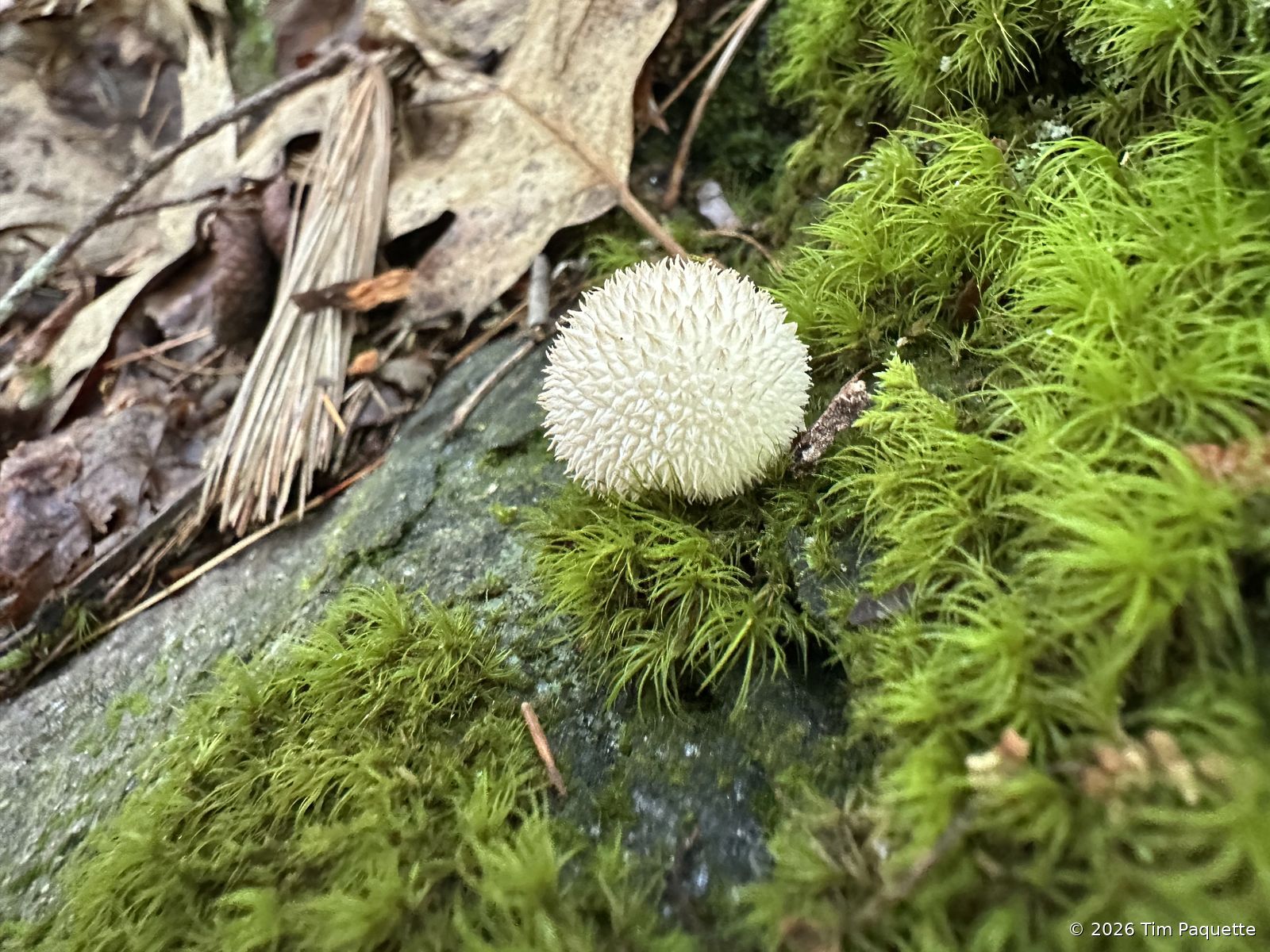 Common puffball — moss cushionLycoperdon perlatum · Aug 8High