Home / Puffballs & earthballs / TM0056
Earthball, cut open
Scleroderma sp. Genus
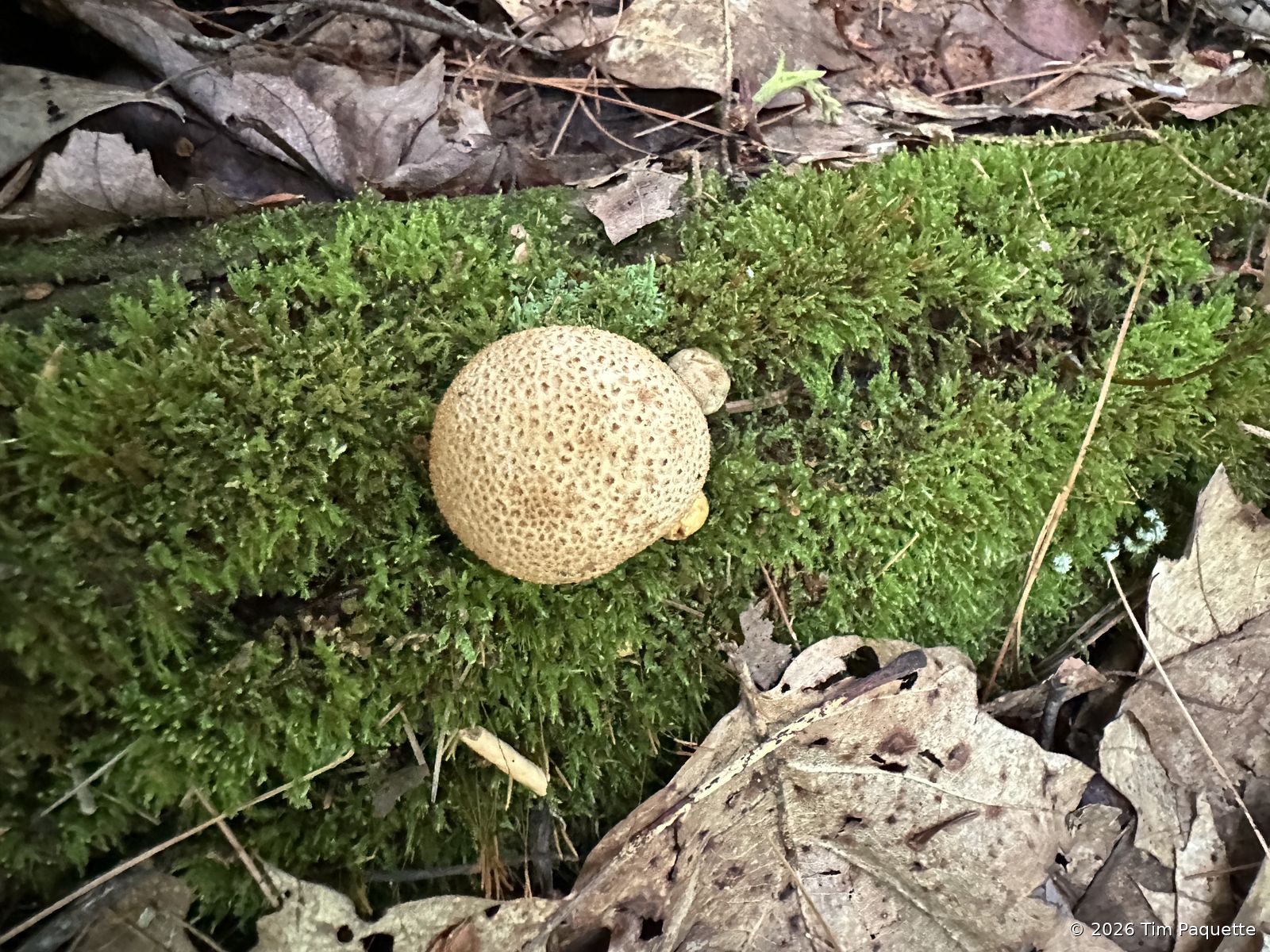
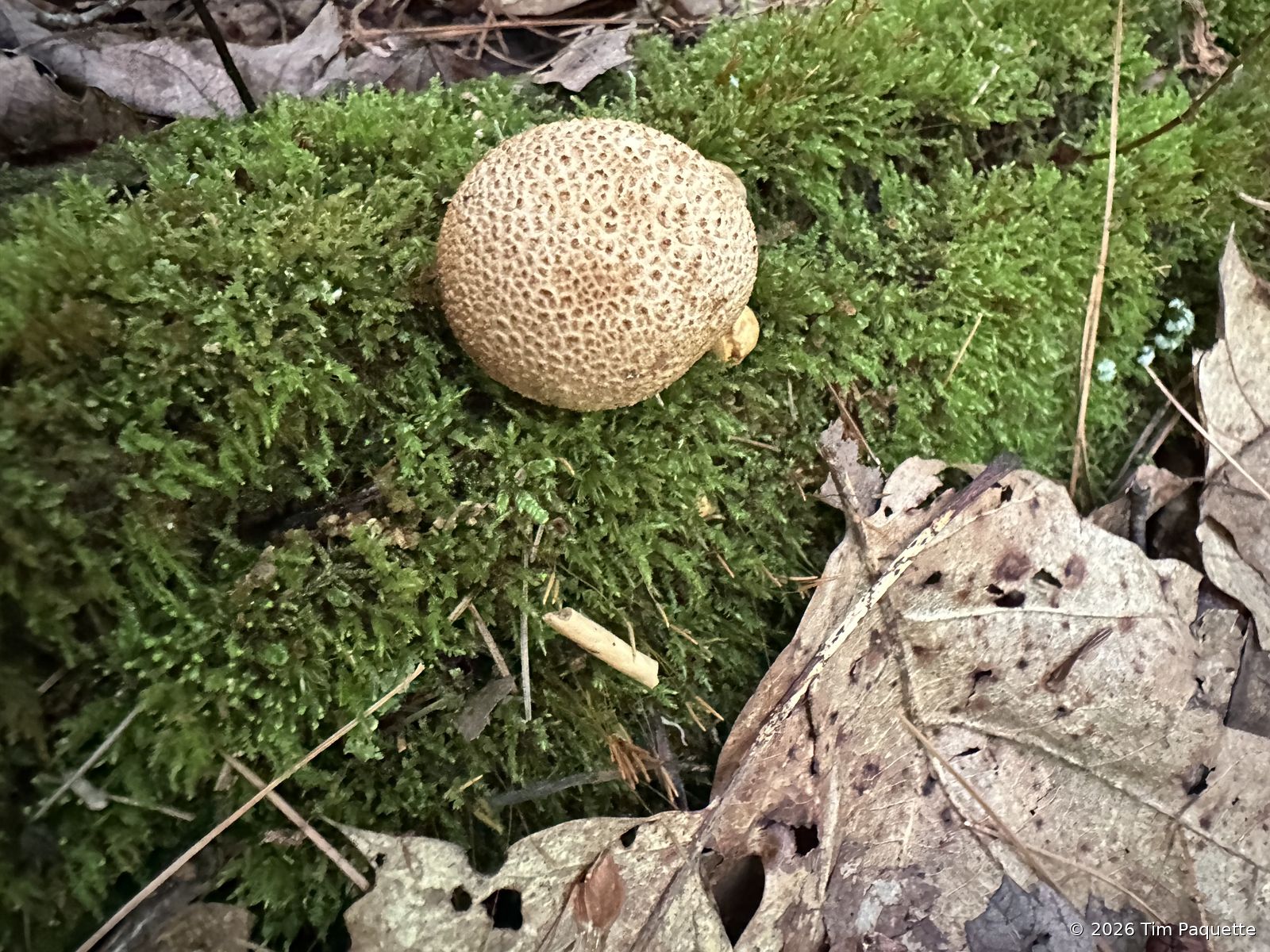
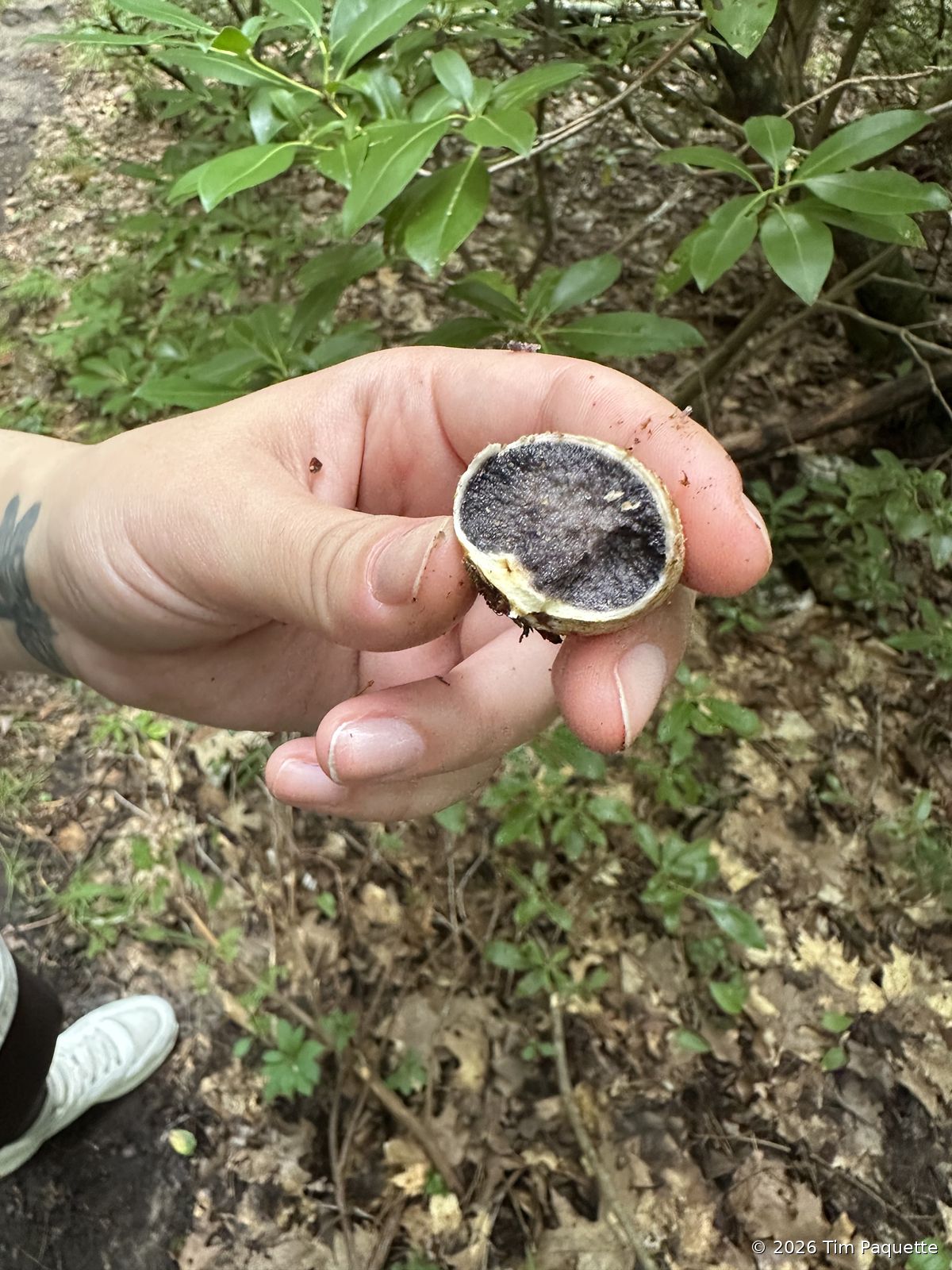
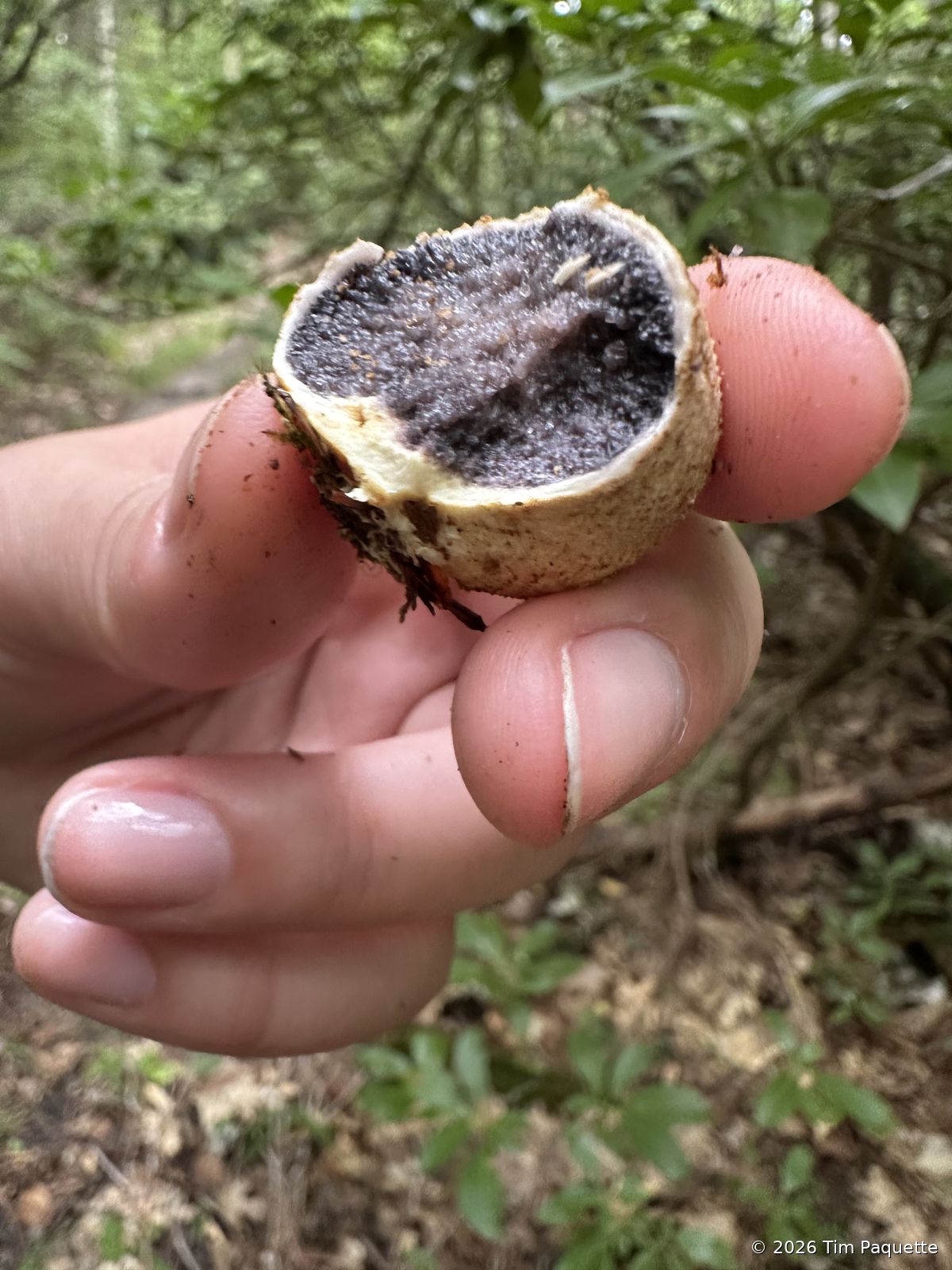
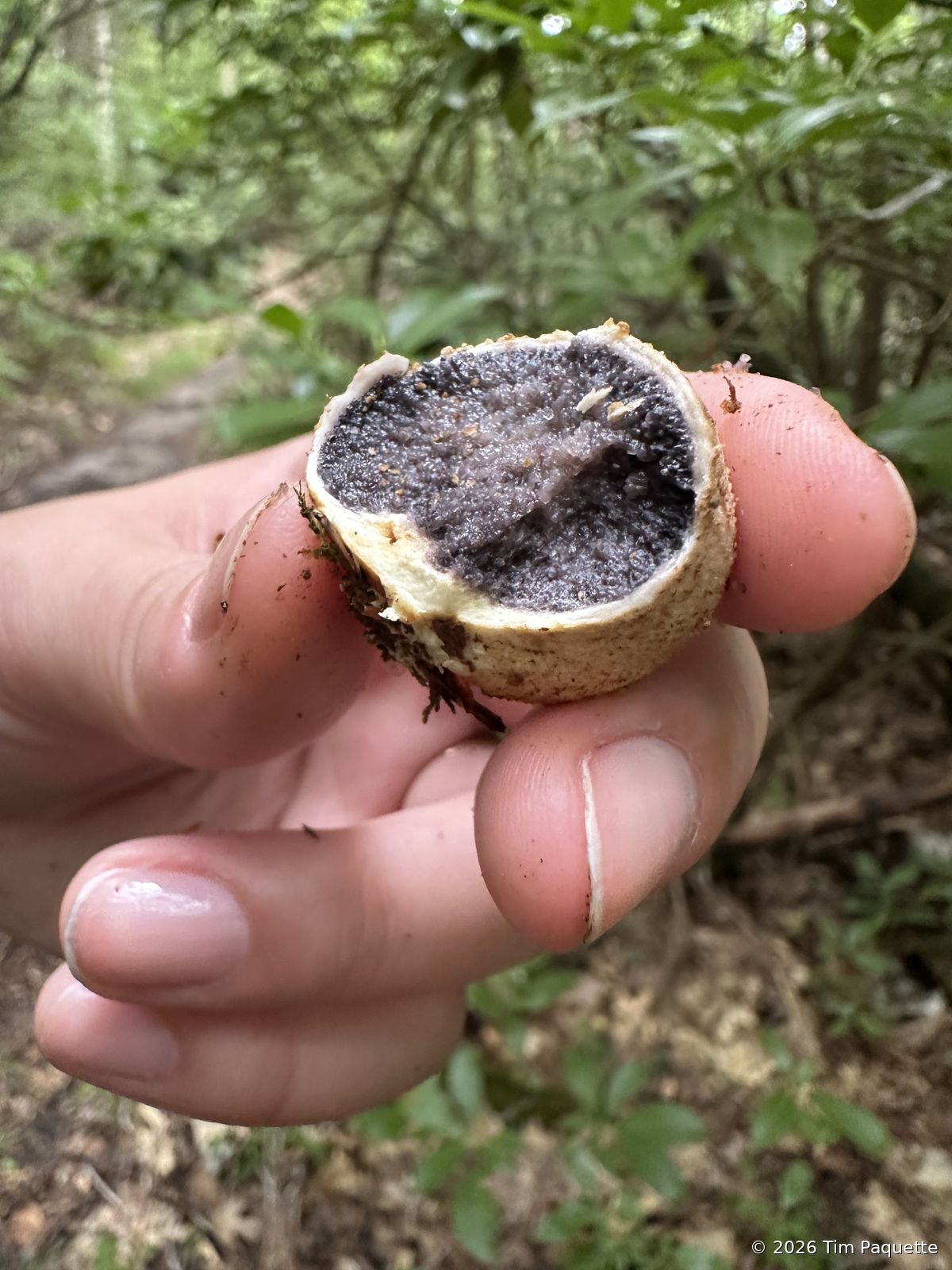
Angles captured. Two frames in situ on the moss, then three of the fruitbody cut in half and held to the camera — the frames that identify it.
Morphology
A firm, roughly spherical fruitbody 5–6 cm across, pale ochre-yellow, with a thick, tough, conspicuously warted and coarsely scaly rind. Sitting directly on the moss with no stalk. Cut in half it shows a very thick pale rind enclosing a solid, dense, uniformly purple-black interior with a marbled texture.
Habitat & substrate
On a cushion of moss under mixed hardwood.
Lookalikes & what rules them out
The cut section is diagnostic. A true puffball (Lycoperdon, Calvatia) is pure white and soft inside when young. A thick rind around a black interior is Scleroderma, the earthballs.
To confirm this identification
Nothing for genus. Rind thickness and scale pattern would take it to species.
Notes
Poisonous — Scleroderma causes gastrointestinal illness and is regularly mistaken for an edible puffball. Cutting it open was exactly the right move, and it is the same test that Volume 1's entry TM0019 still needs. Compare the two entries directly: this is what TM0019 would look like if it were an earthball rather than a puffball.
Found at Elm St area, Leominster, MA on Thursday, 6 August 2026 at 11:43. See the full walk for that day's weather and everything else recorded.
Others in this group
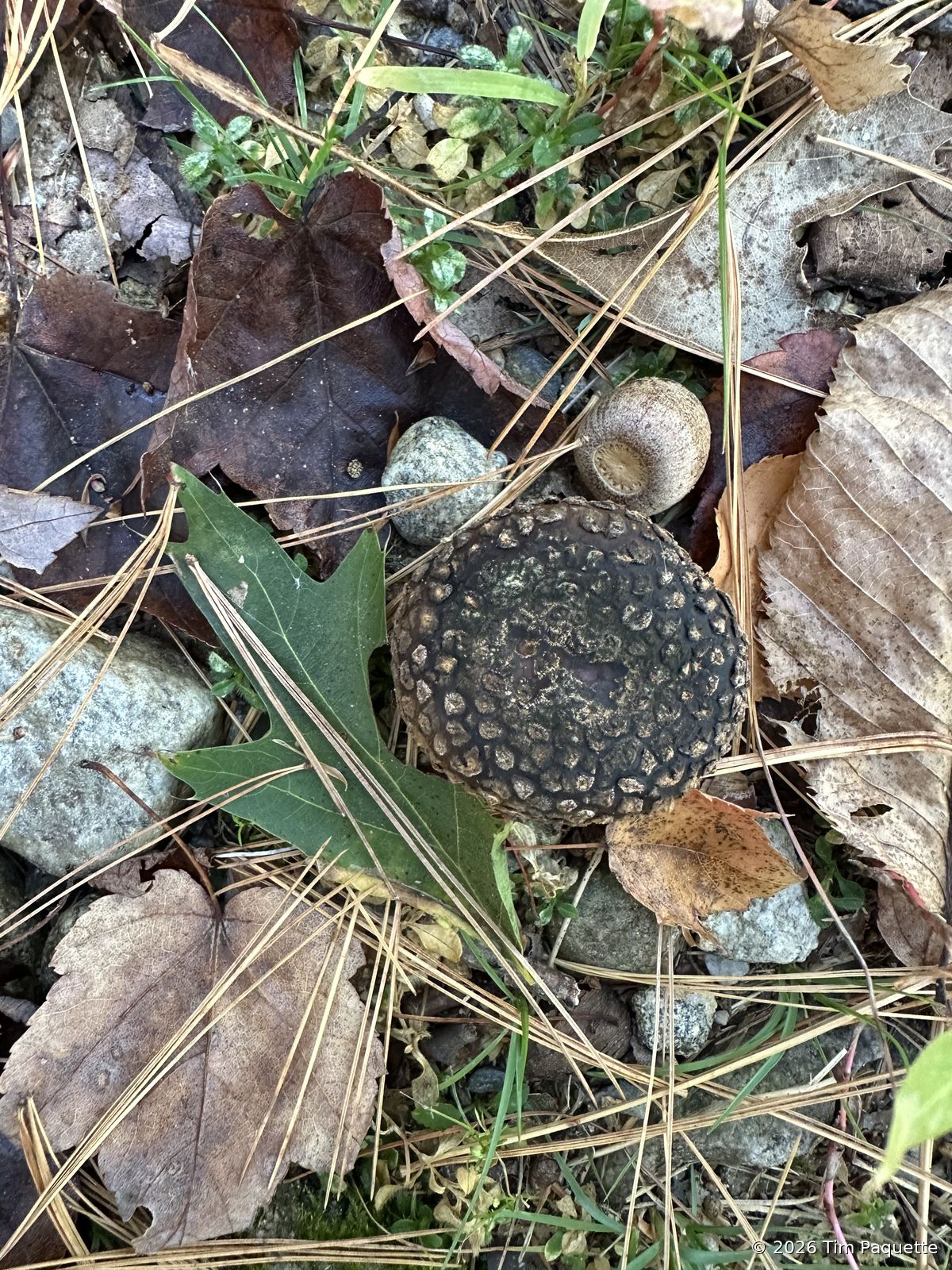 Earthballs in leaf litterScleroderma sp. · Oct 11Moderate
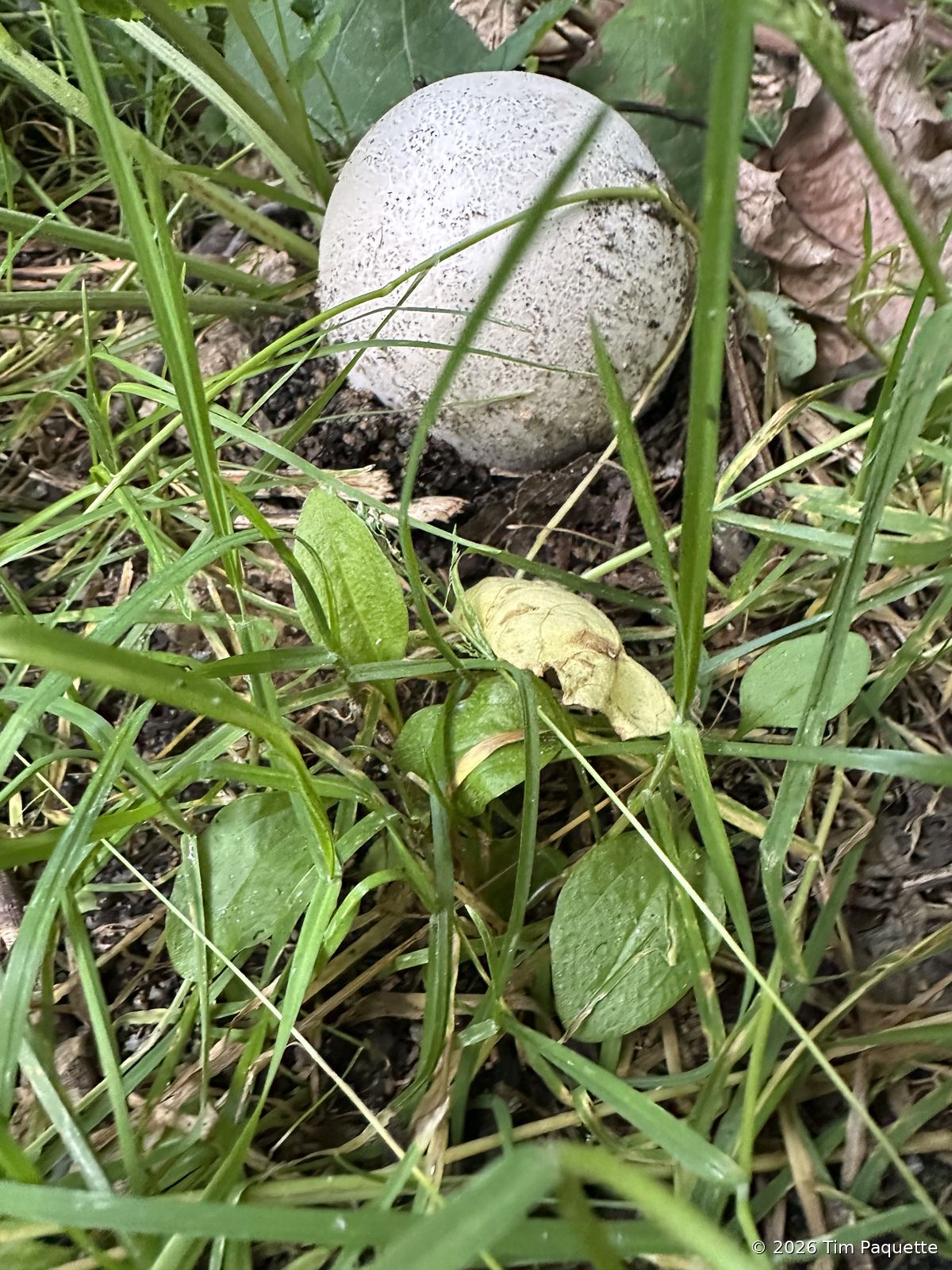 Puffball in grassLycoperdon or Calvatia · Jul 31Moderate–high
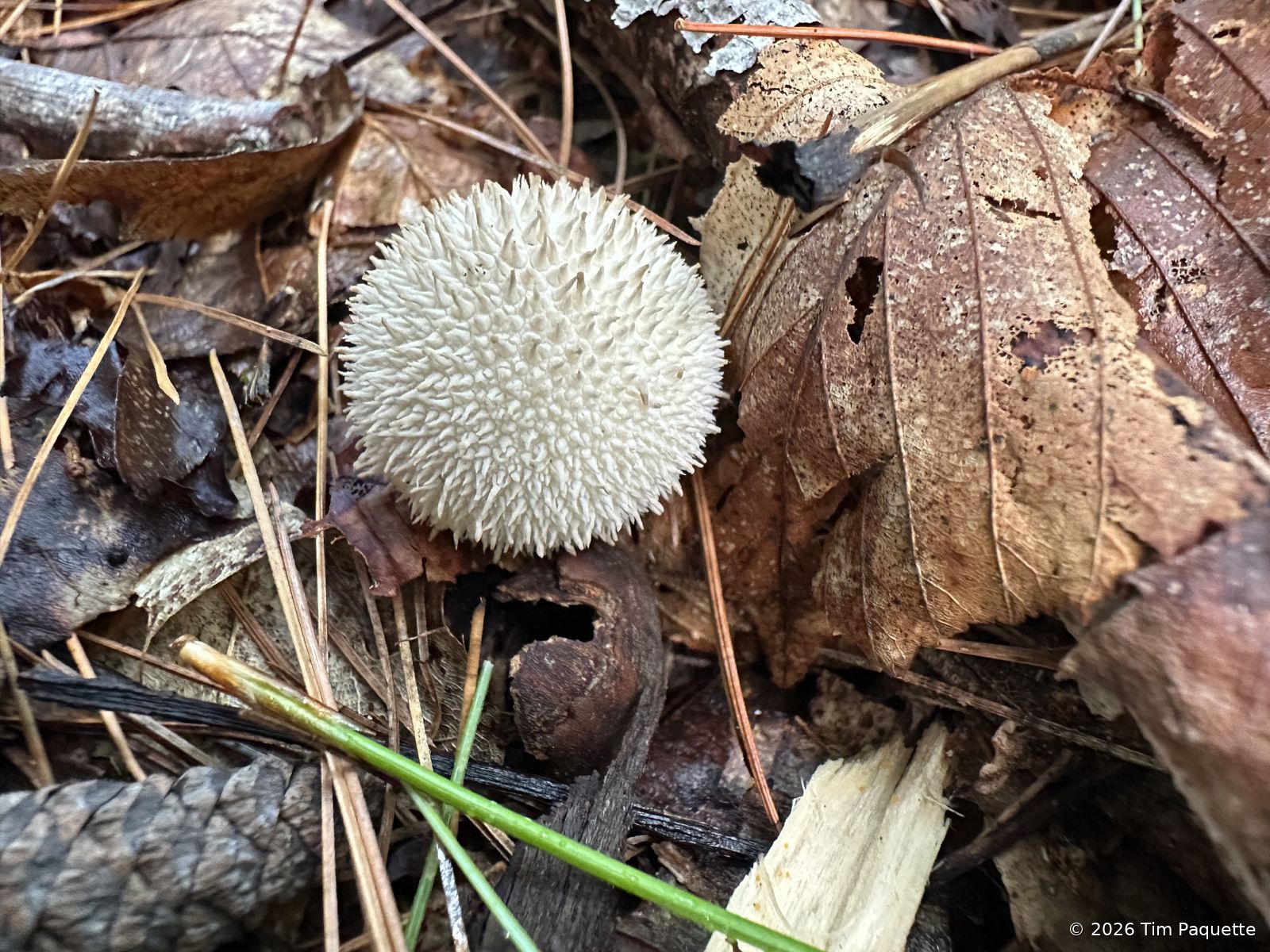 Common puffballs in litterLycoperdon perlatum · Aug 8Moderate–high
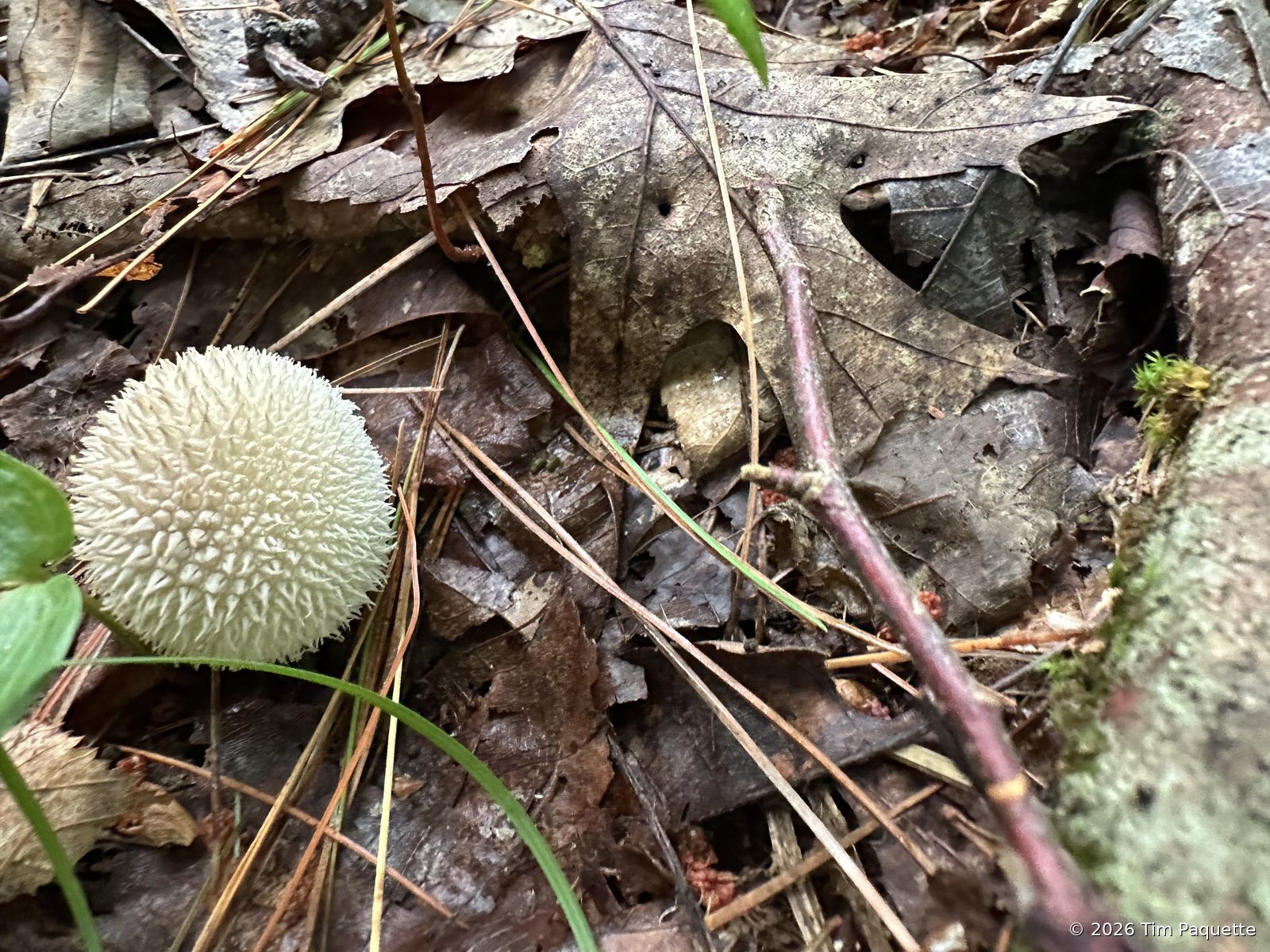 Common puffball — mossy bankLycoperdon perlatum · Aug 8Moderate–high
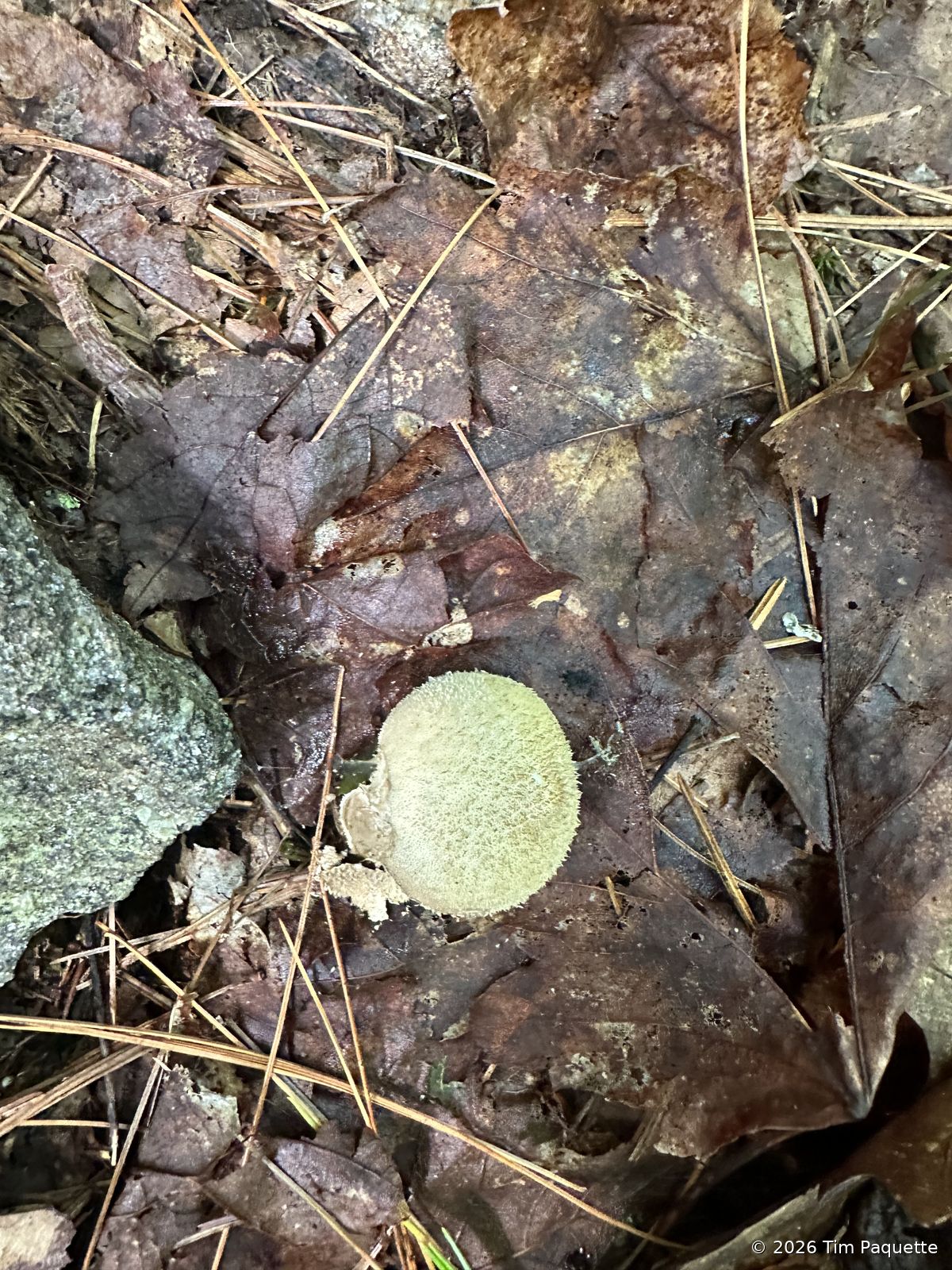 Common puffball — by the boulderLycoperdon cf. perlatum · Aug 8Moderate
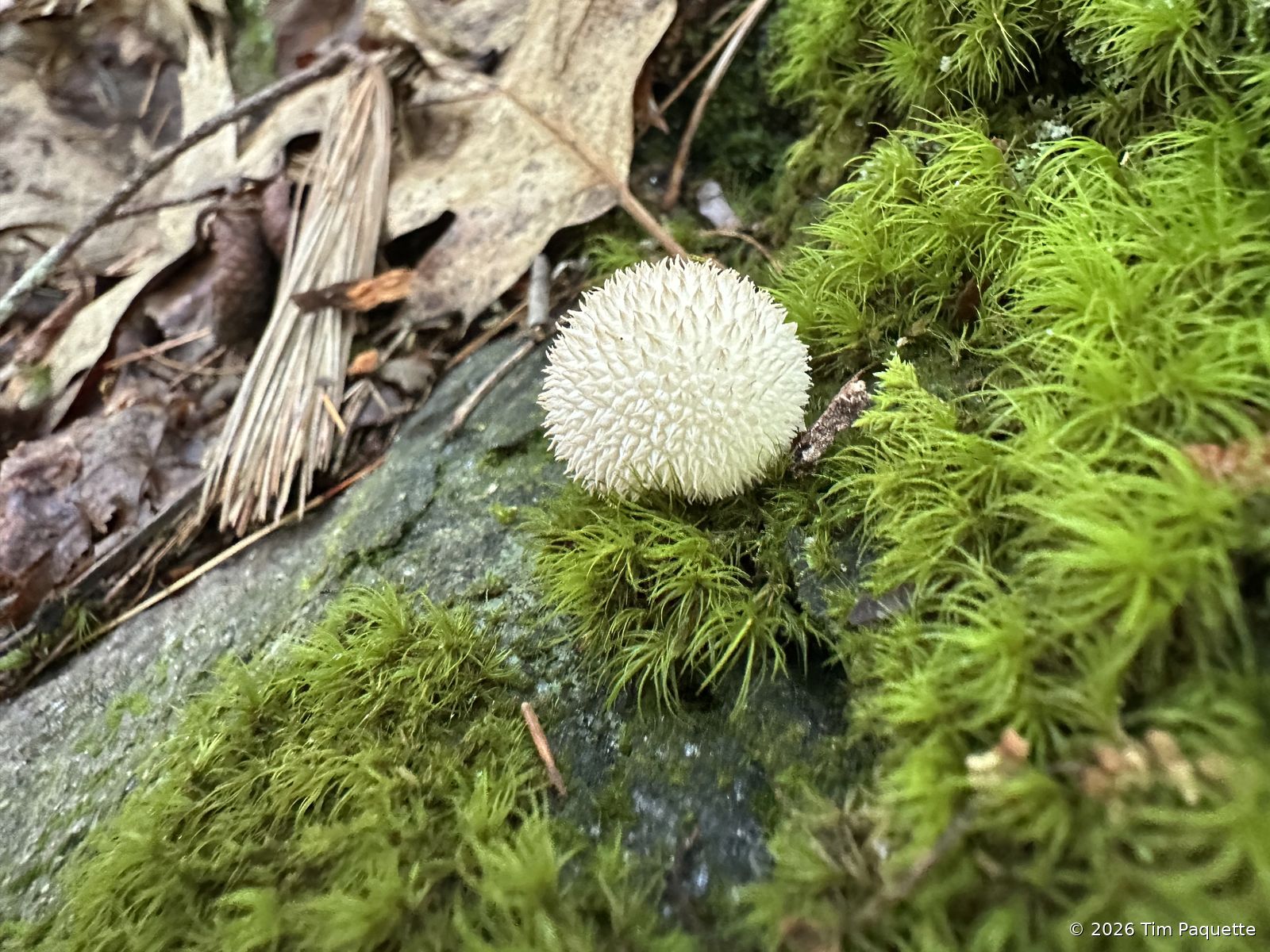 Common puffball — moss cushionLycoperdon perlatum · Aug 8High