Brown suede bolete with unstaining flesh
cf. Tylopilus Genus
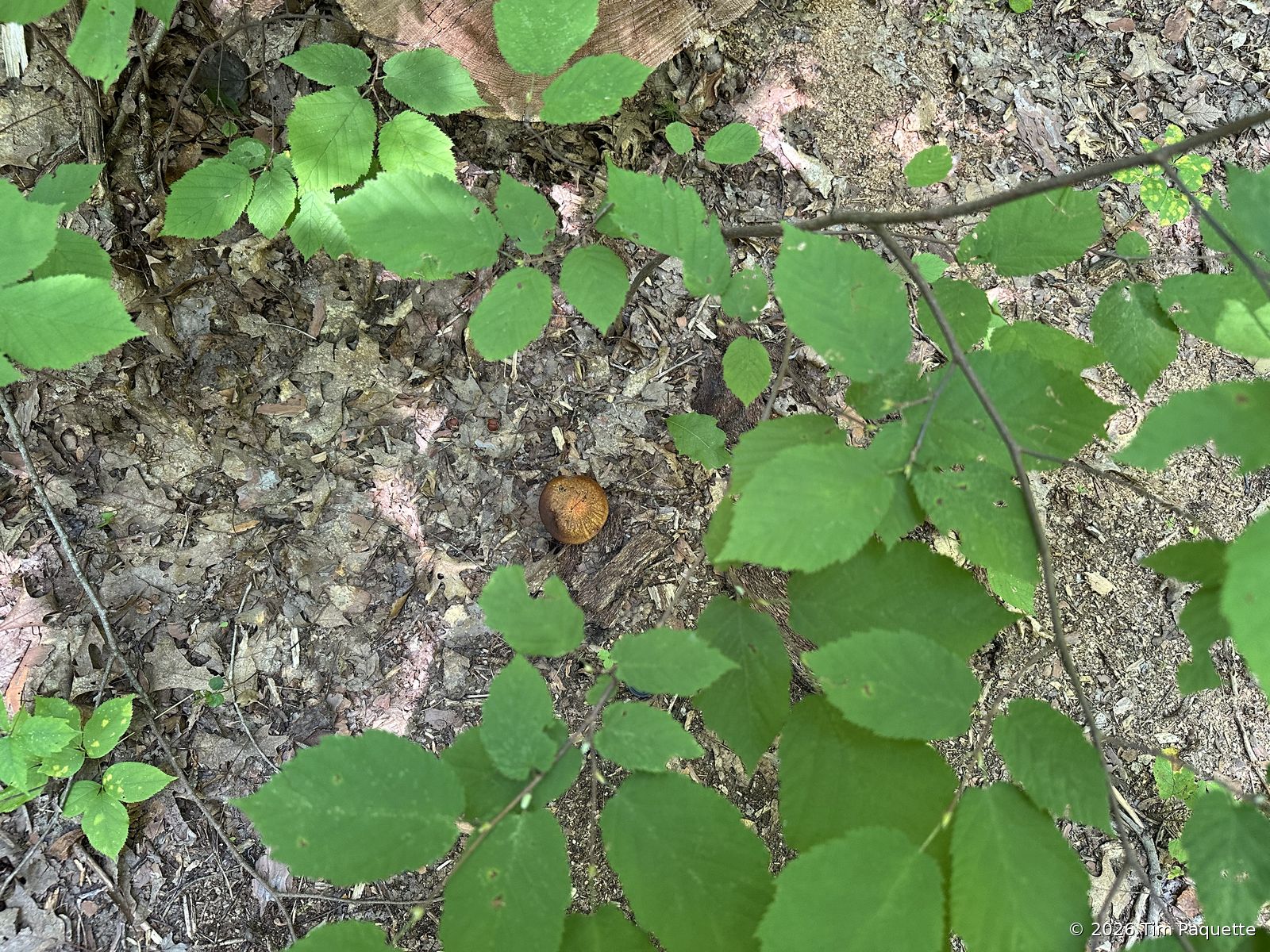
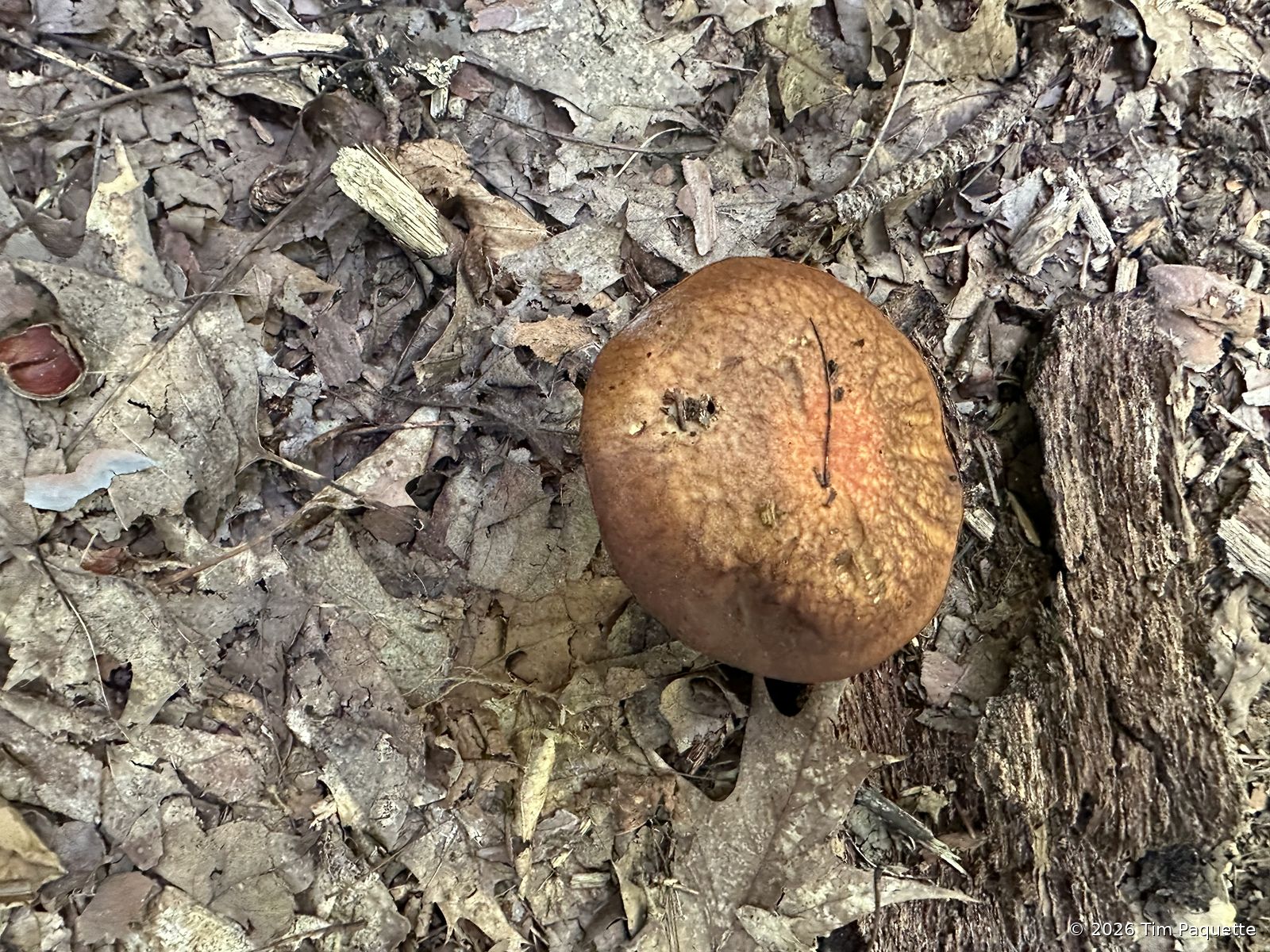
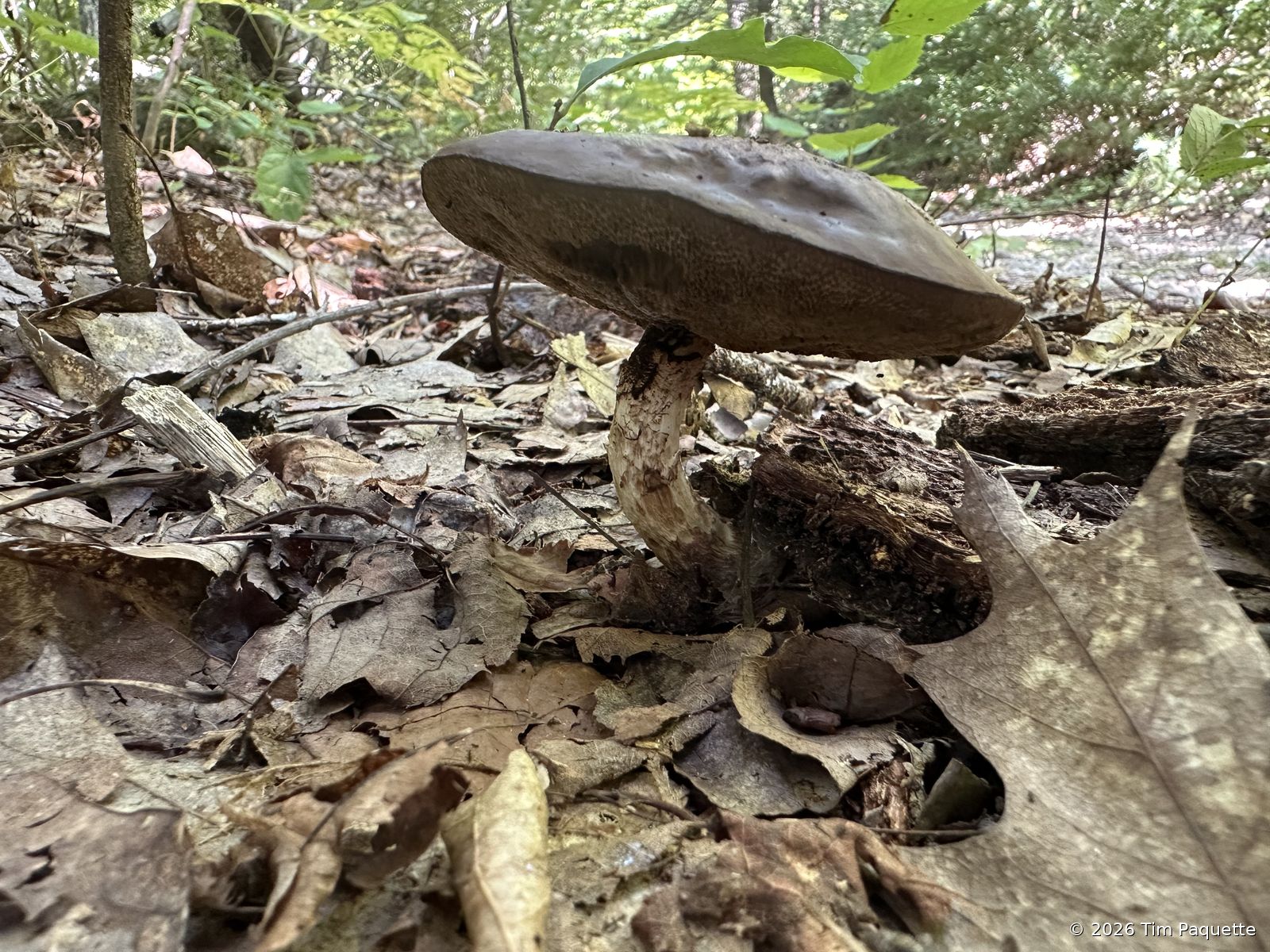
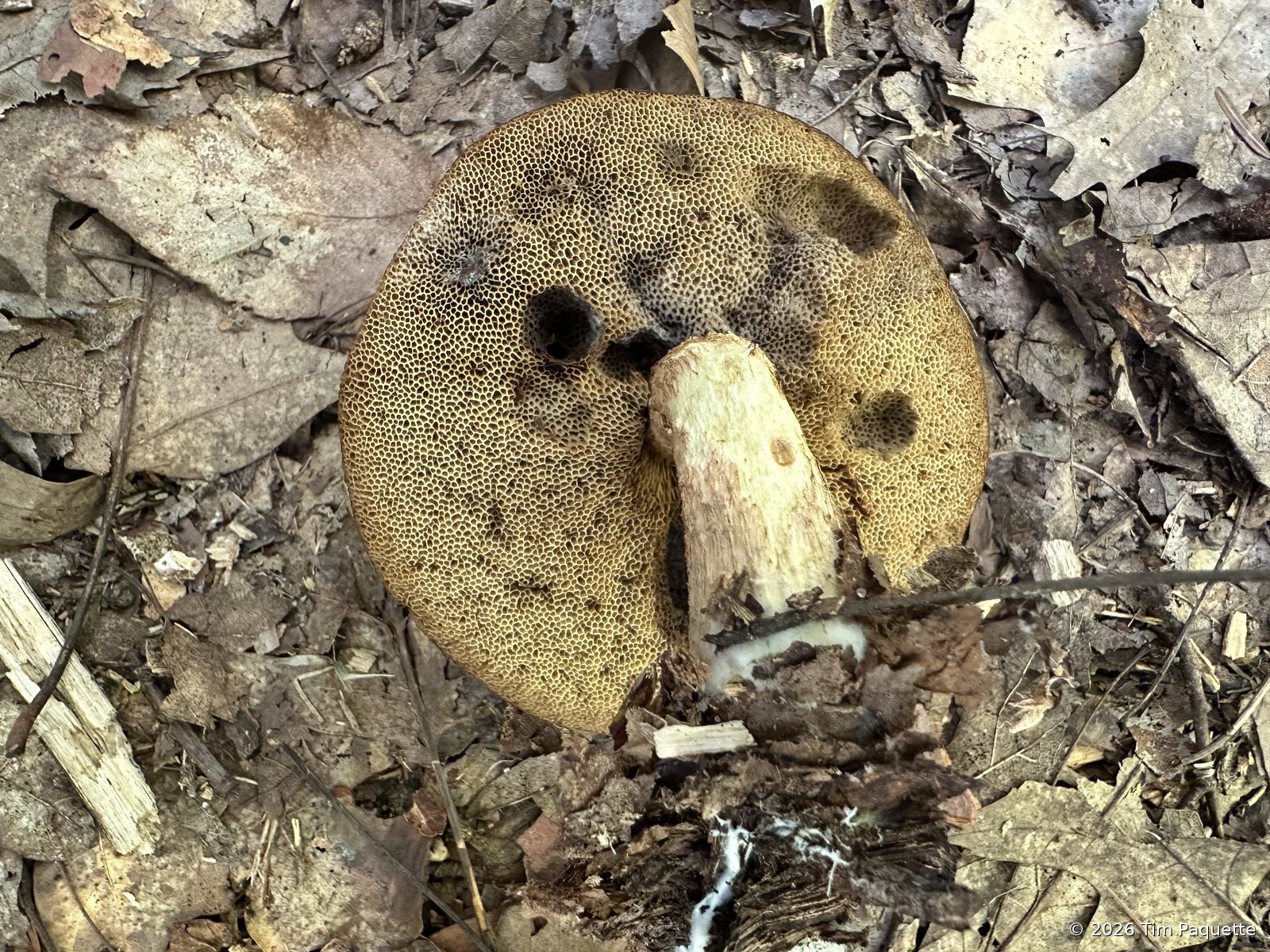
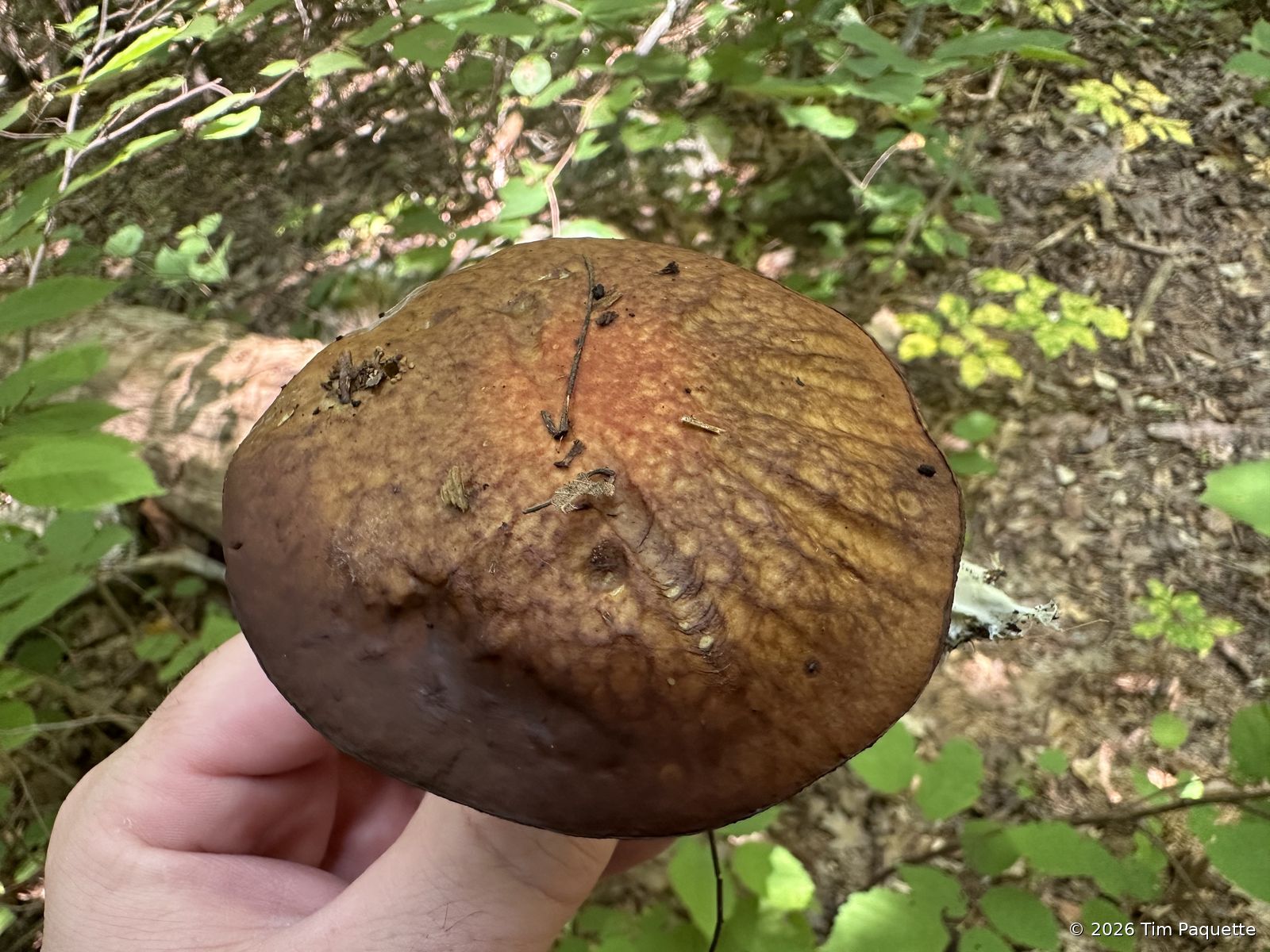
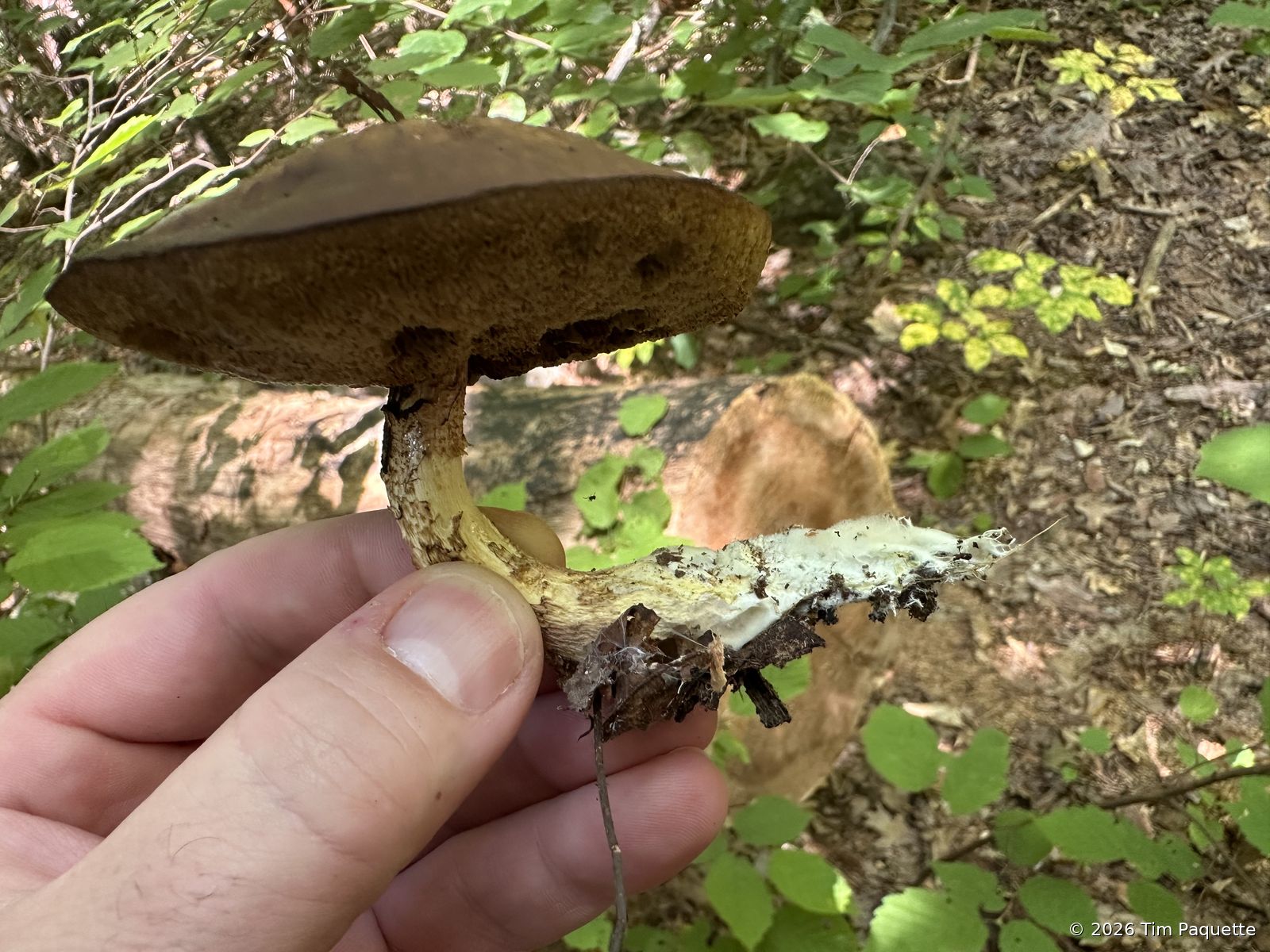
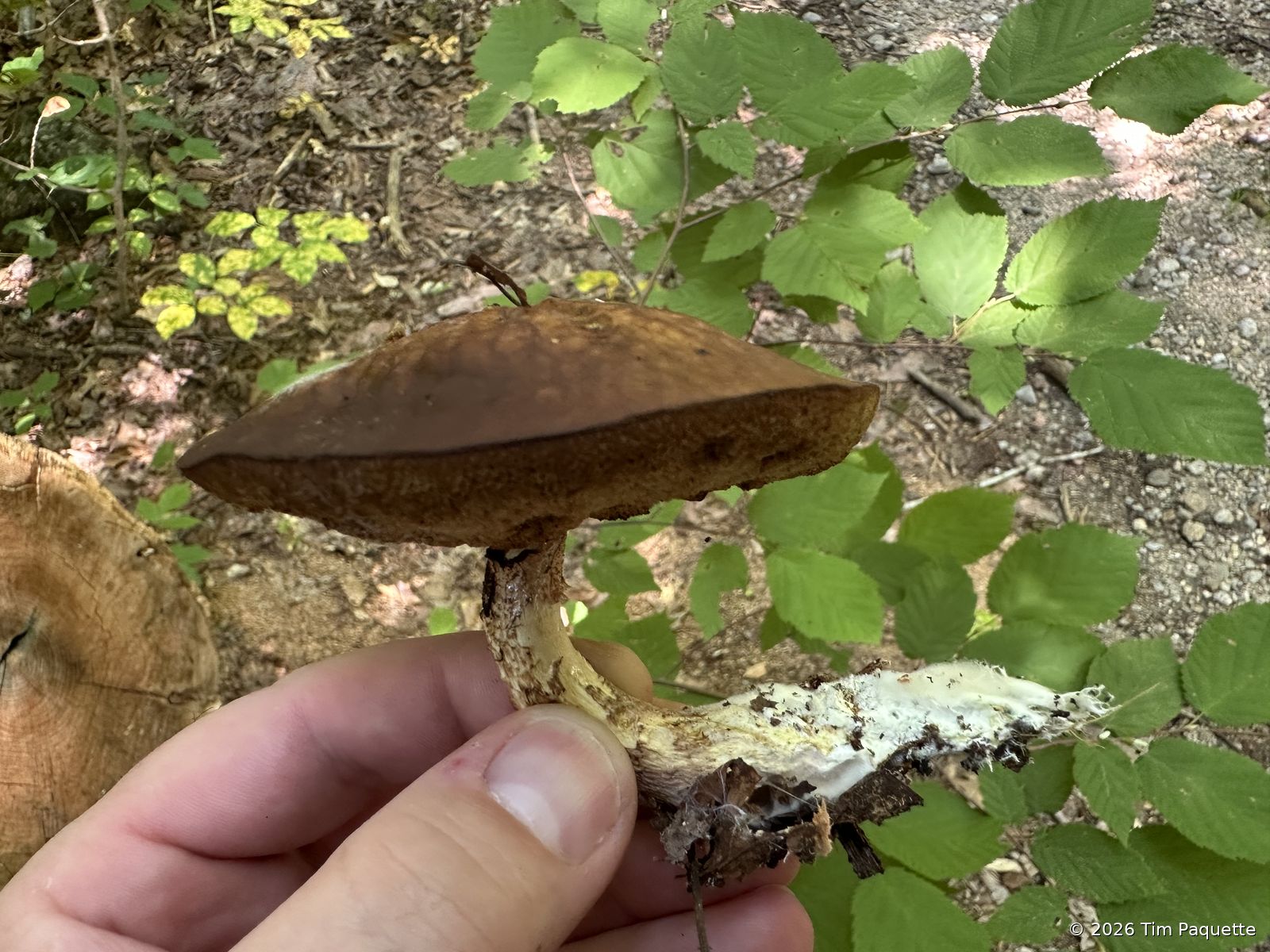
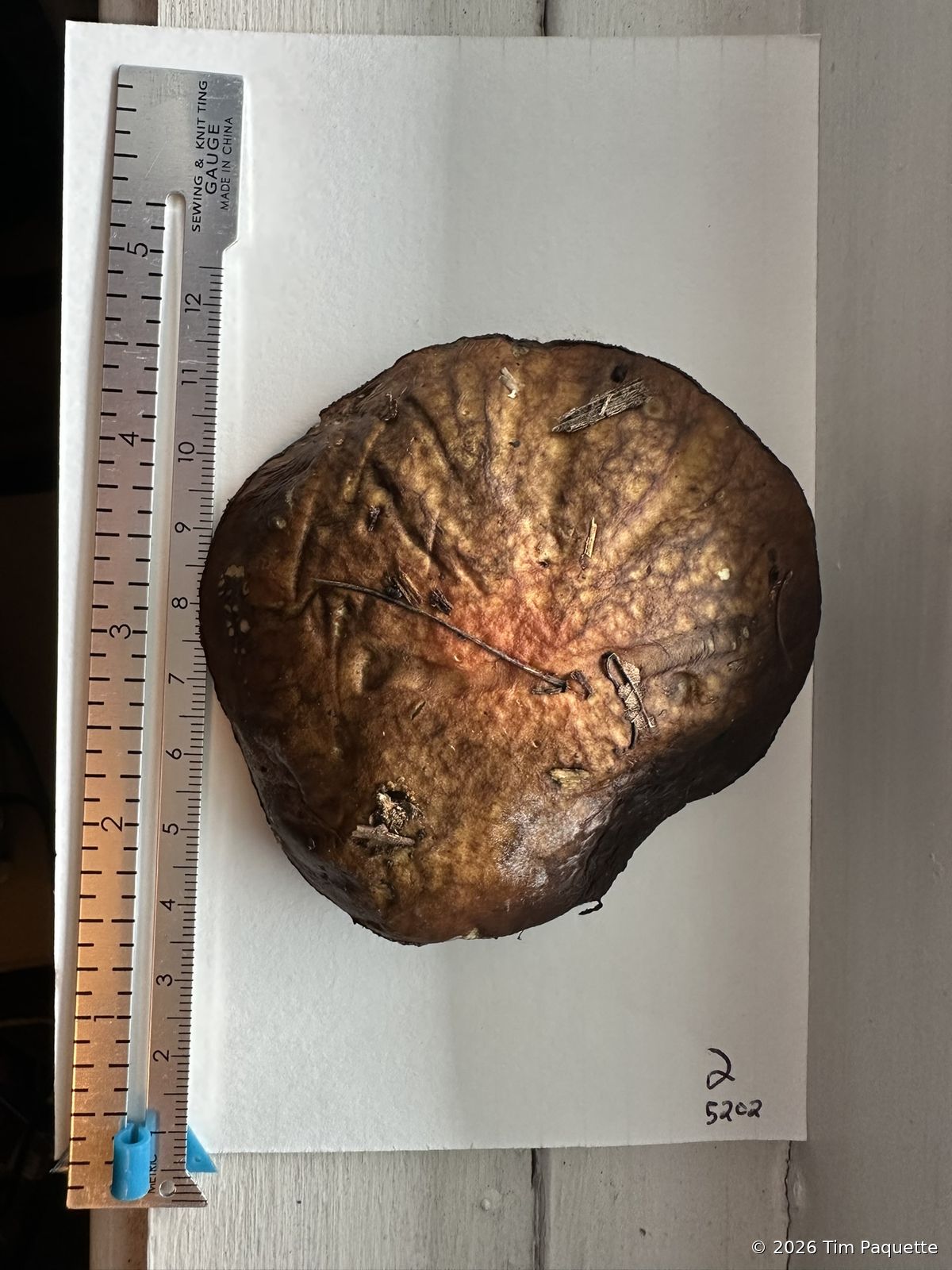
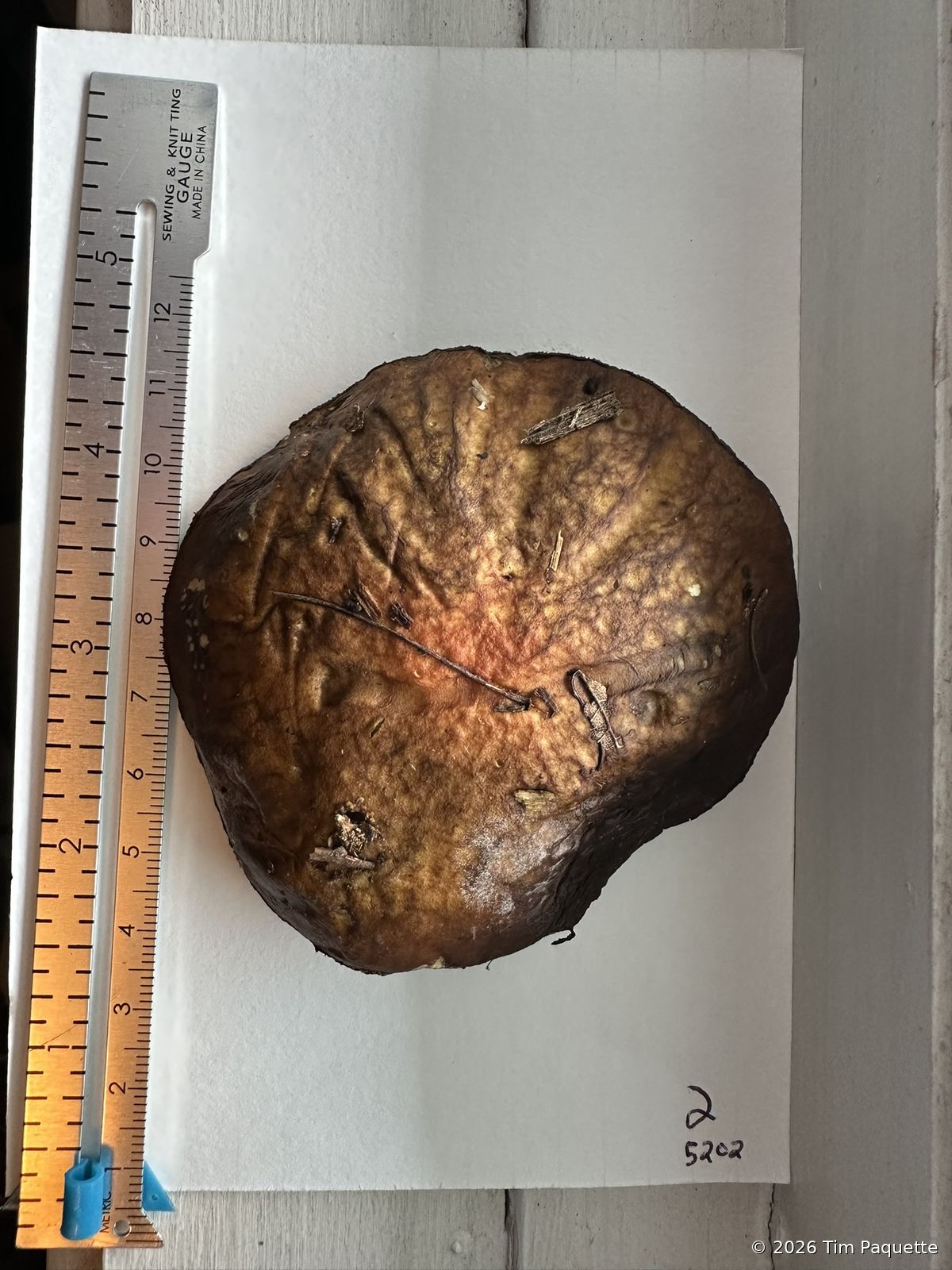
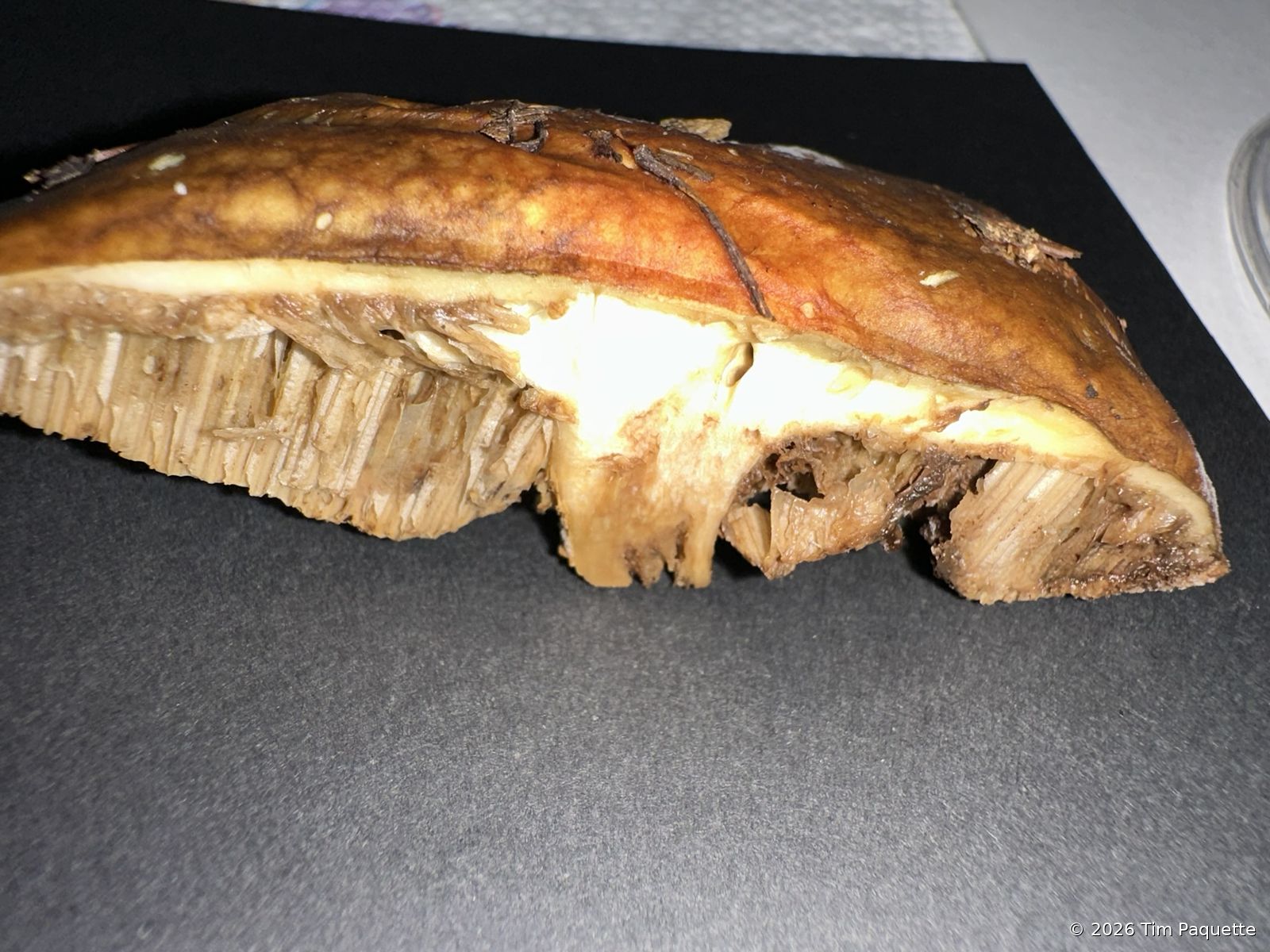
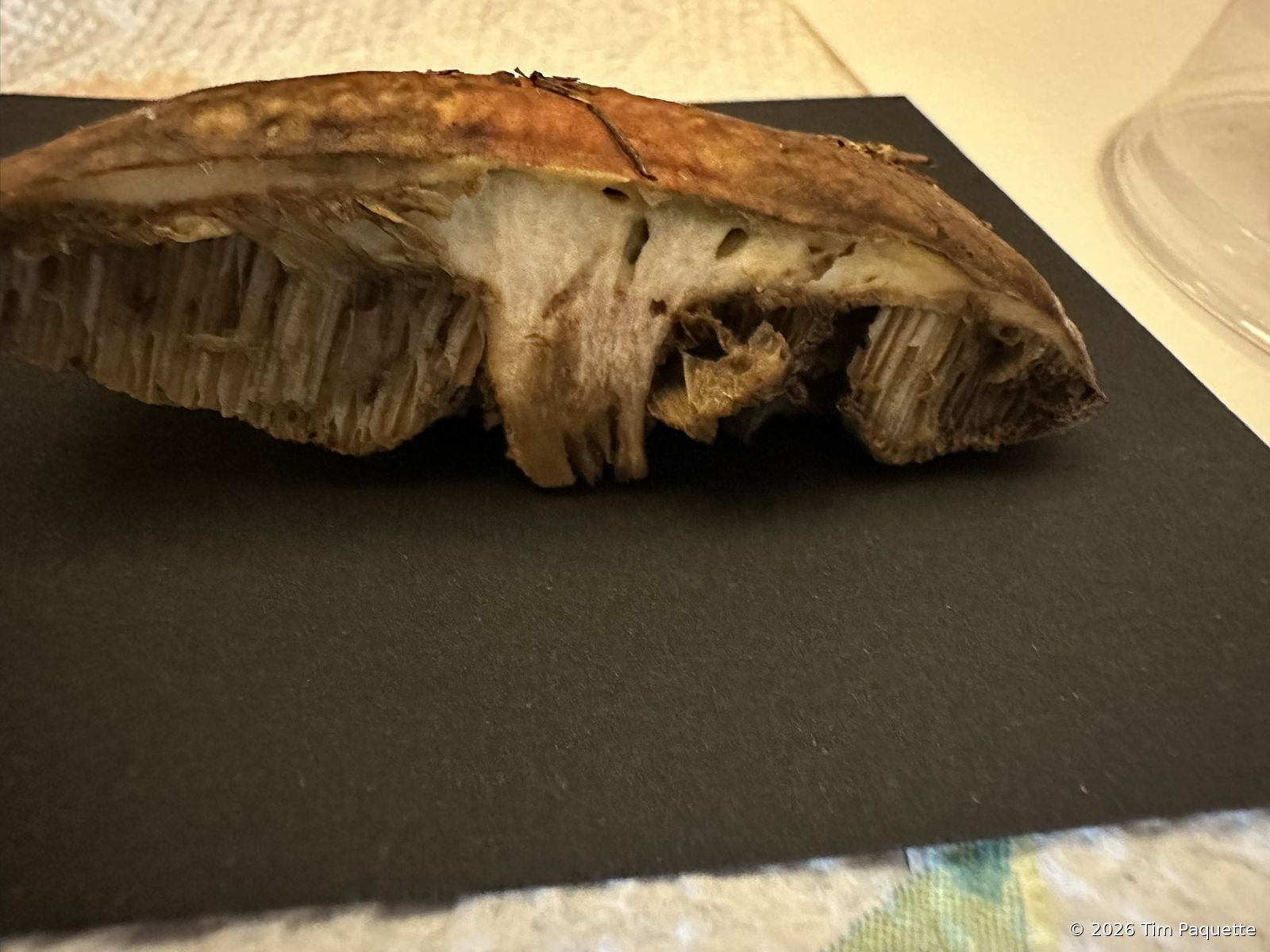
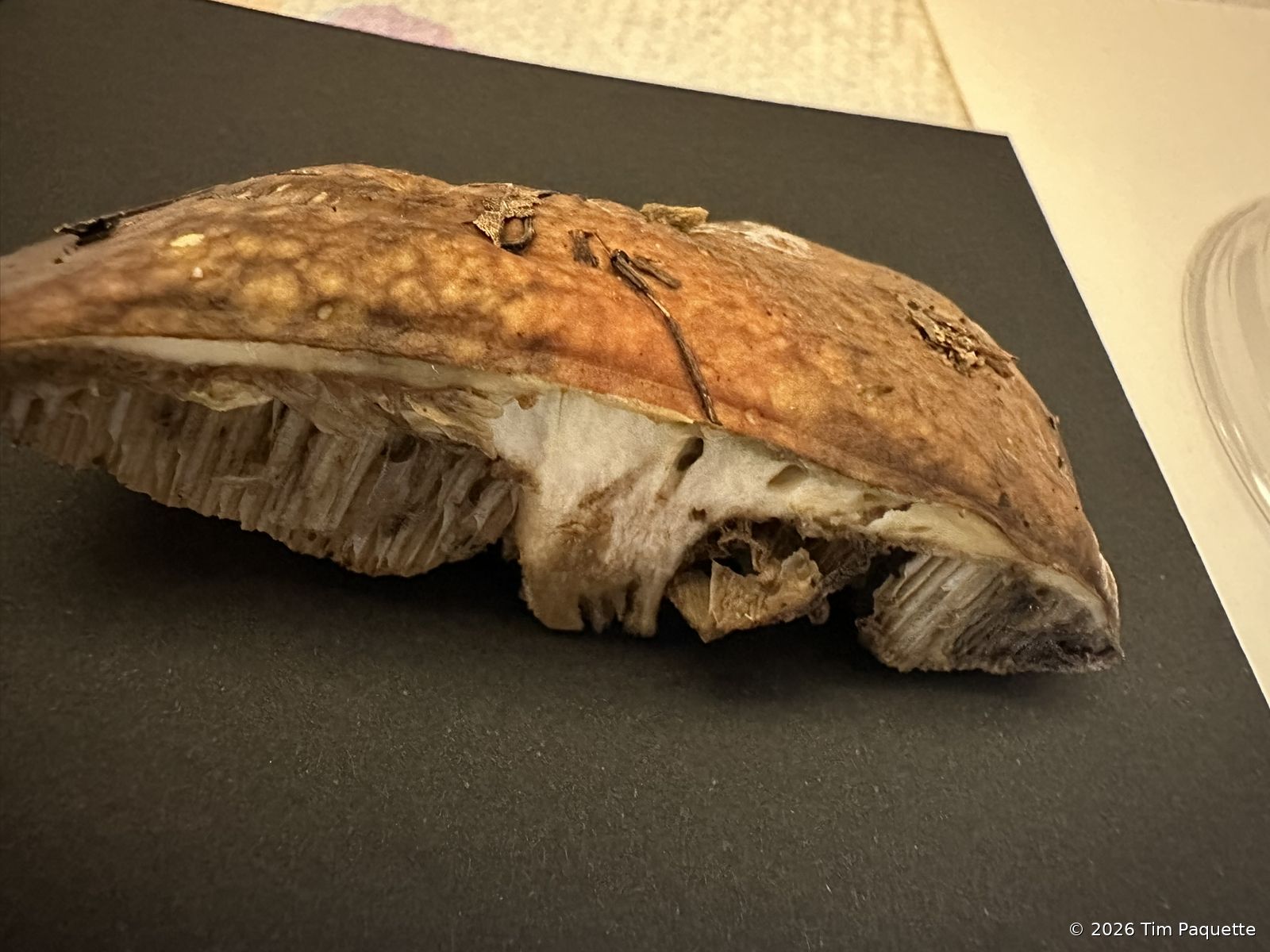
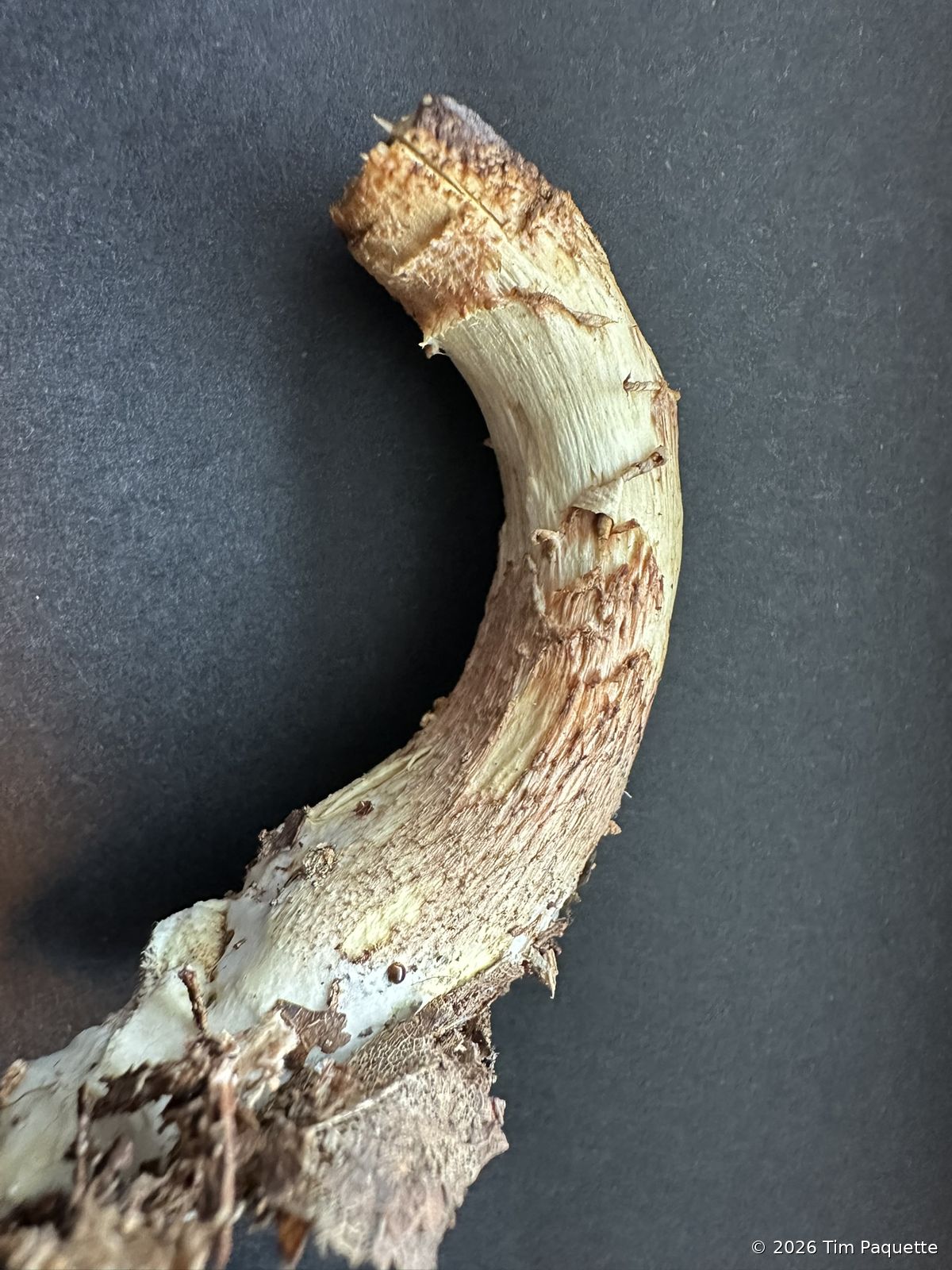
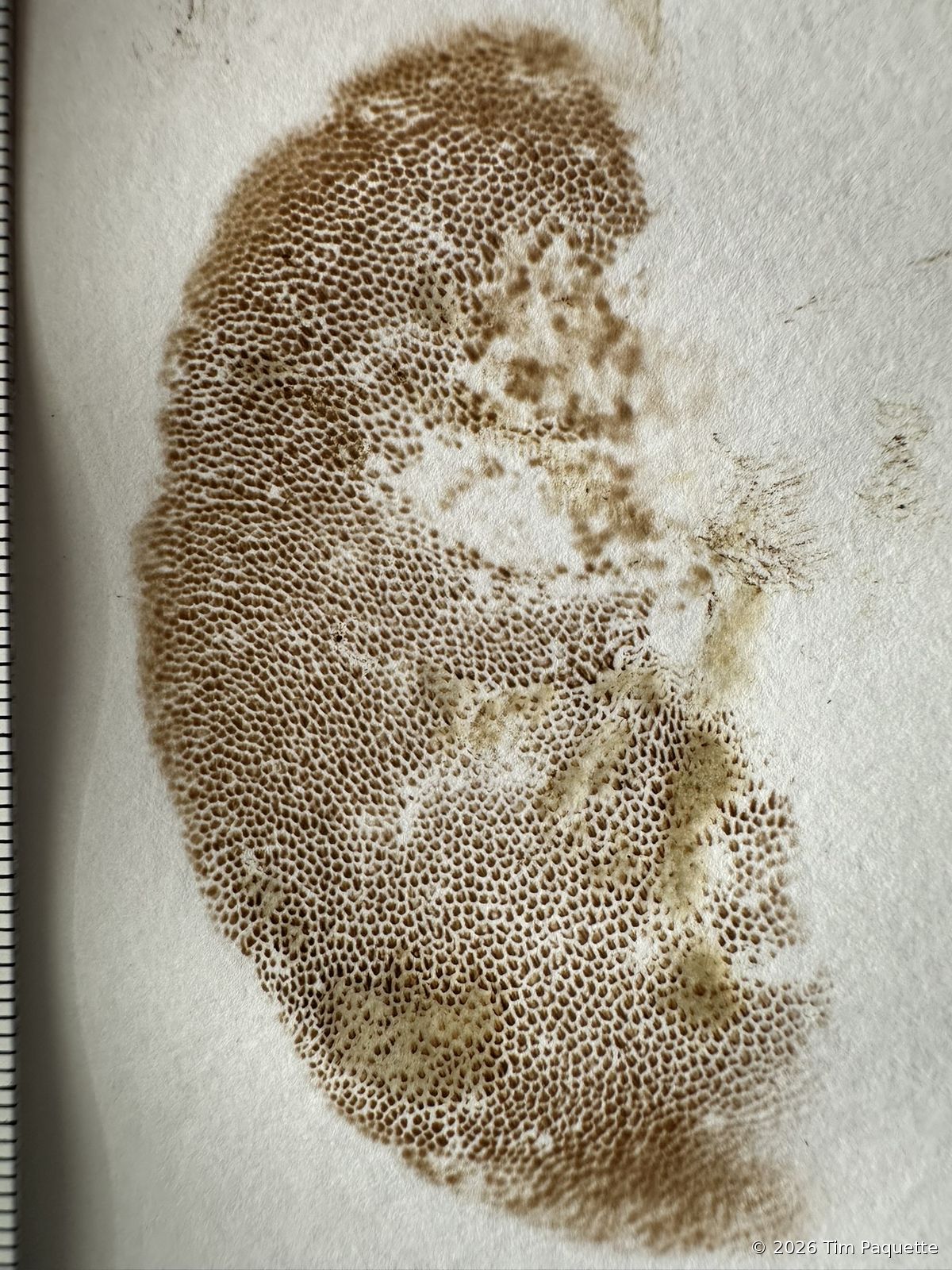
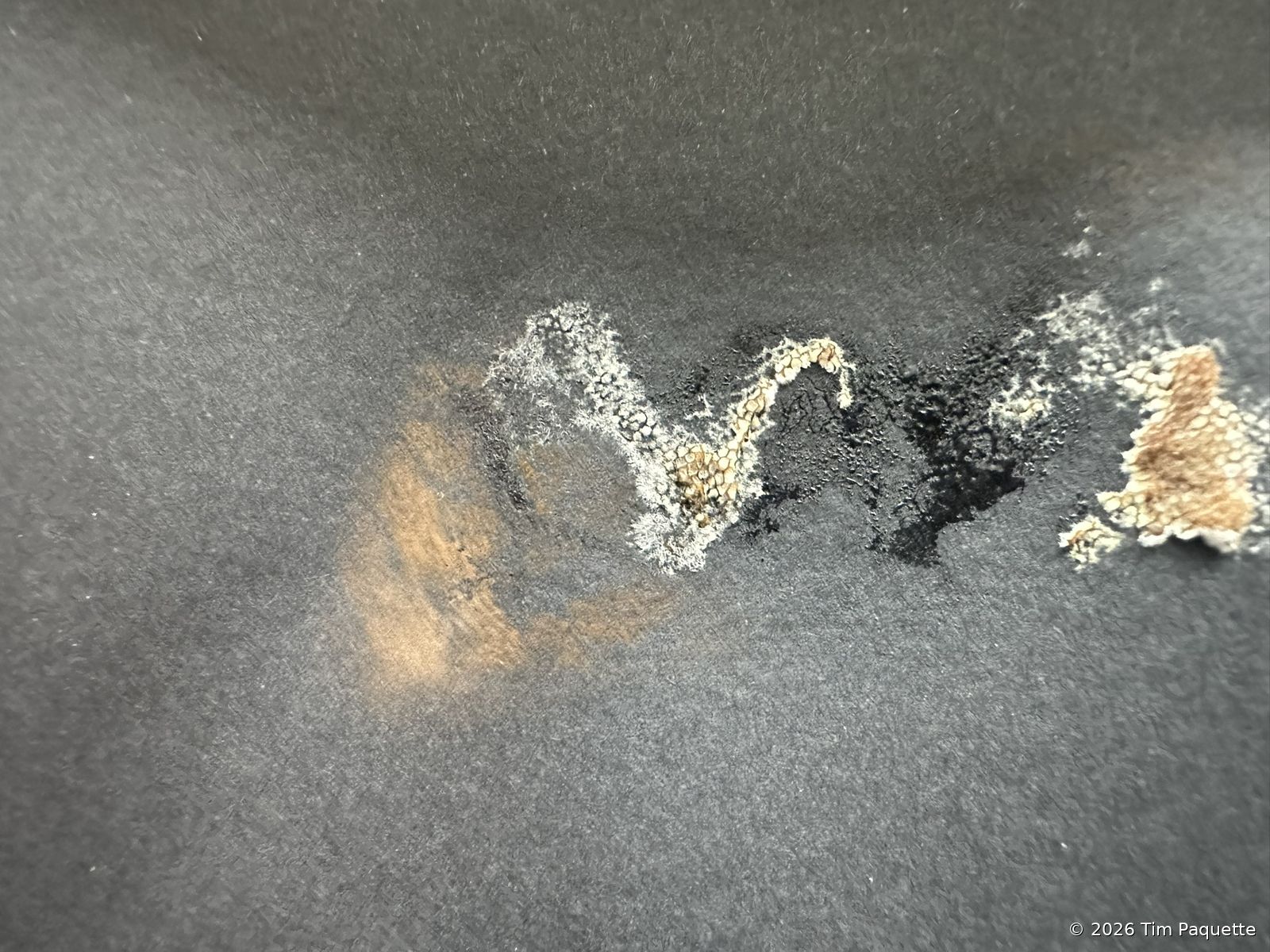
Angles captured. Seven field frames including the substrate and the stipe in hand, six bench frames with cross-sections on black card, and the spore print.
Morphology
Cap 6–9 cm, dark brown, dry, finely suede-textured. Pore surface pale tan. Stipe slender, curved, yellow-tinged with brown fibrous streaking — no scabers and no coarse netting — over a large white mycelial base. Cut flesh white to cream and unchanging across the bench session. Spore print warm cinnamon-brown with no olive tone, stippled with the pore pattern.
Habitat & substrate
Mixed hemlock and hardwood litter beside the trail, terrestrial.
Lookalikes & what rules them out
Three characters now pull the same direction: unstaining white flesh, a warm brown print without olive, and a stipe with neither scabers nor strong netting. That combination fits Tylopilus — the bitter bolete group — better than the brown Xerocomus-type boletes the cap suggested in the field, whose prints run olive-brown. A nearly smooth-stemmed T. felleus is common; Leccinum is excluded on the bare stipe.
To confirm this identification
Touch a cut sliver to the tongue tip and spit: strong bitterness ends it as Tylopilus. Read the print against daylight for any pink cast.
Notes
The stipe question travelled through three hypotheses in one evening — Leccinum on cap gestalt, Xerocomus on the streaked yellow stipe, Tylopilus on the section and print. Recorded because the guide is for learning: each swap followed a character, not a mood.
Found at Walker Pond Rd area, Sturbridge, MA on Thursday, 20 August 2026 at 11:50. See the full walk for that day's weather and everything else recorded.
Others in this group
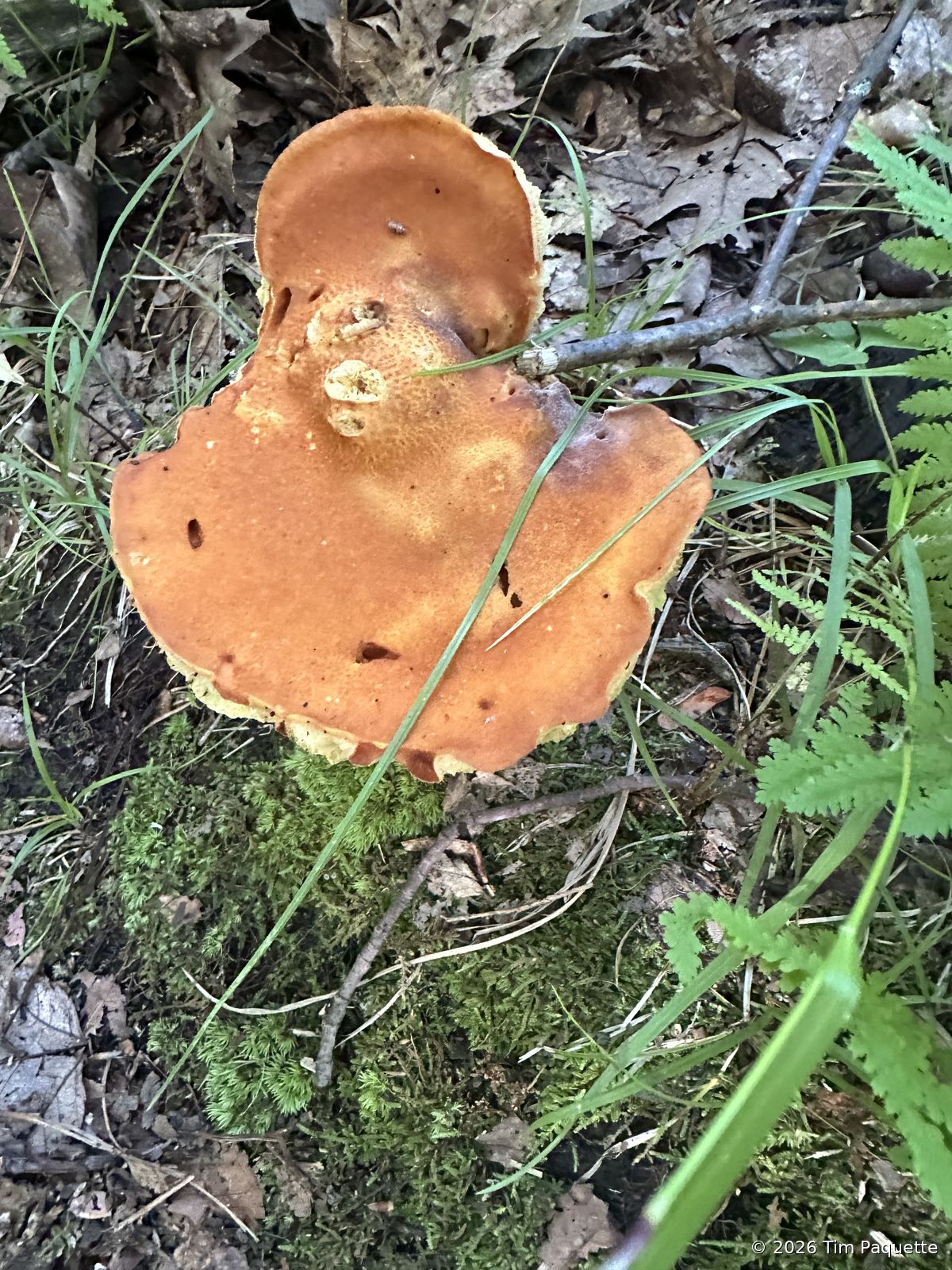 Large orange-brown bolete, uprootedBoletaceae · Jul 31Low–moderate
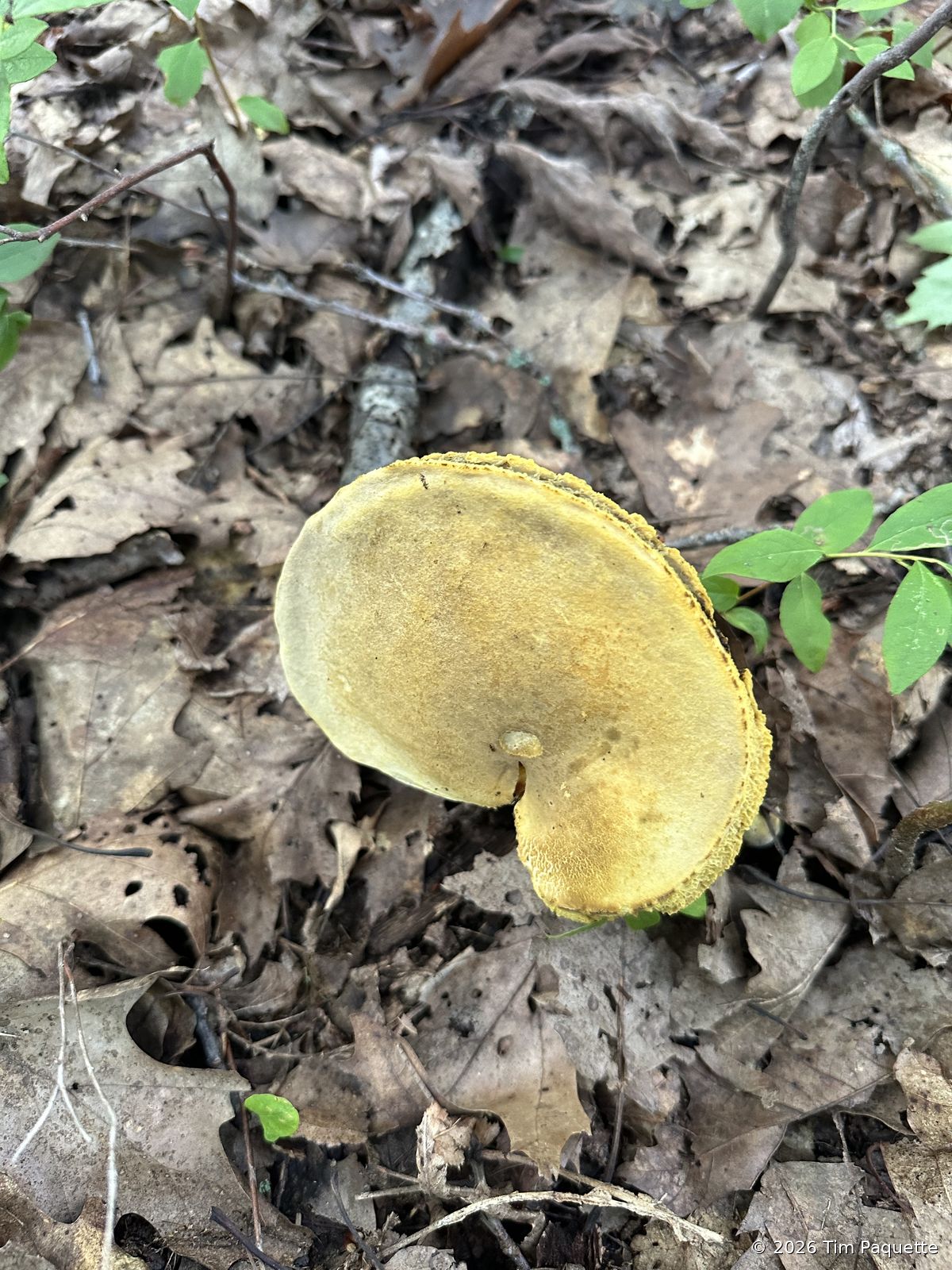 Bolete with boletinoid poresBoletinellus, Suillus or Phylloporus · Jul 31Moderate
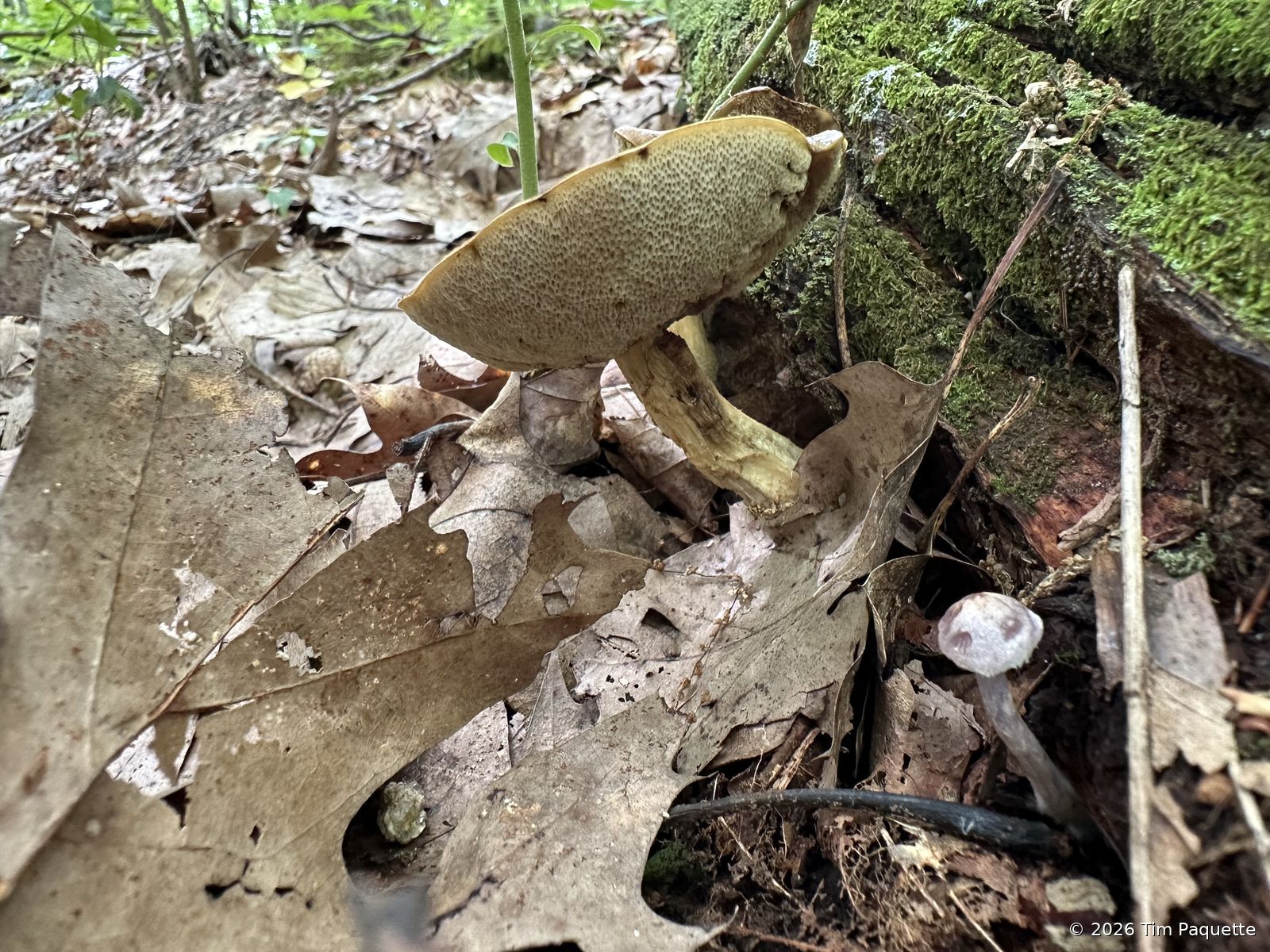 Olive-brown boleteBoletaceae · Aug 6Low–moderate
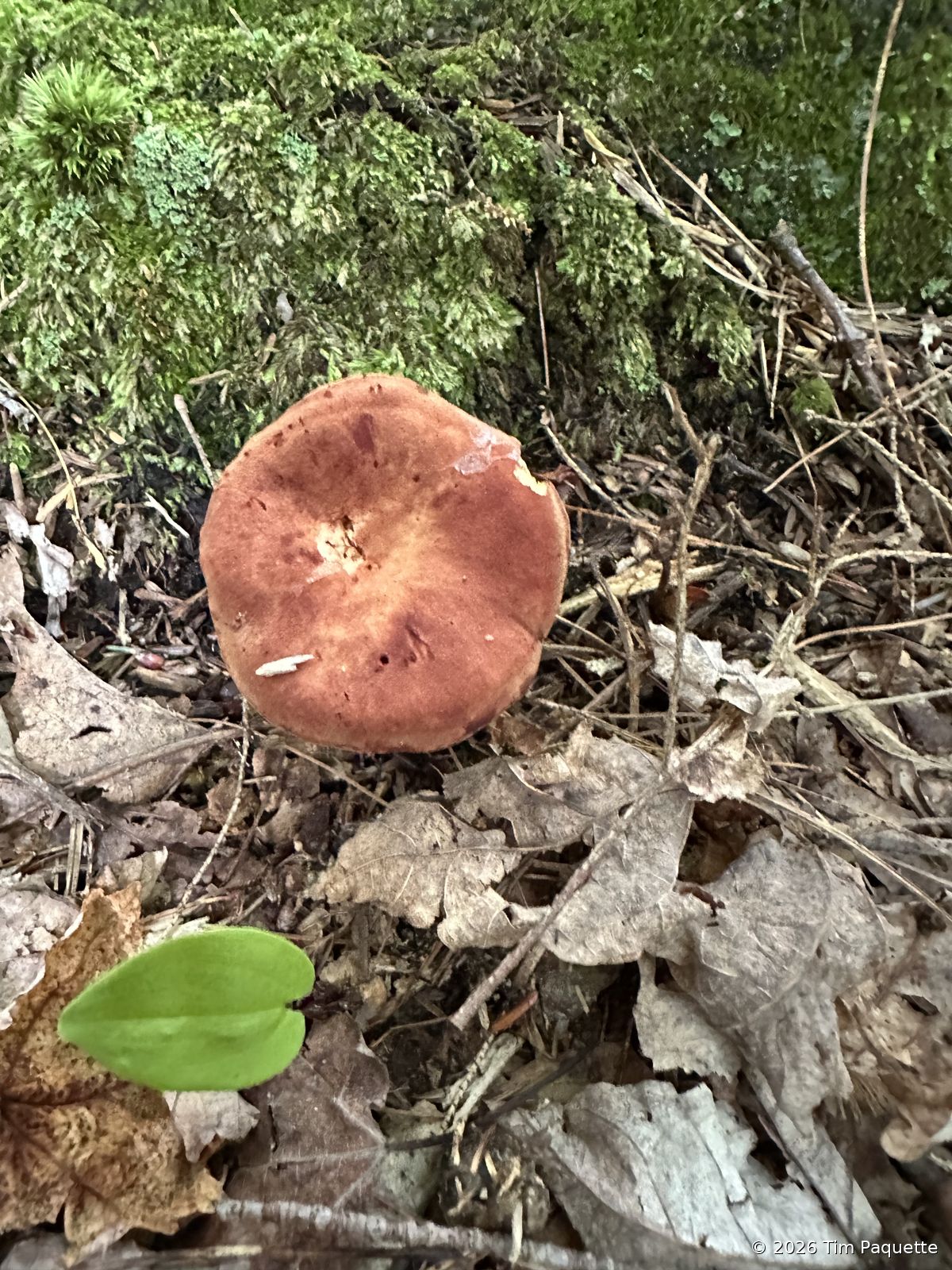 Rosy cap with golden gill-platescf. Phylloporus · Aug 6Moderate
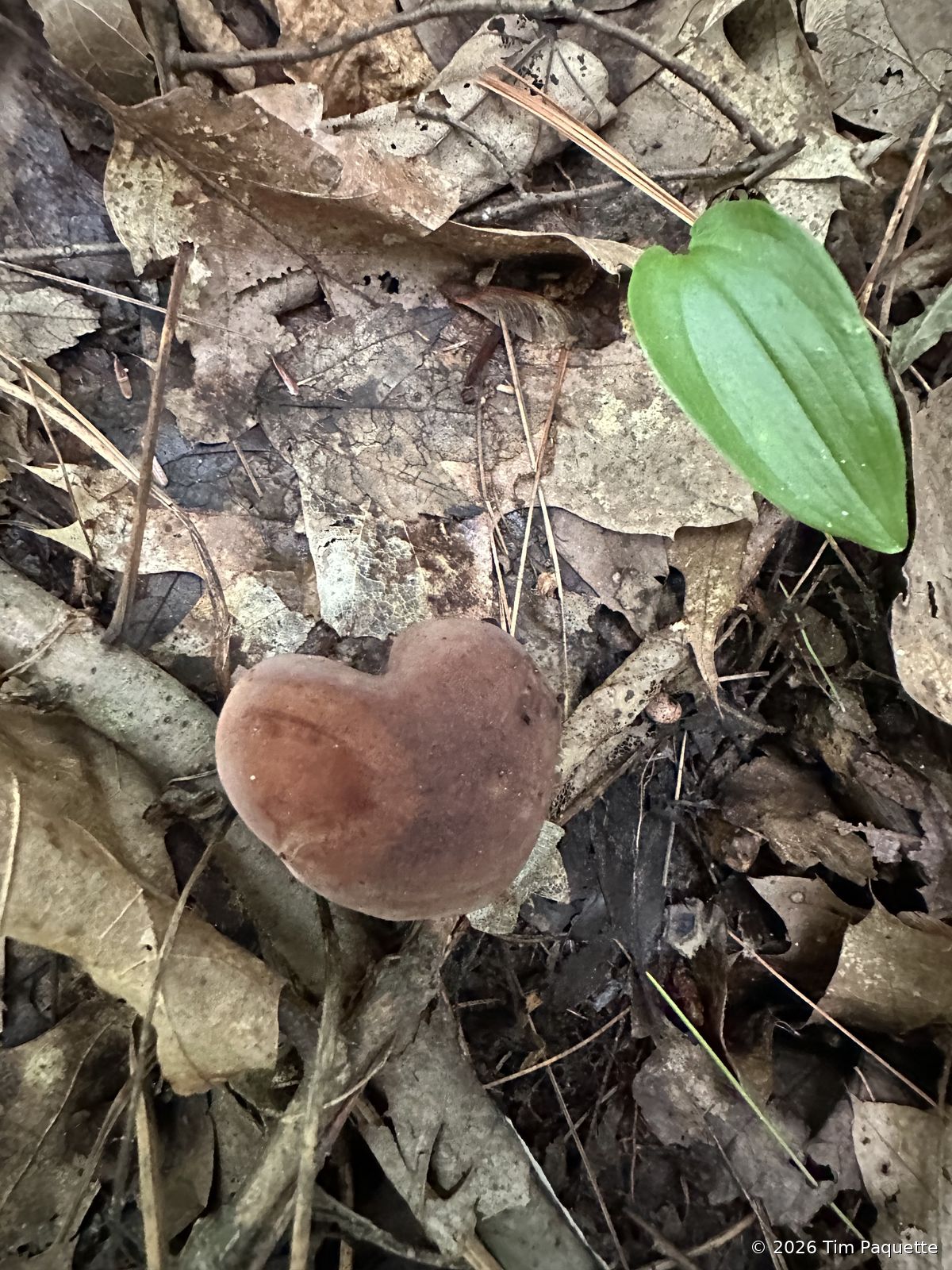 Dark chestnut boleteBoletaceae · Aug 6Moderate
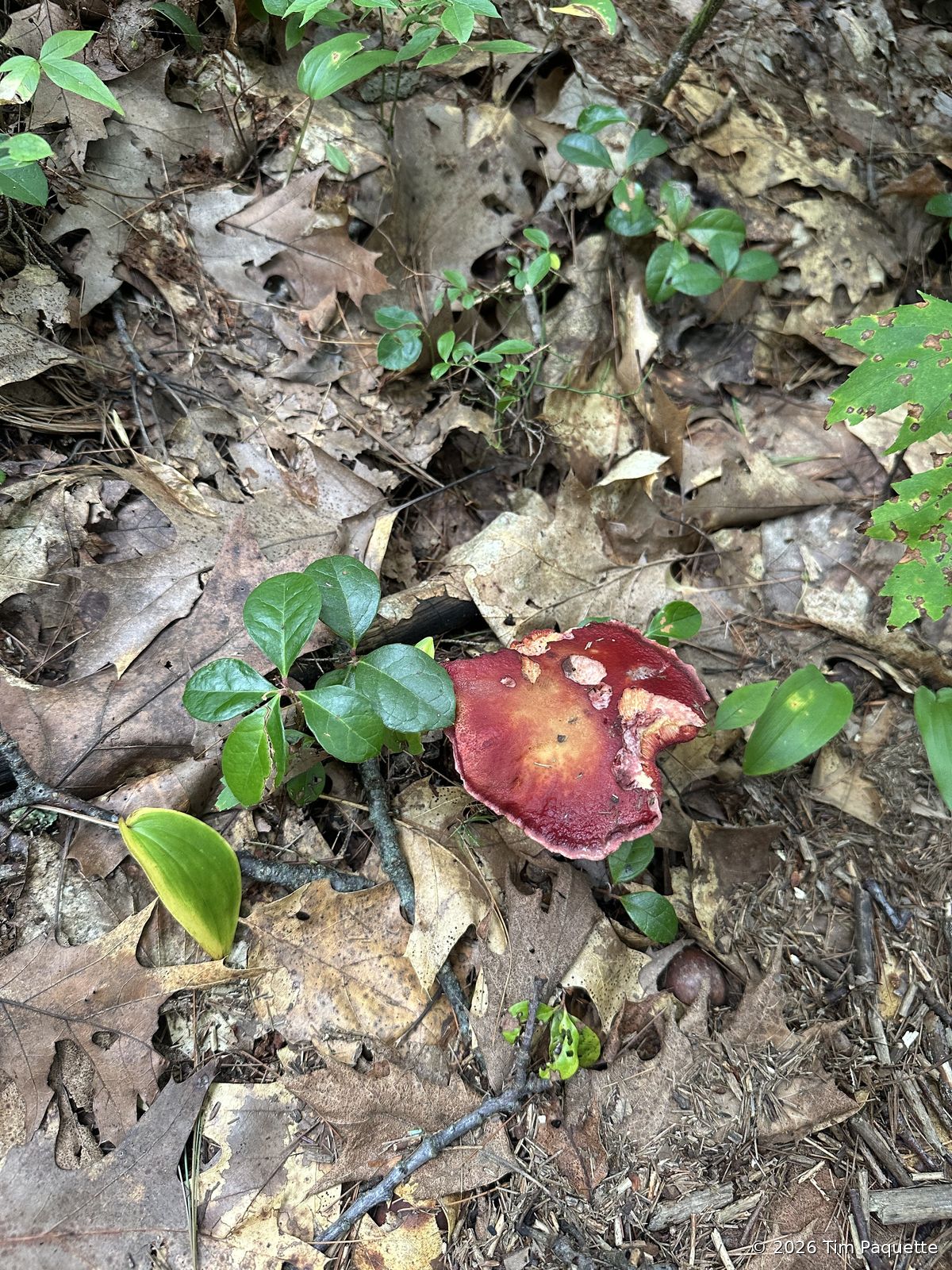 Wine-red boleteBoletaceae · Aug 6Moderate
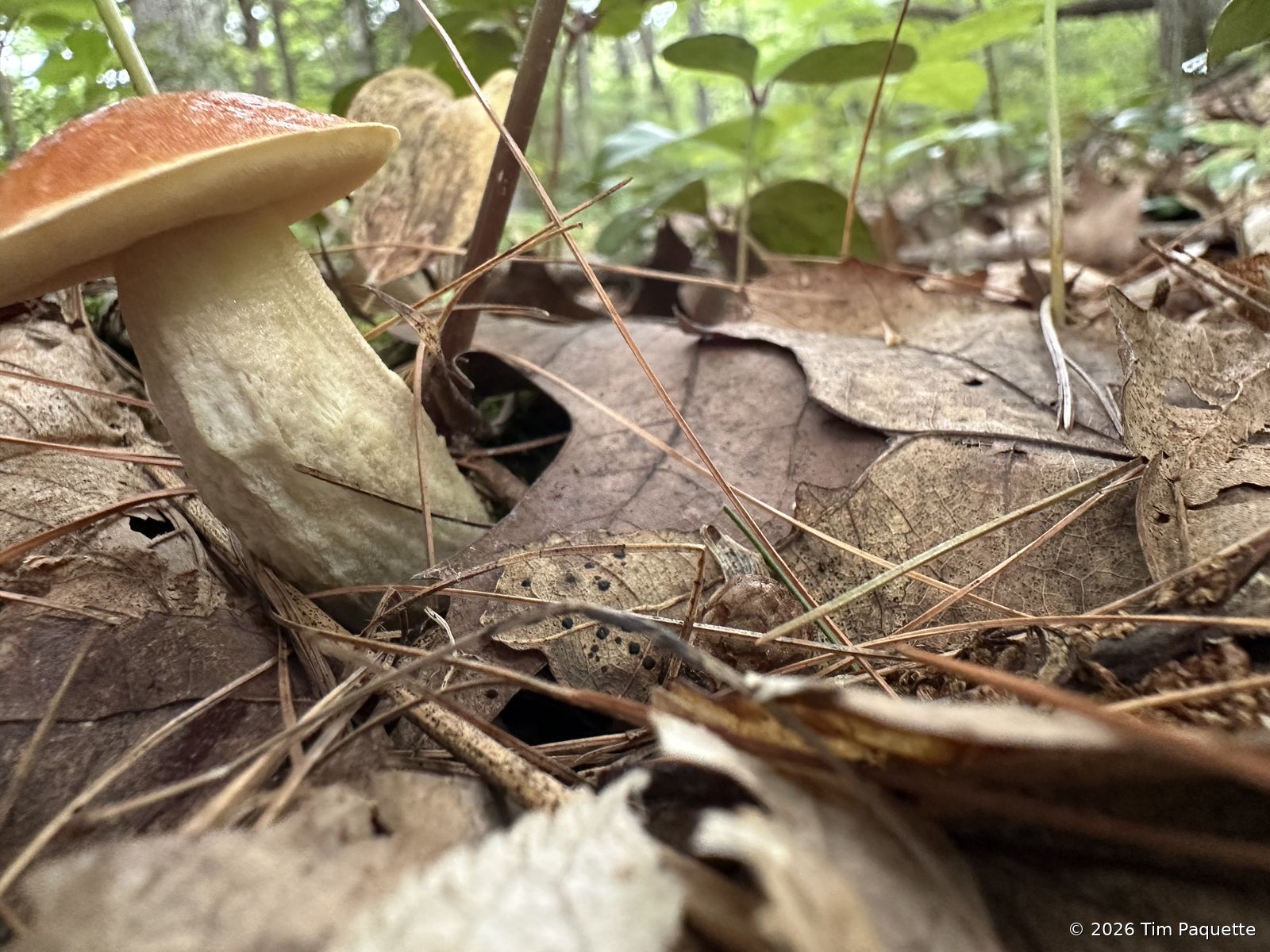 Orange-capped boletesBoletaceae · Aug 6Low–moderate
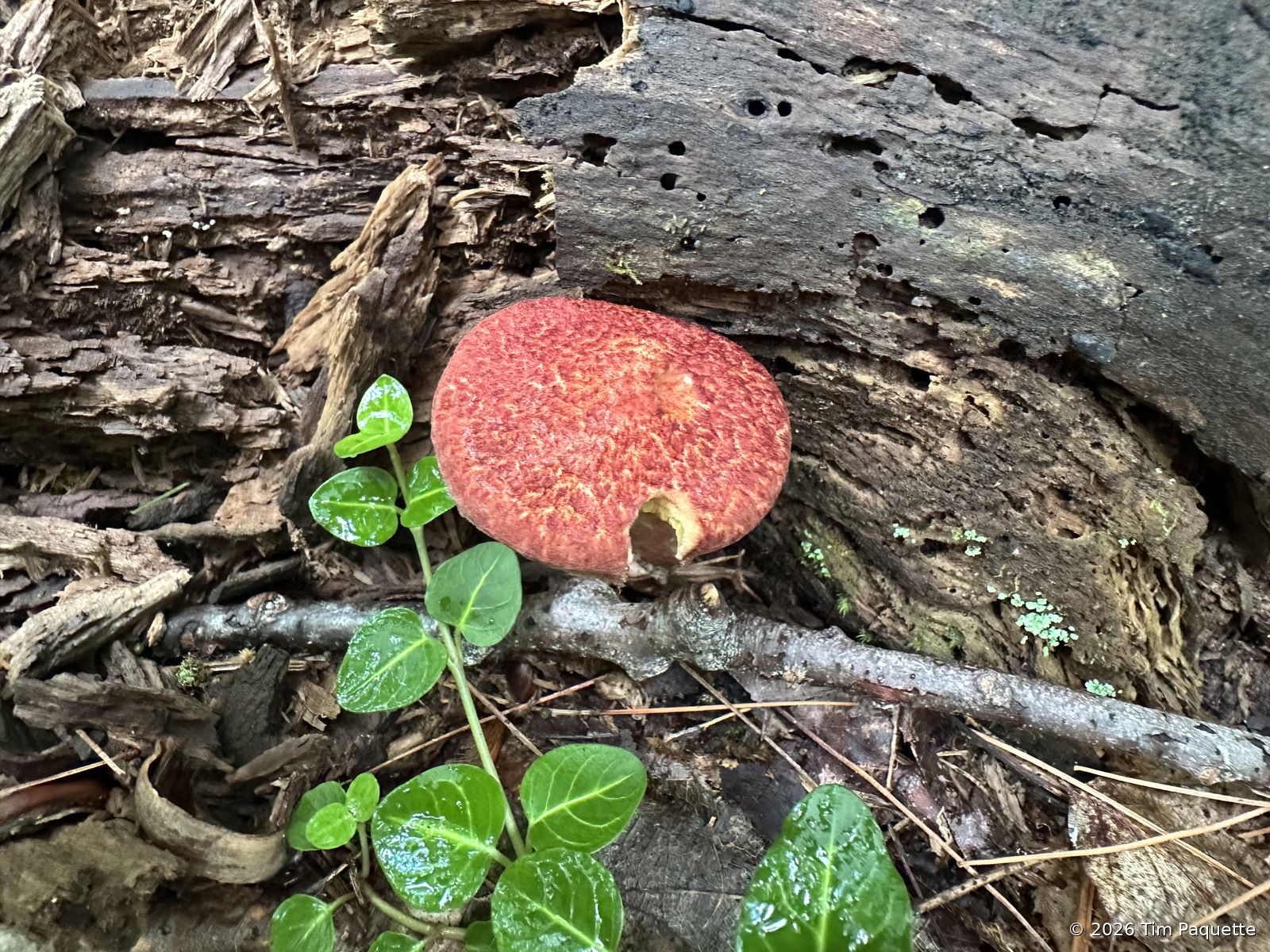 Red-capped bolete with yellow poresBoletaceae · Aug 8Moderate