Large orange-brown bolete, uprooted
Boletaceae Family
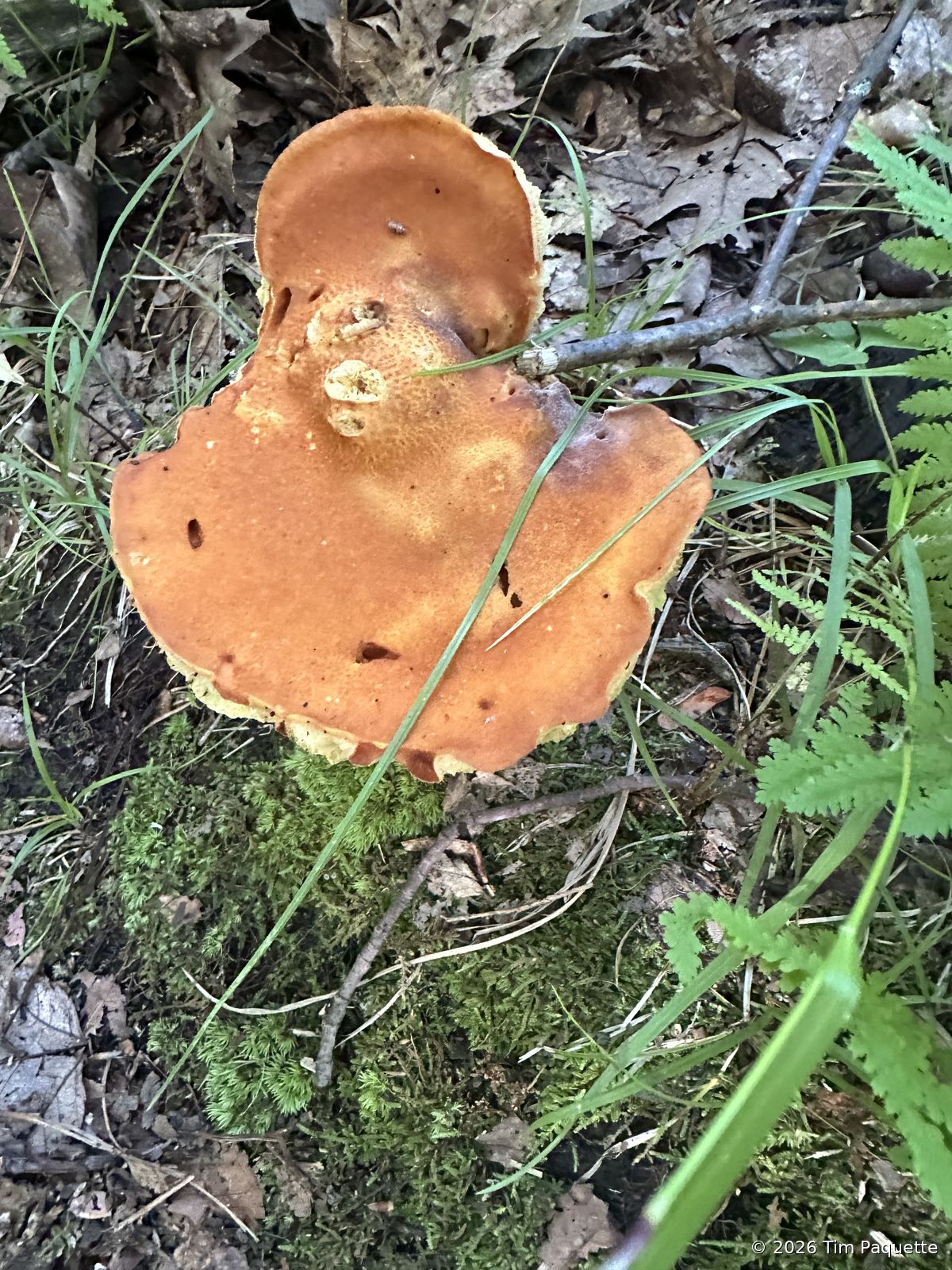
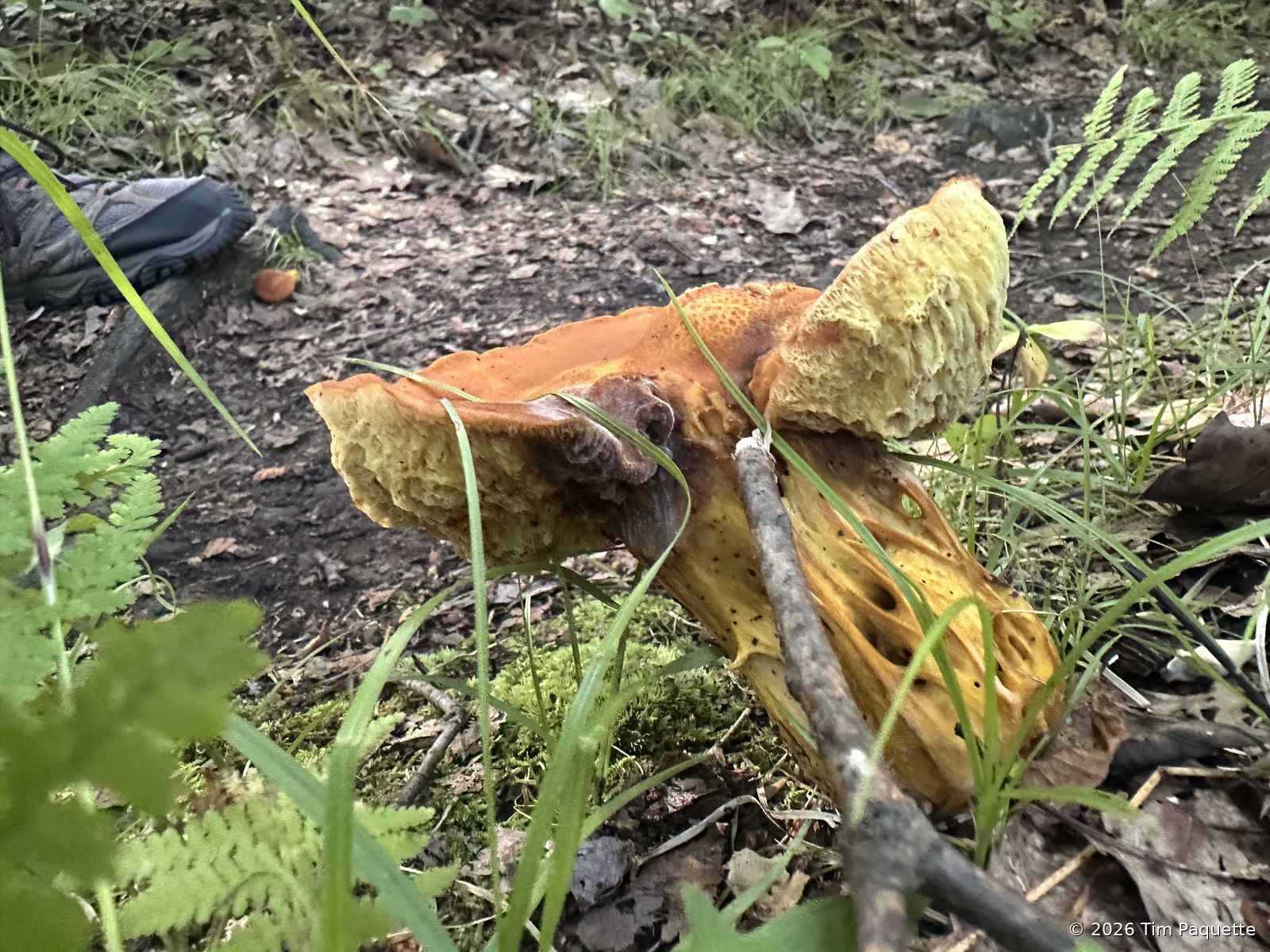
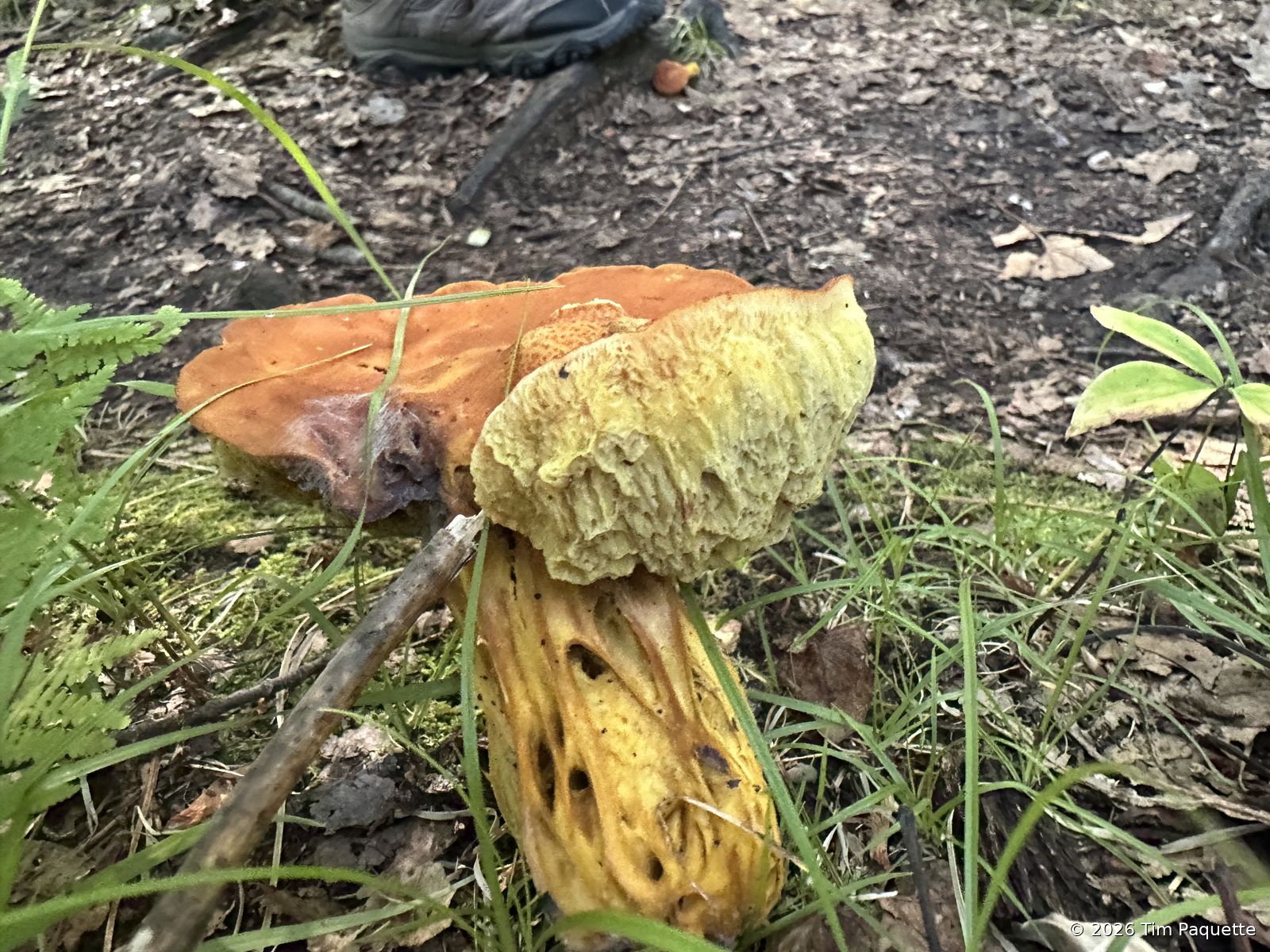
Angles captured. Cap from directly above, then two views of the fruitbody lying on its side. No intact underside and no clean view of the stipe base.
Morphology
Large, cap perhaps 10–12 cm, rusty orange-brown, dry, minutely areolate. The fruitbody is uprooted and damaged: the tube layer has been torn away from part of the cap, leaving a coarse pale-yellow spongy mass, and the stipe is extensively tunnelled by fly larvae, which is what produces the large irregular yellow chambers in the close views. Patches of greyish-violet discolouration in the broken flesh.
Habitat & substrate
Bare compacted soil at a trail edge with hay-scented fern, grass and moss. A second small orange-brown fruitbody is visible further up the trail.
Lookalikes & what rules them out
A bolete by the tube layer and overall build. Beyond that the damage removes the diagnostic characters — an intact pore surface and stipe are what separate Suillus, Leccinum, Boletus and Xerocomellus.
To confirm this identification
An undamaged fruitbody. Pore size and arrangement, stipe ornamentation, and whether the flesh blues on cutting would each move this forward.
Notes
Revised on second pass. This was first logged as Suillus at moderate-to-high confidence, on the basis of what appeared to be coarse radially arranged pores. At full resolution that texture is a torn tube layer and larval tunnelling, not pore structure — so the Suillus call is withdrawn and the entry is now held at family level.
Found at Massasoit Rd area, Worcester, MA on Friday, 31 July 2026 at 17:50. See the full walk for that day's weather and everything else recorded.
Others in this group
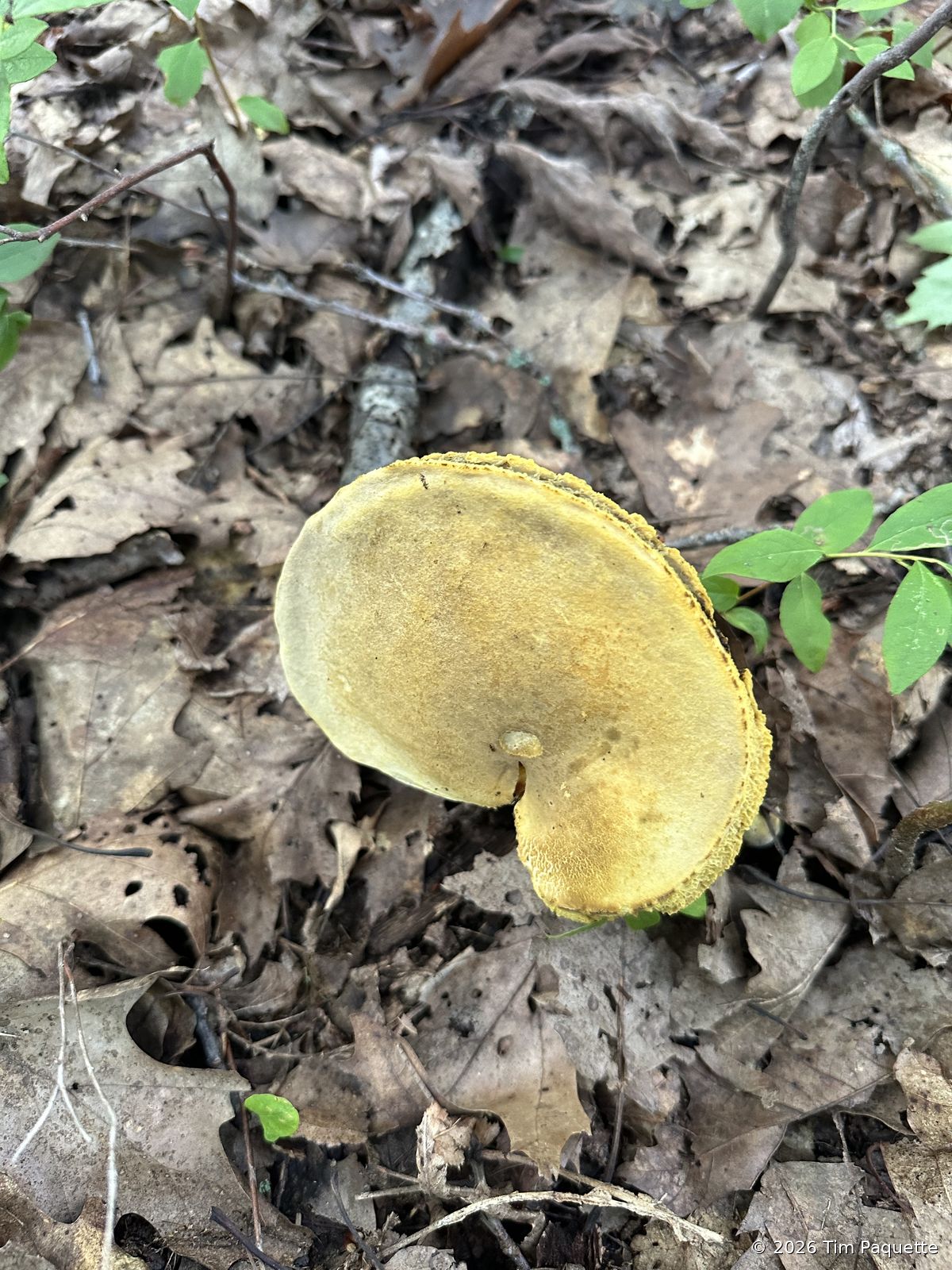 Bolete with boletinoid poresBoletinellus, Suillus or Phylloporus · Jul 31Moderate
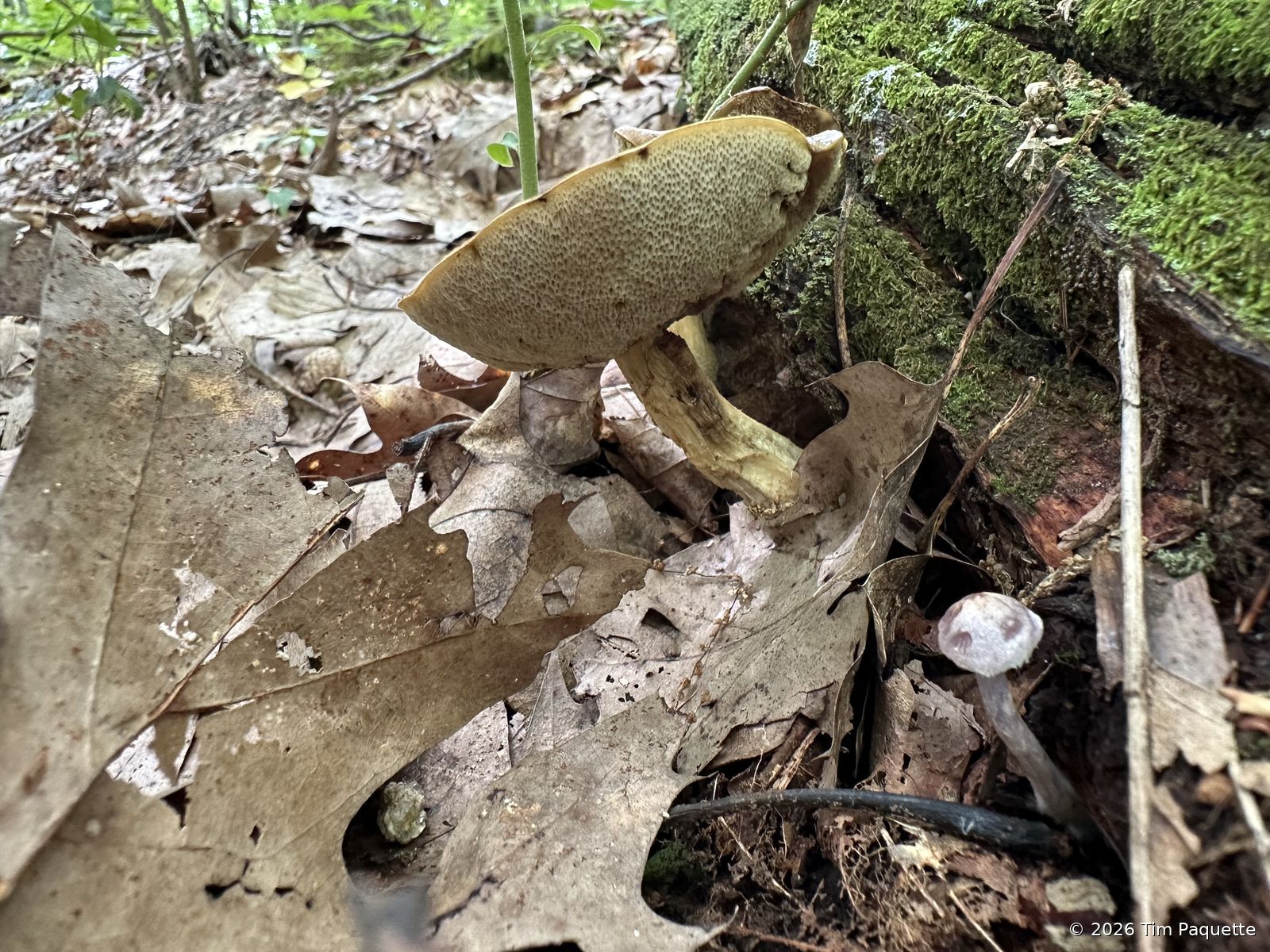 Olive-brown boleteBoletaceae · Aug 6Low–moderate
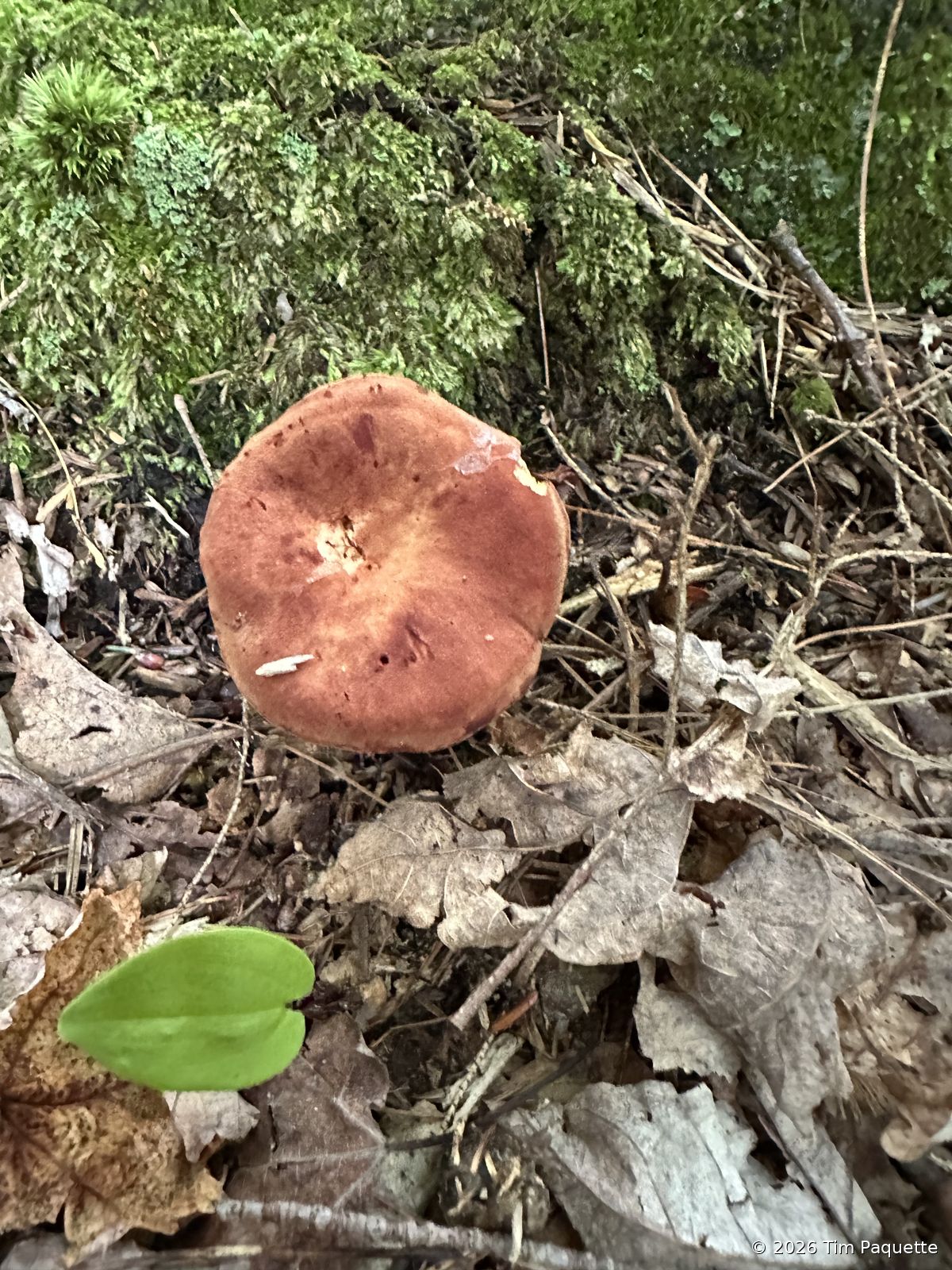 Rosy cap with golden gill-platescf. Phylloporus · Aug 6Moderate
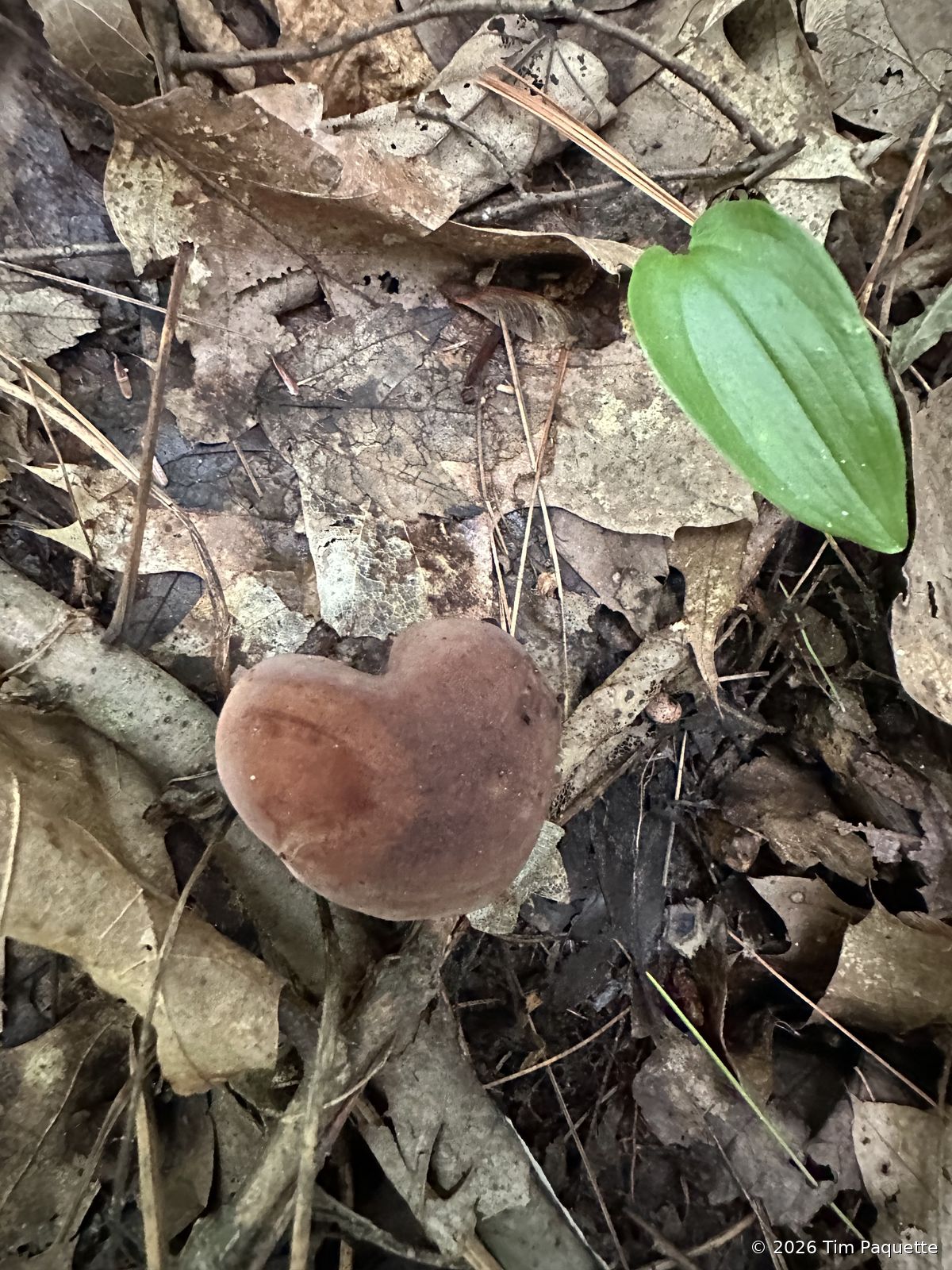 Dark chestnut boleteBoletaceae · Aug 6Moderate
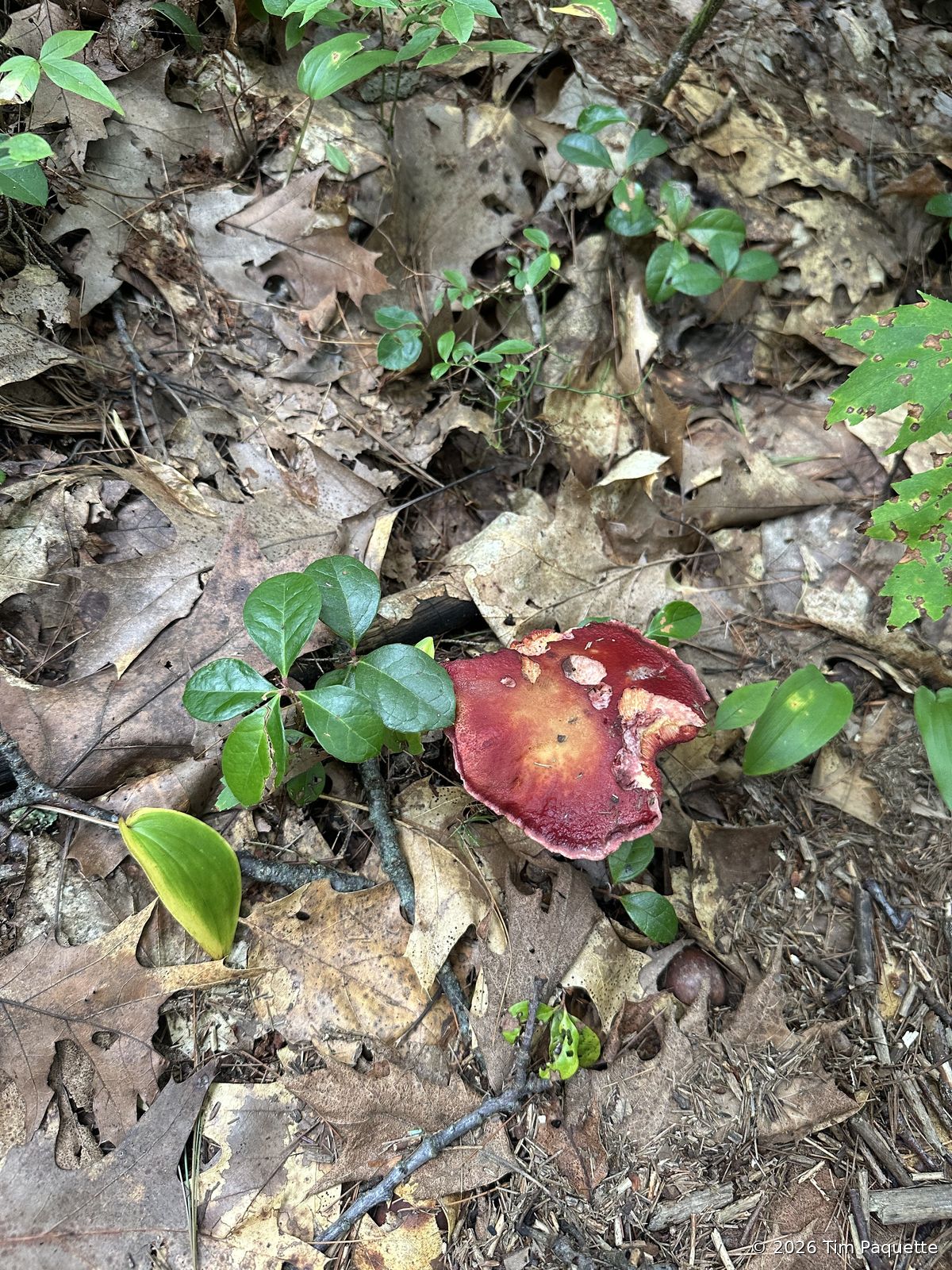 Wine-red boleteBoletaceae · Aug 6Moderate
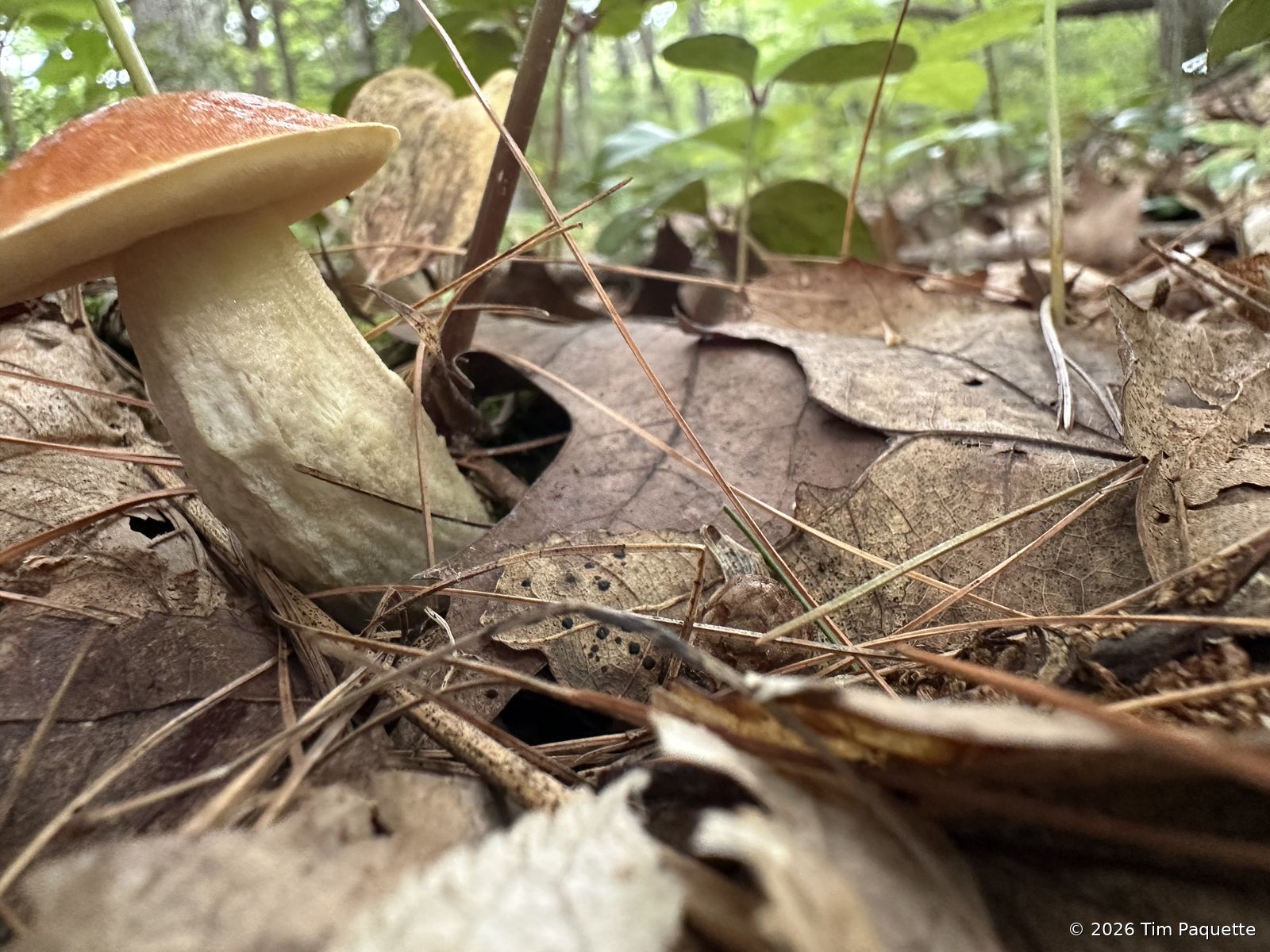 Orange-capped boletesBoletaceae · Aug 6Low–moderate
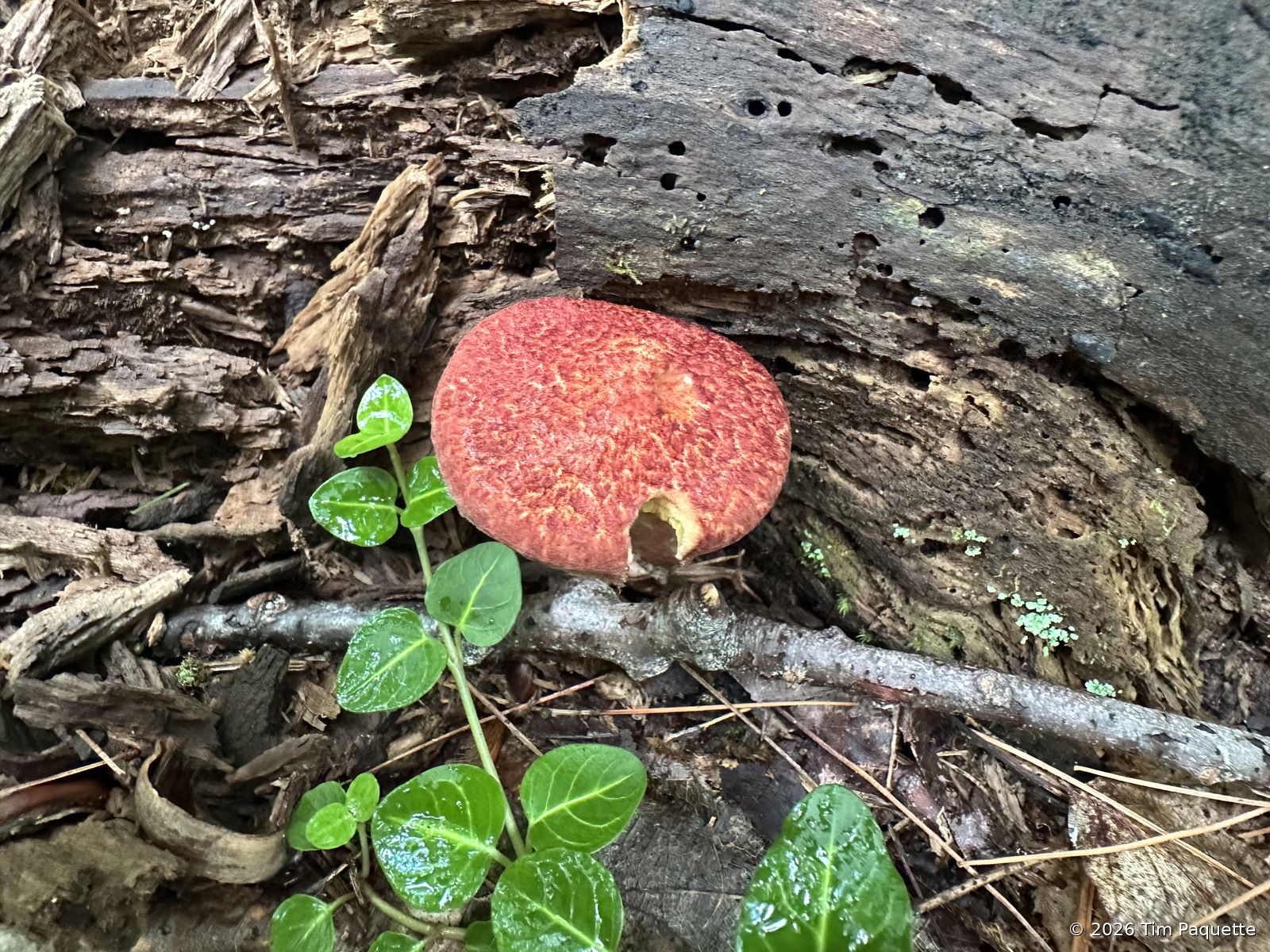 Red-capped bolete with yellow poresBoletaceae · Aug 8Moderate
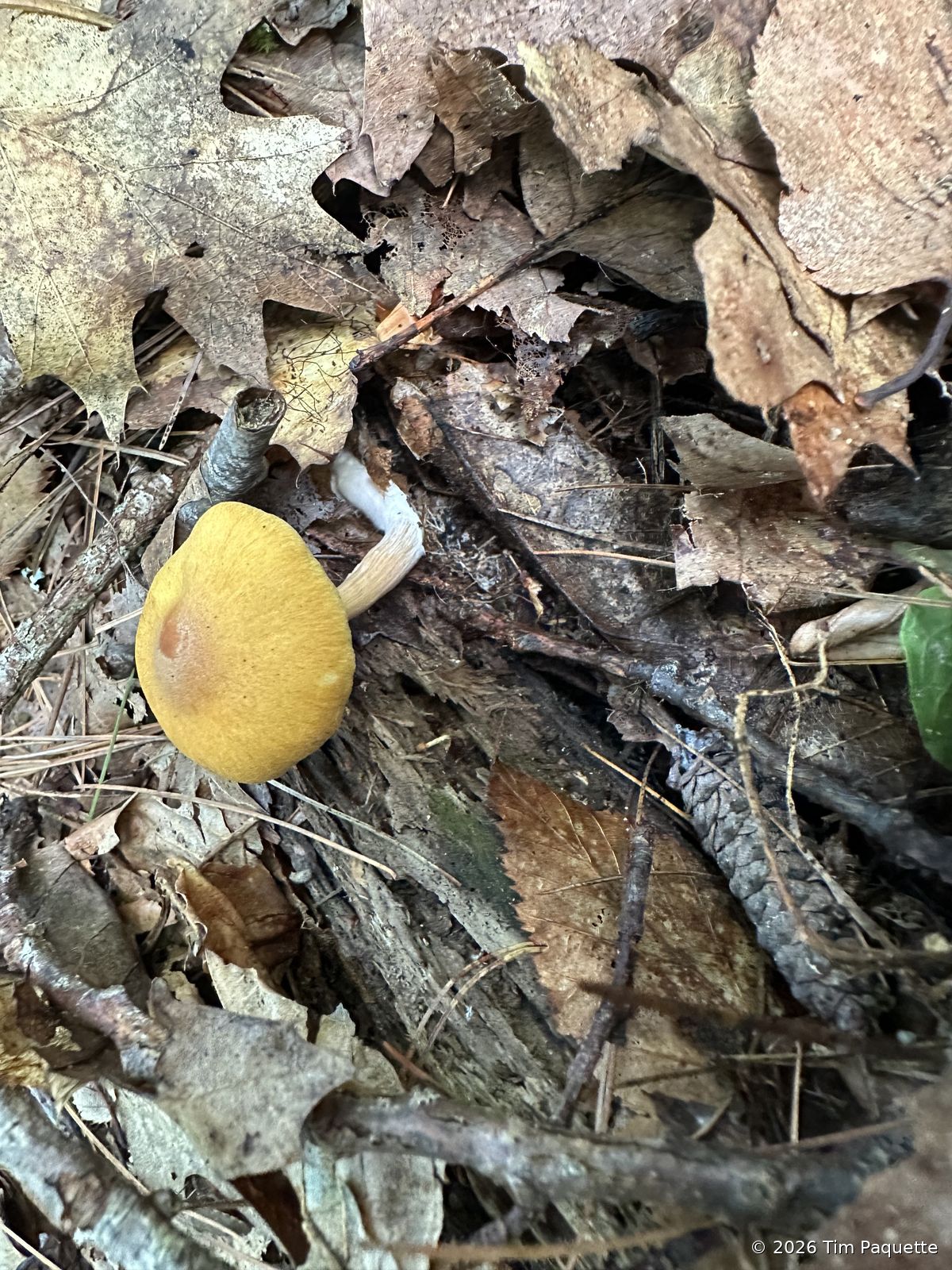 Yellow-brown boleteBoletaceae · Aug 8Low–moderate