Home / Gilled mushrooms on the ground / TM0040
Cinnamon-capped agaric
Cortinarius or Gymnopilus Genus
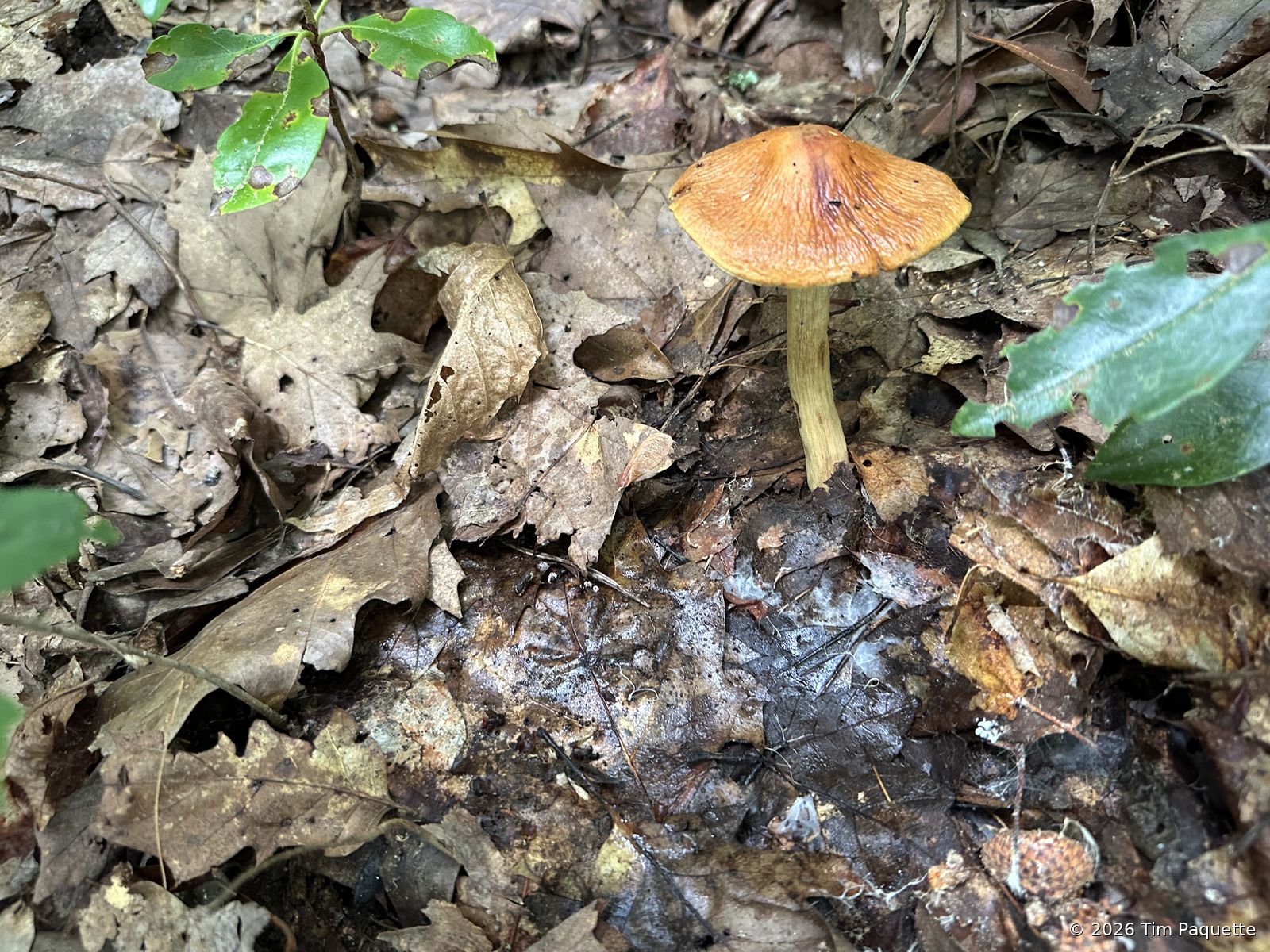
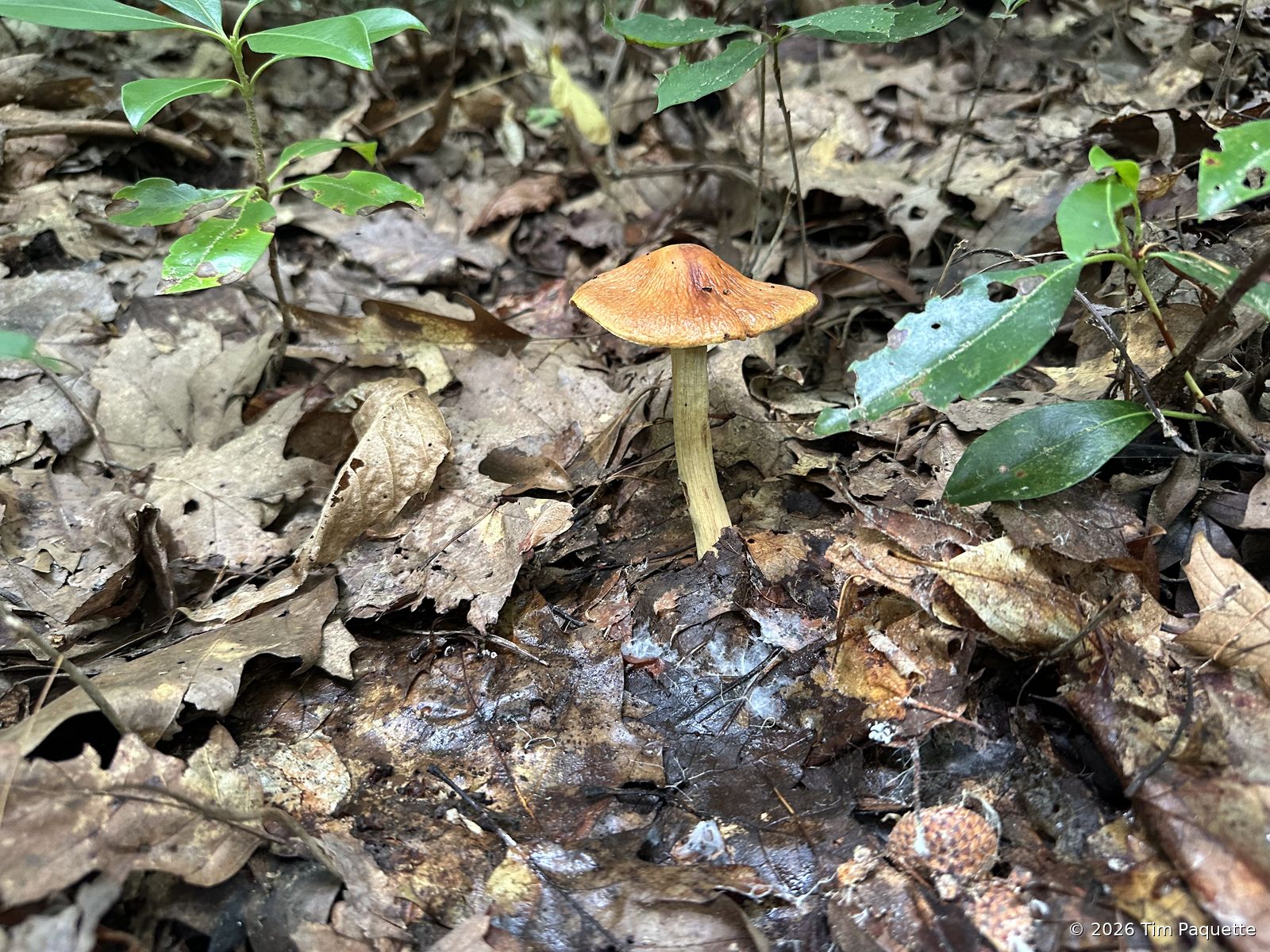
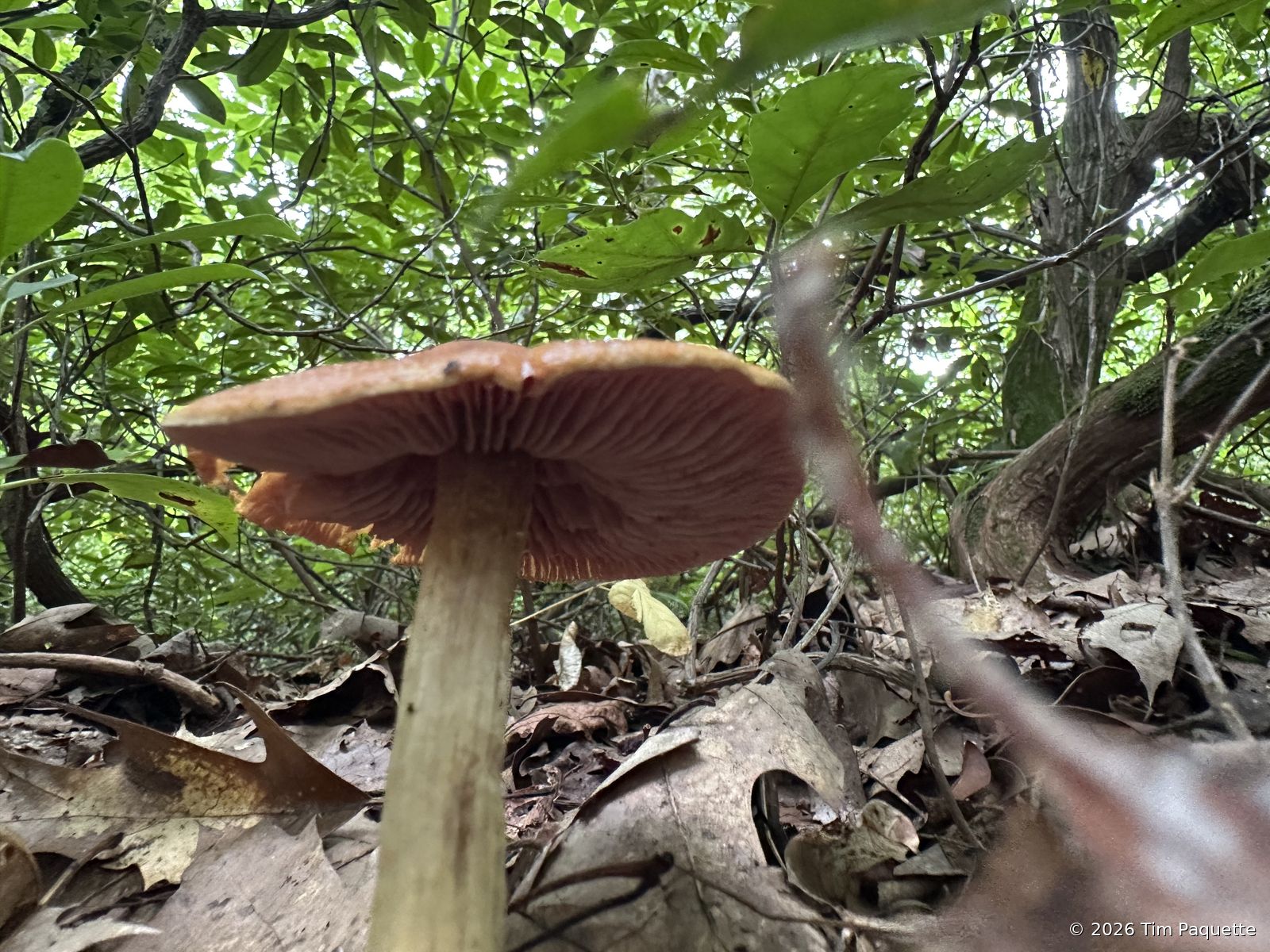
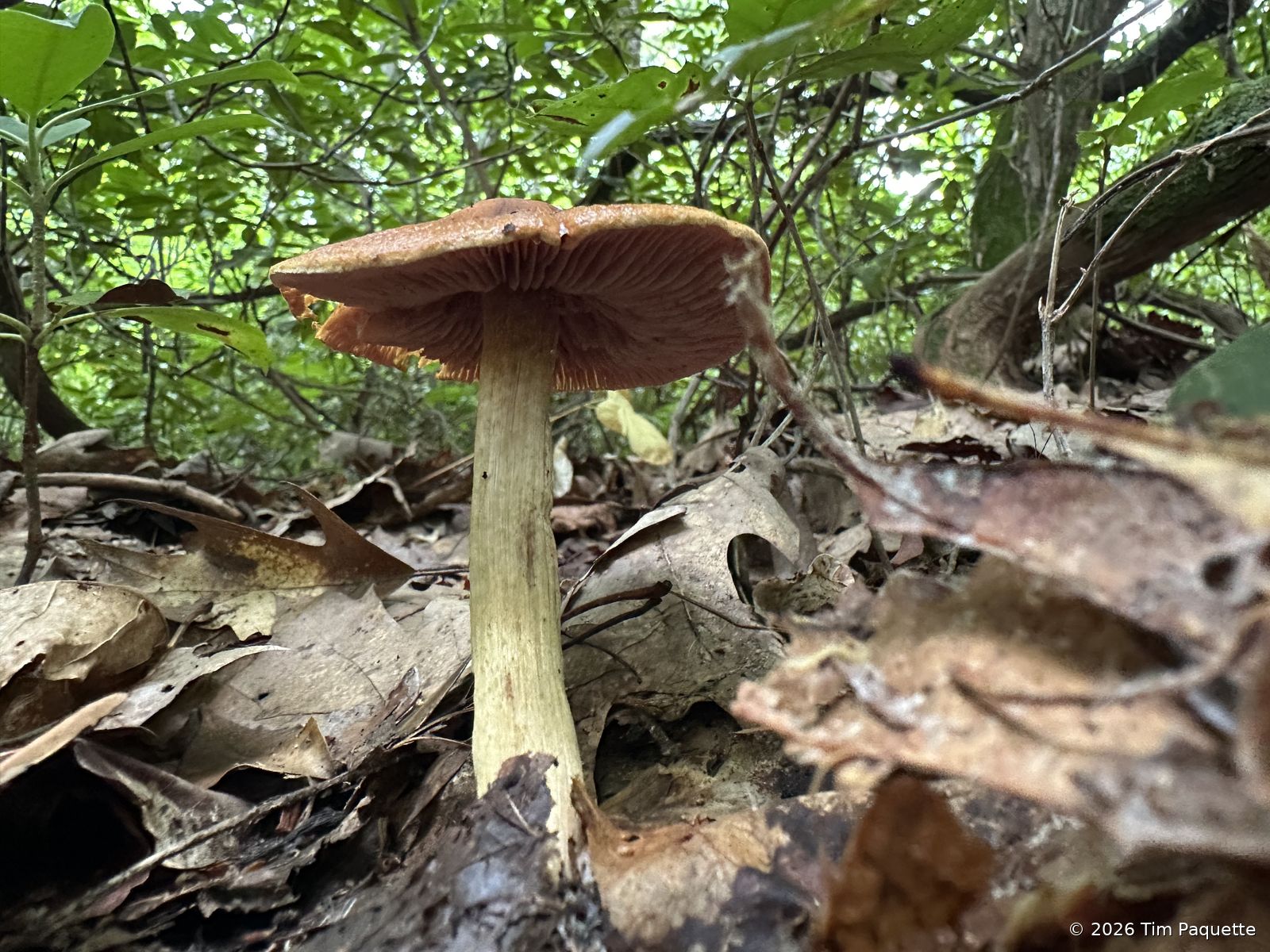
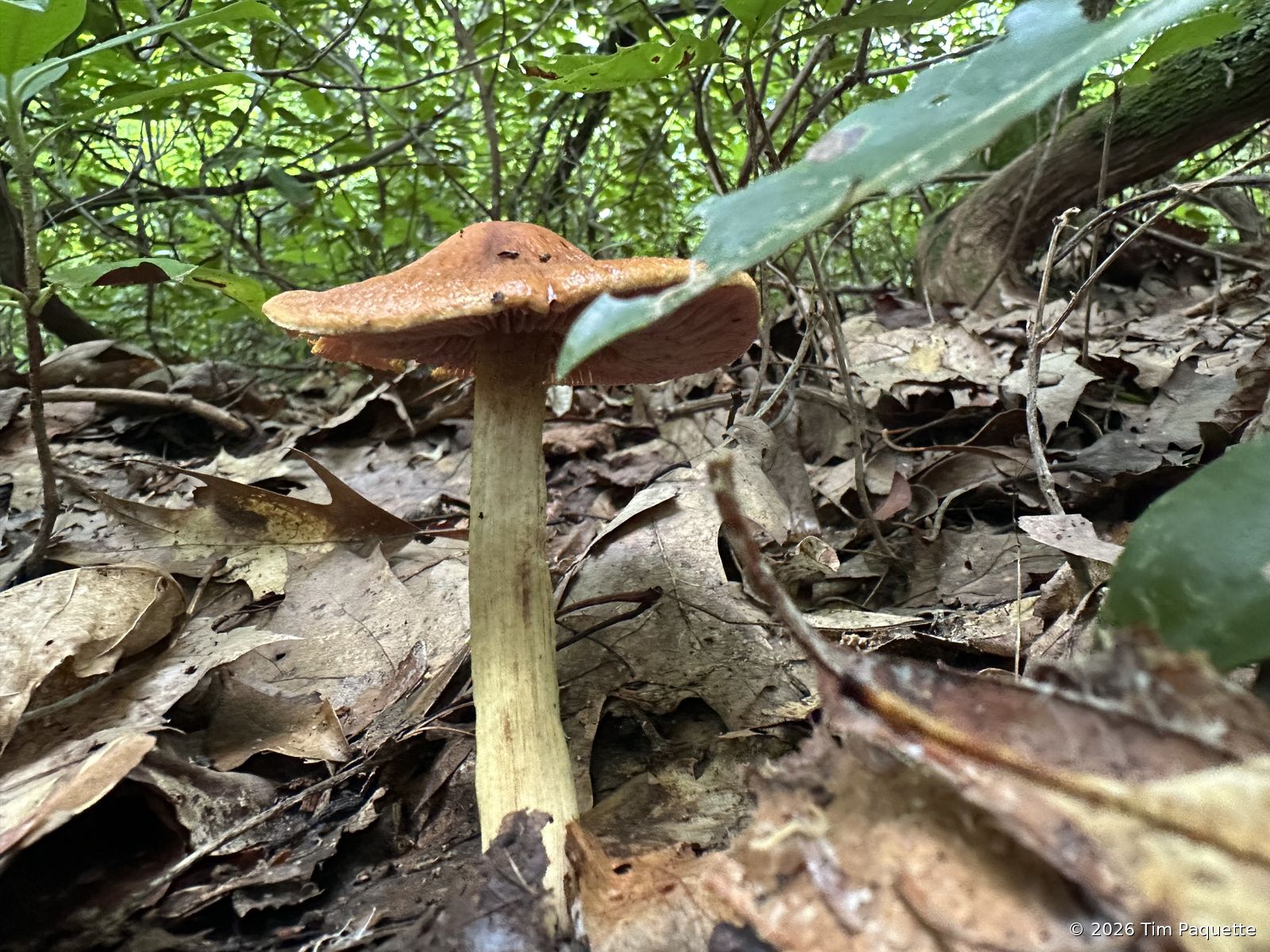
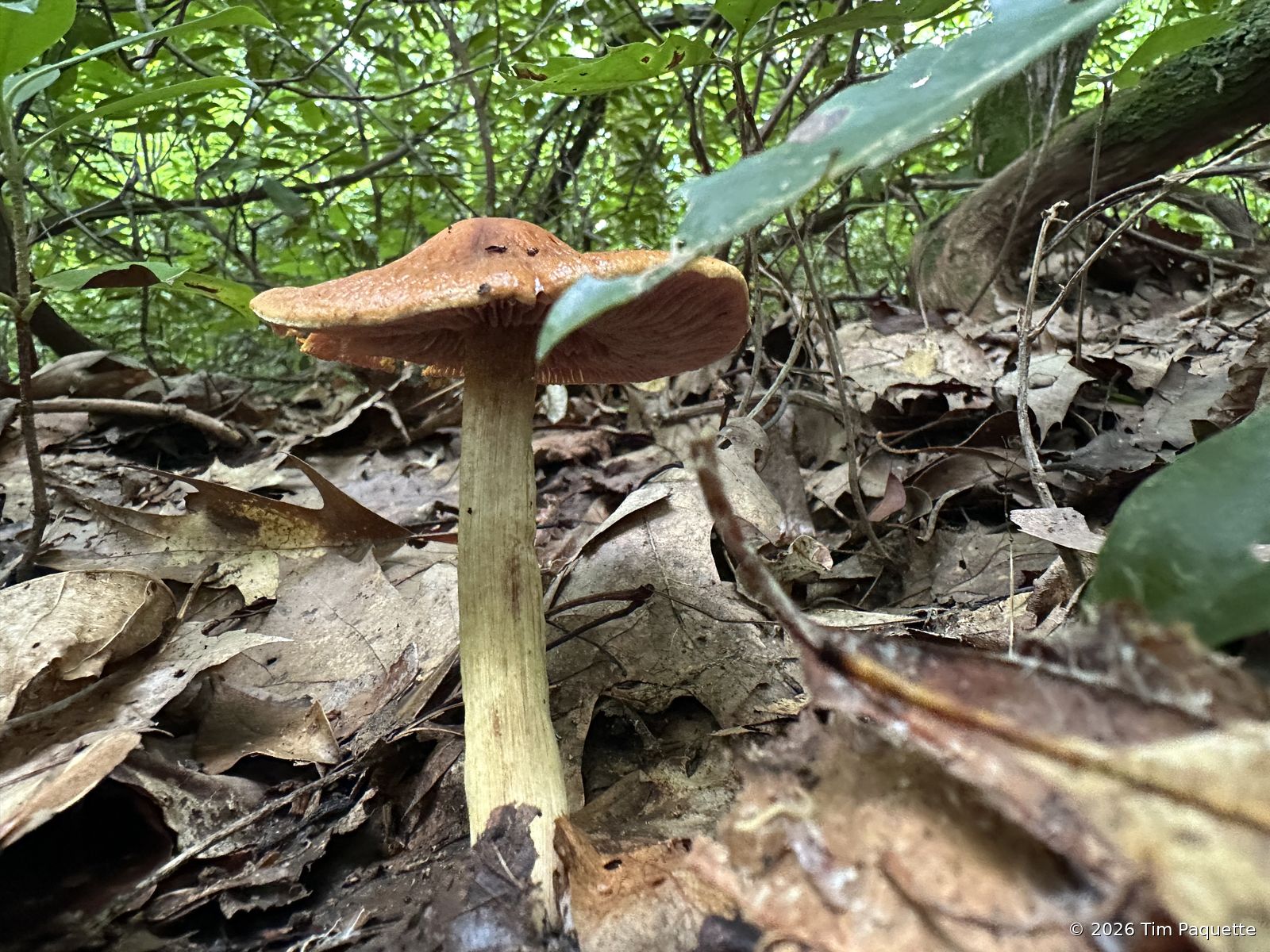
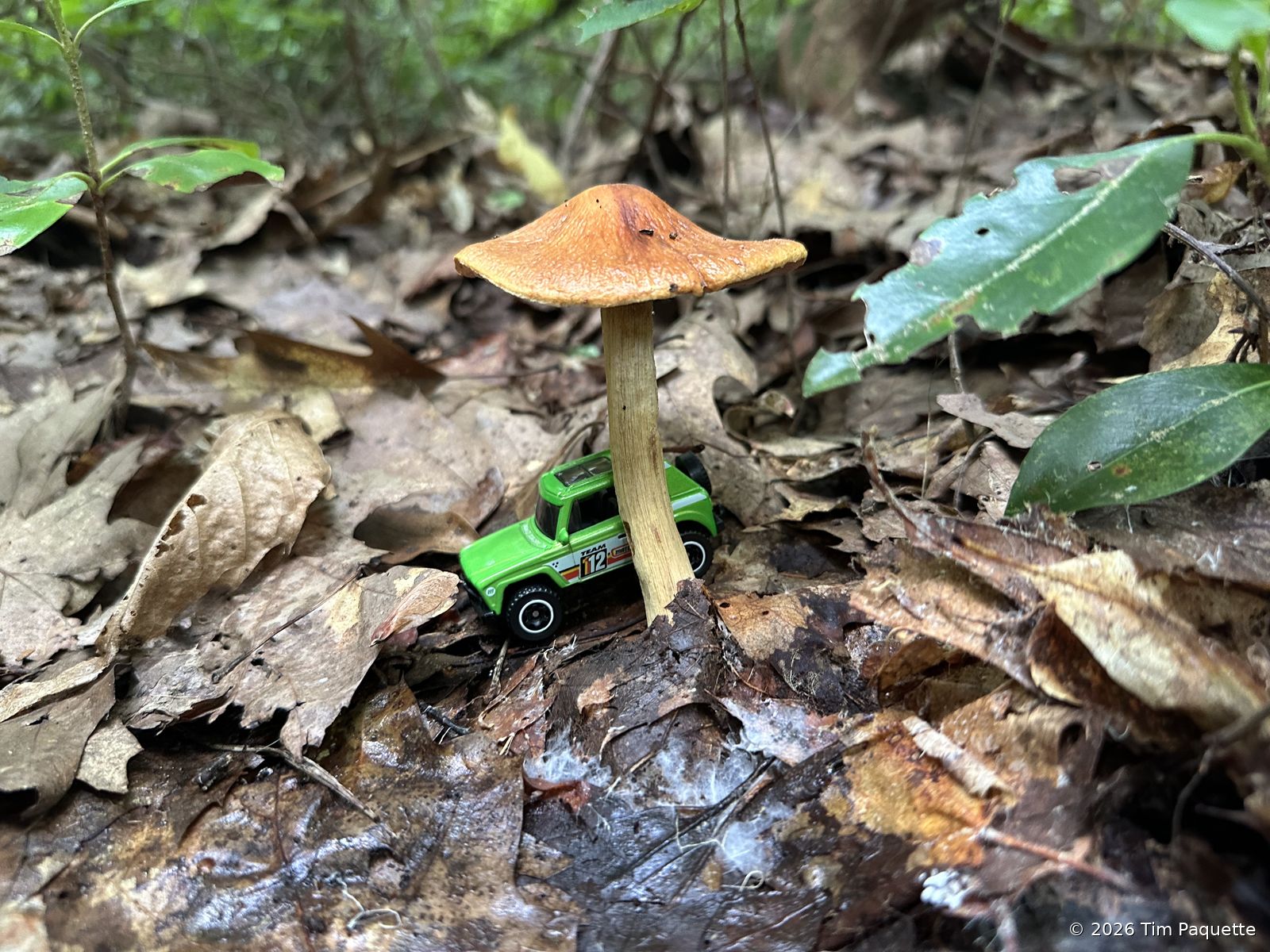
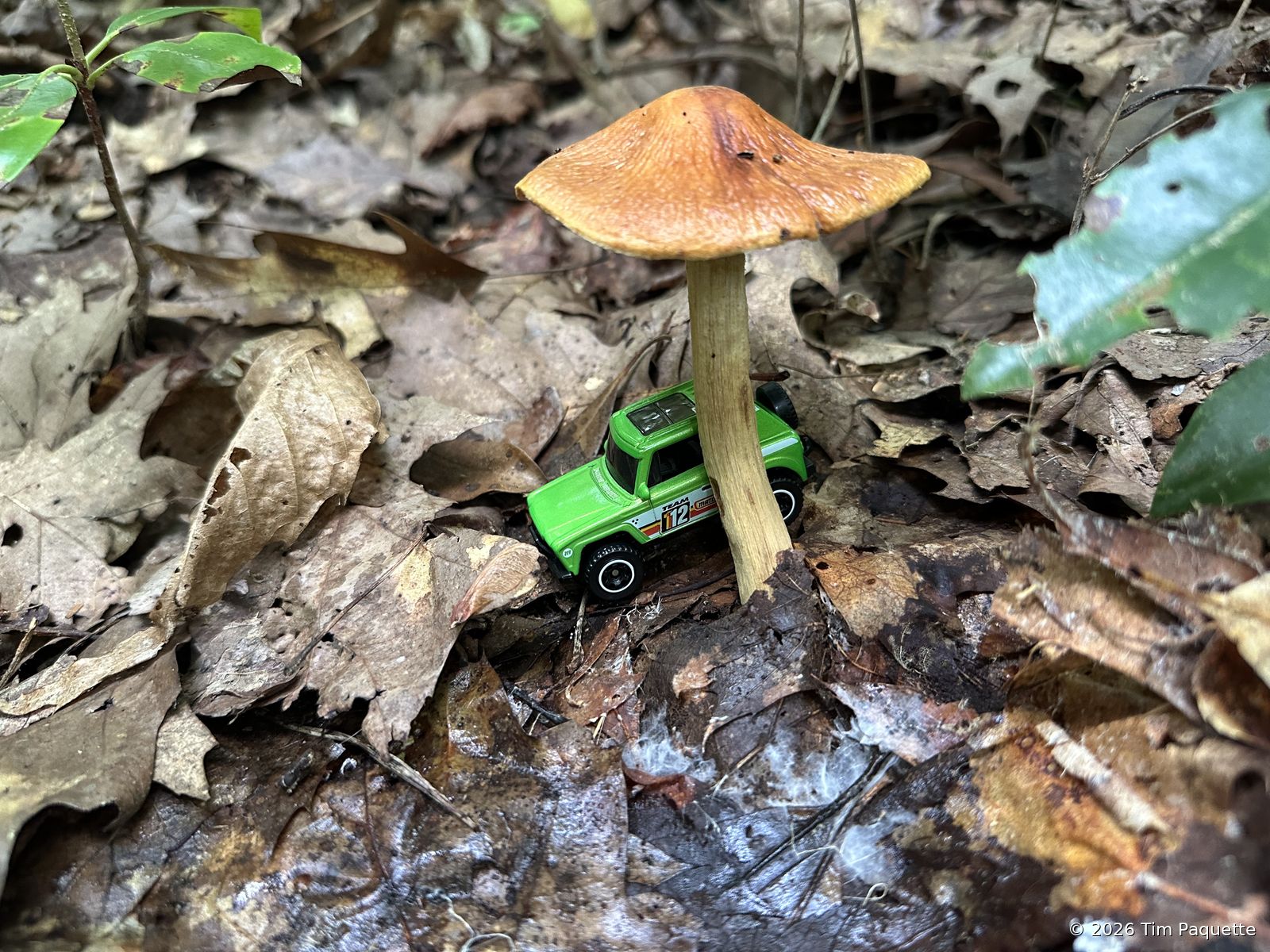
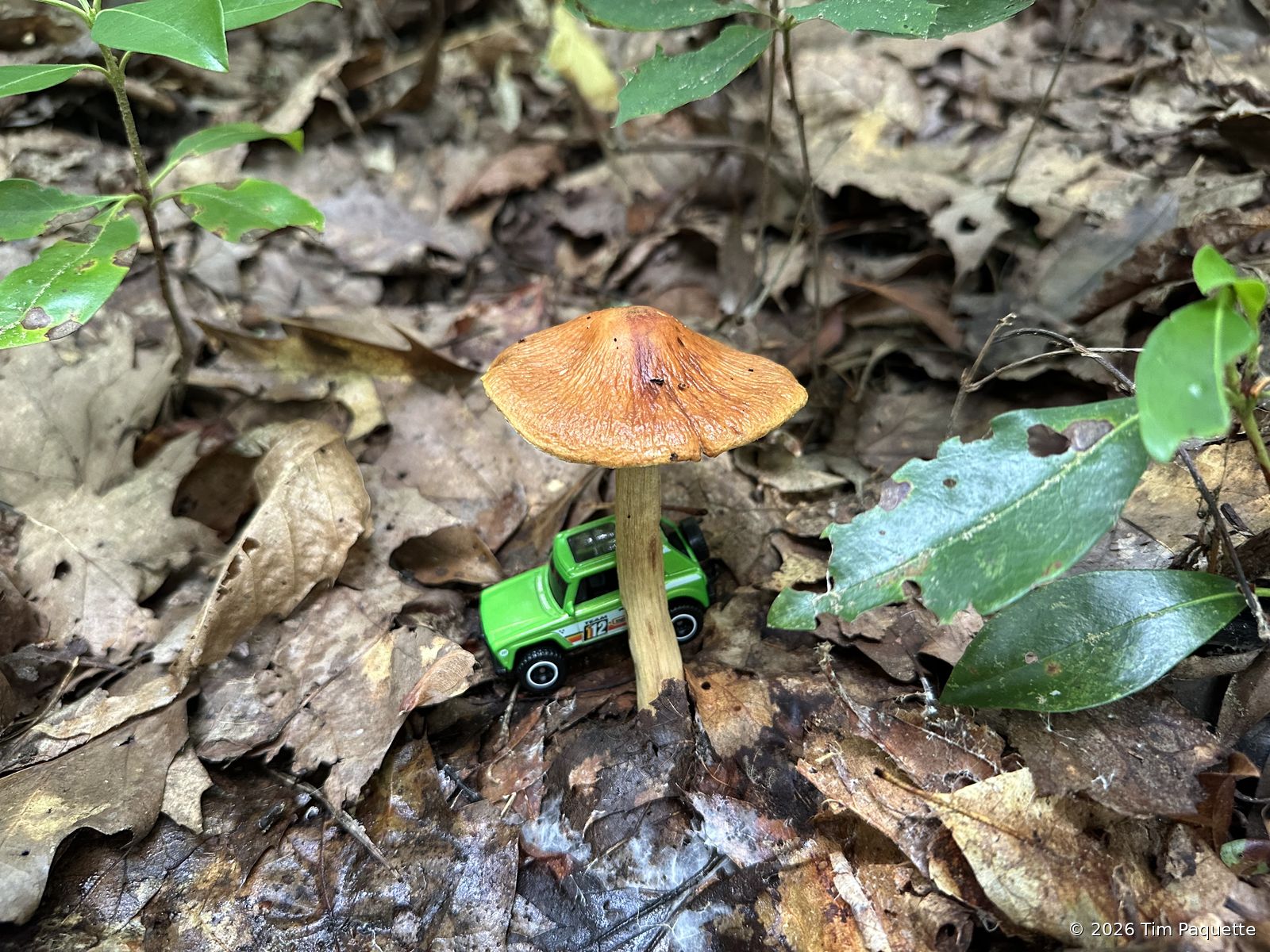
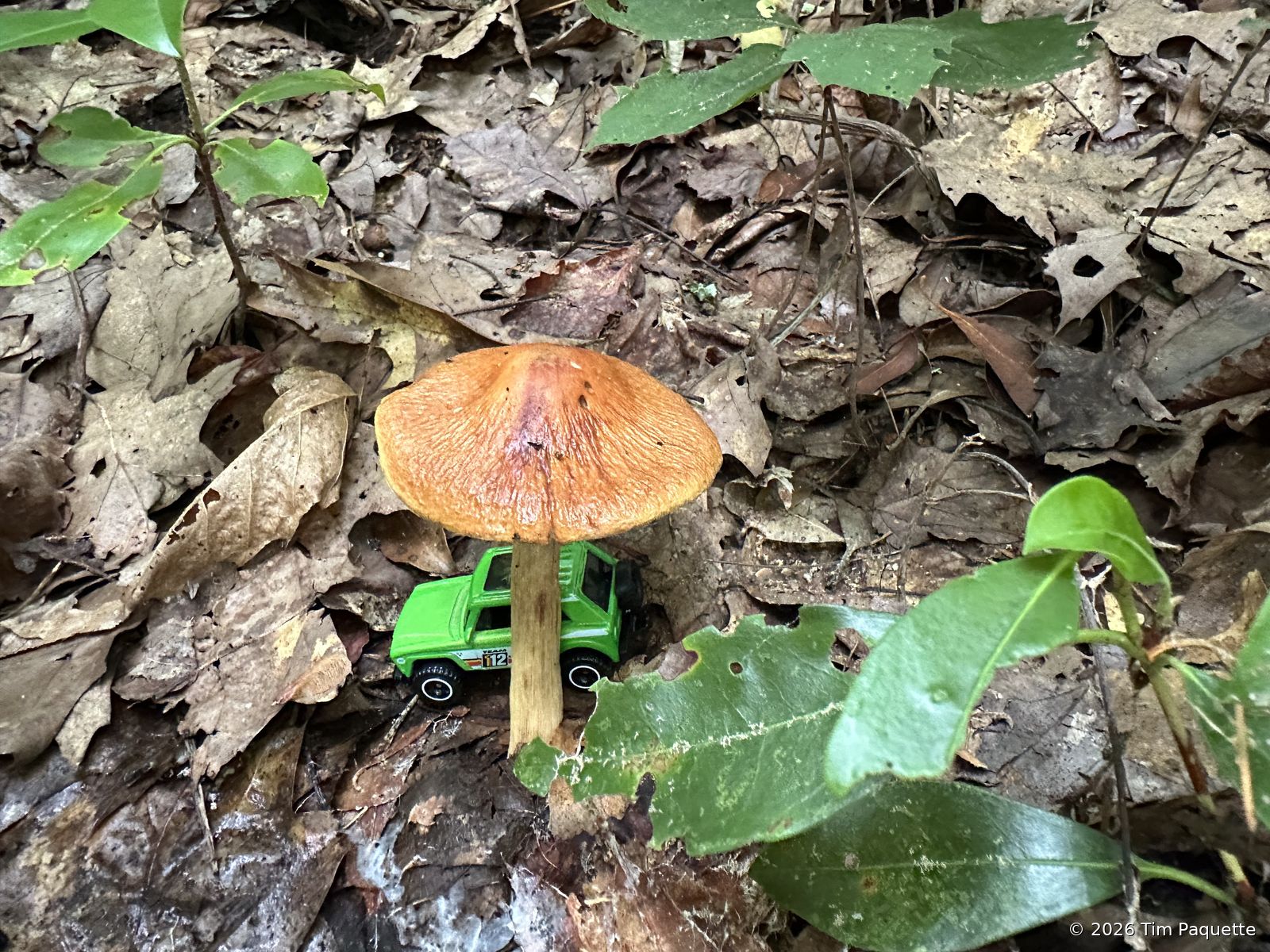
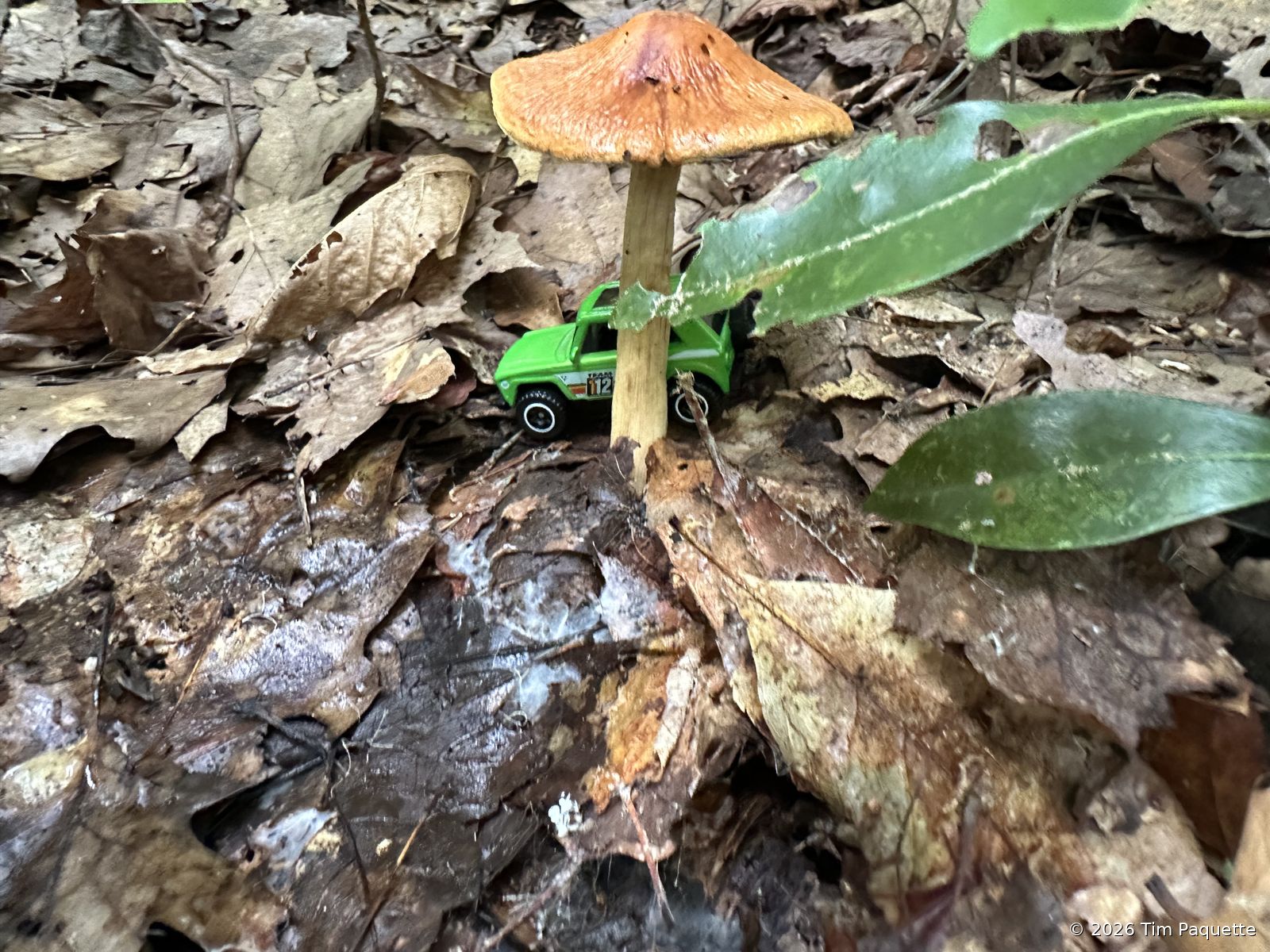
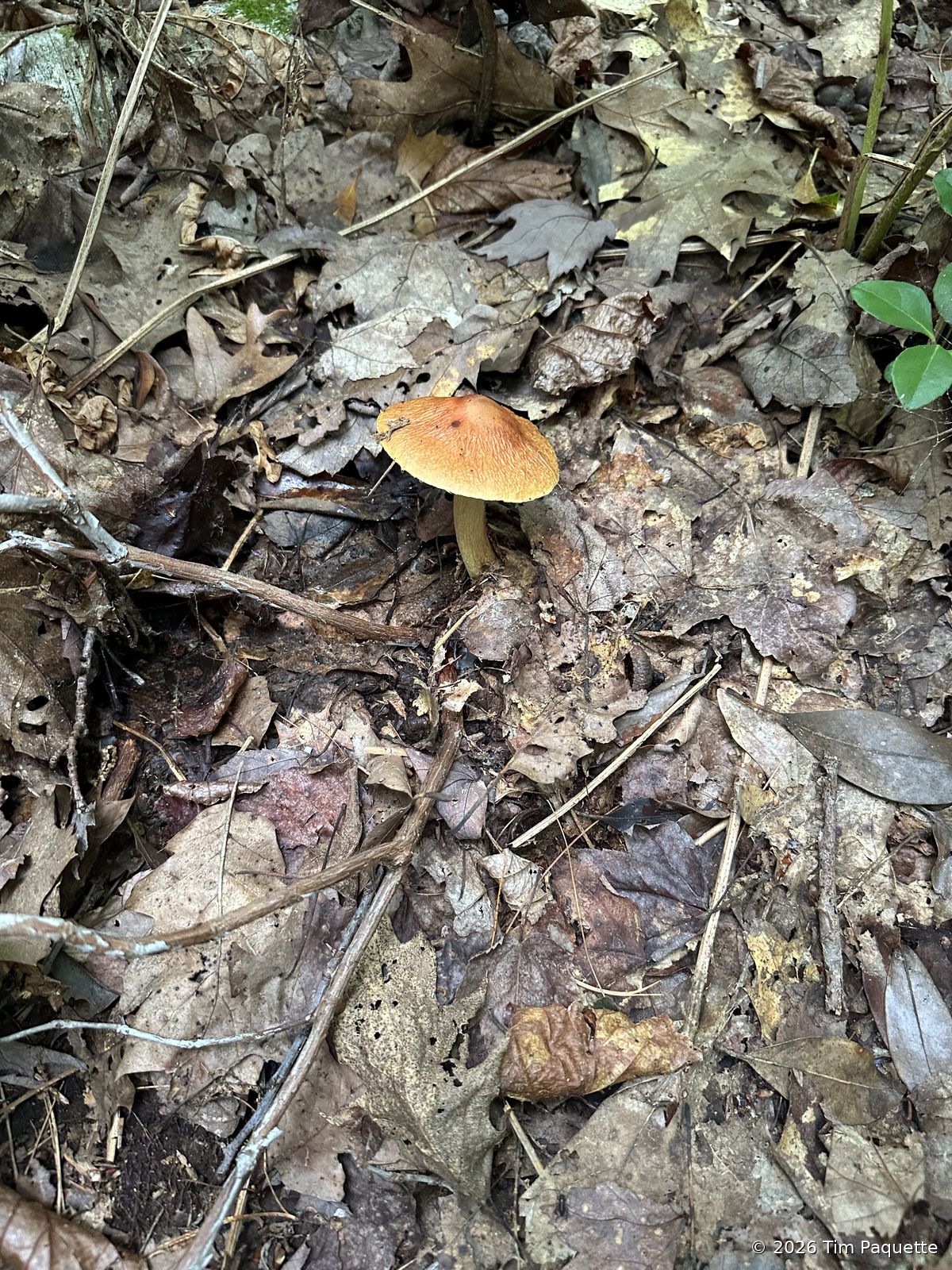
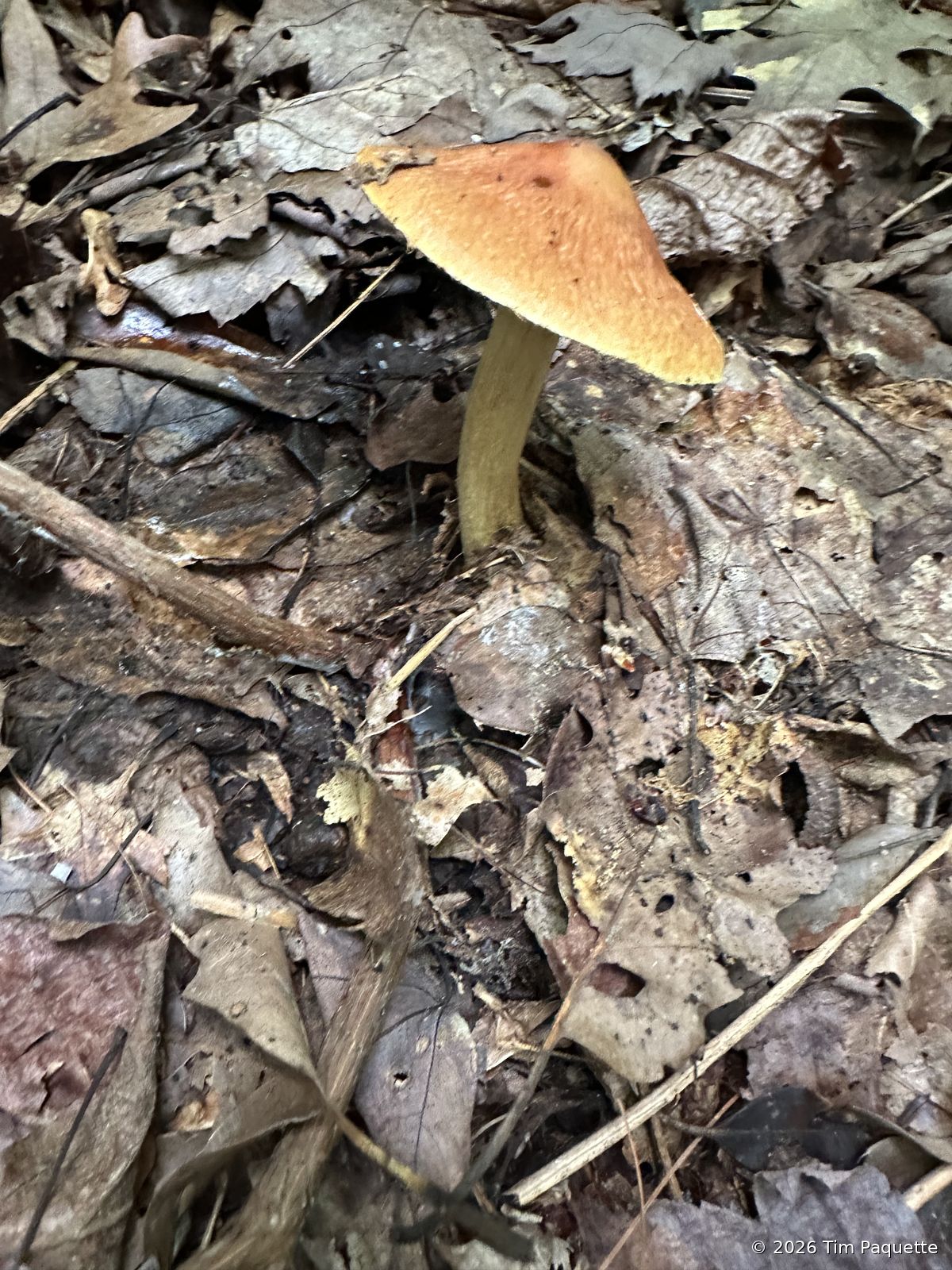
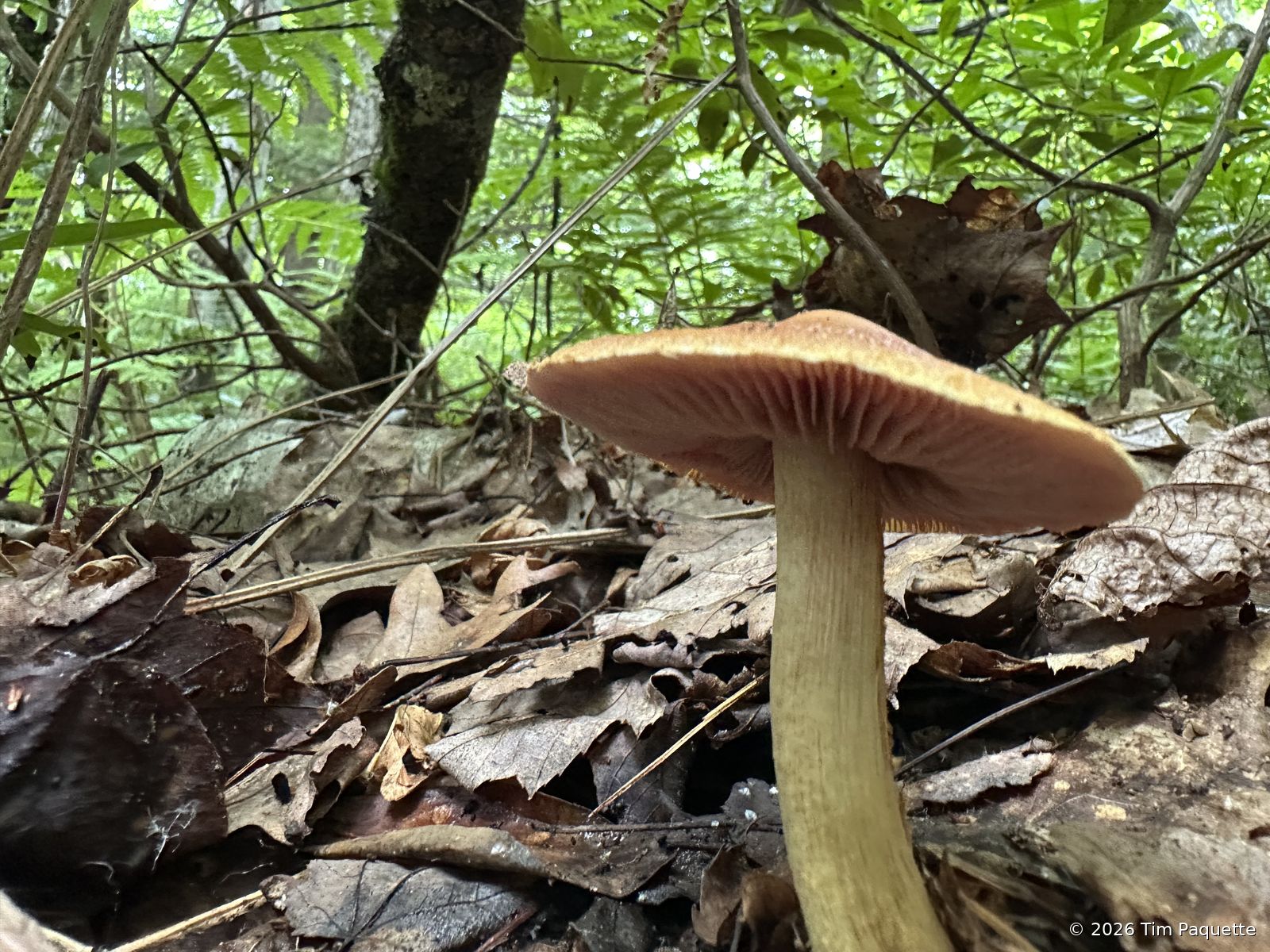
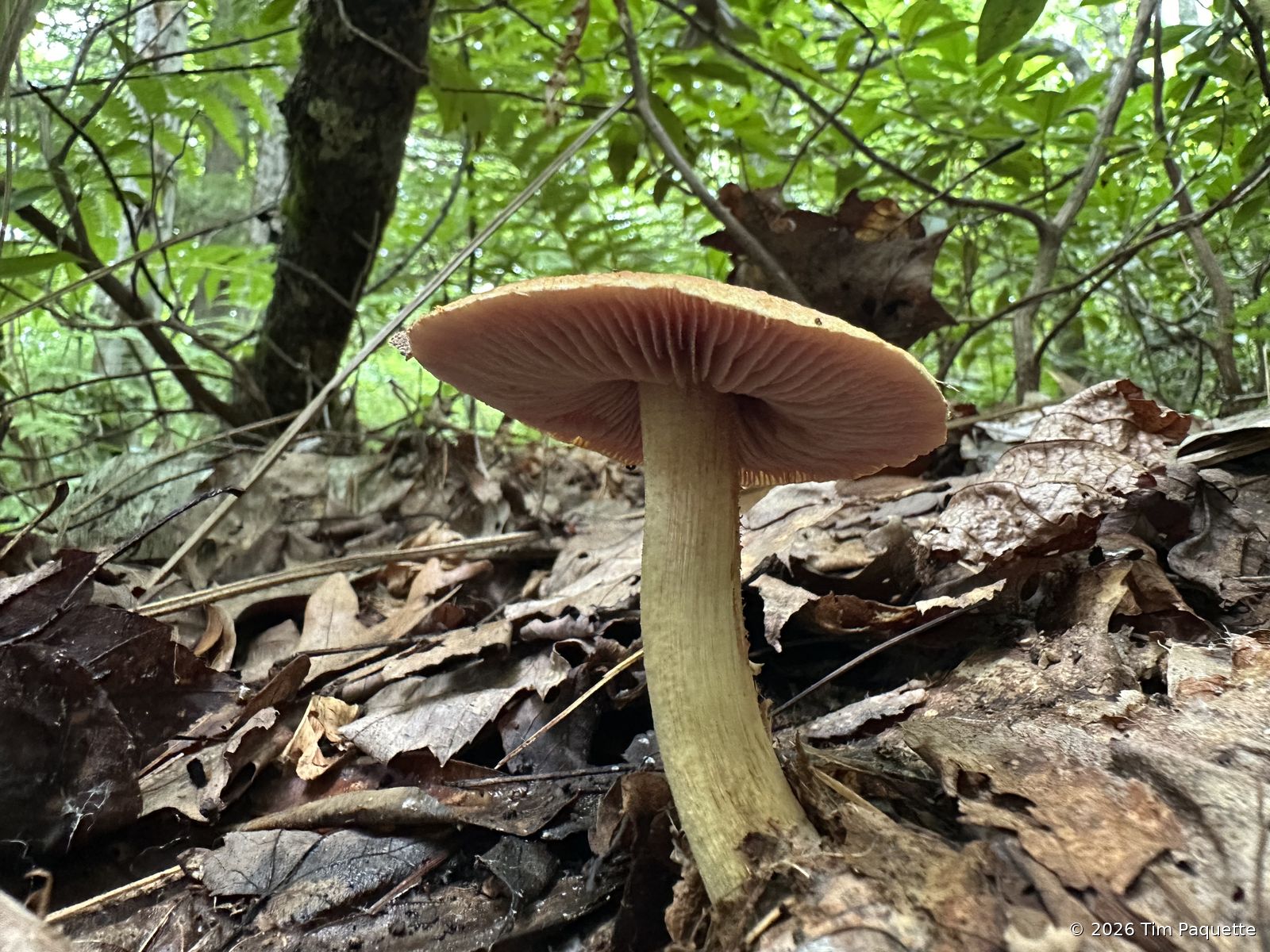
Angles captured. Fifteen frames of one fruitbody over about two minutes — from above, from several sides, low profiles against the canopy showing the full stipe and gills, and four with a toy truck placed alongside as a scale reference. The apparent differences in size and colour between frames are perspective, exposure and changing light, not different mushrooms.
Morphology
A single fruitbody. Cap 5–6 cm, warm tawny-orange to reddish date-brown, convex becoming plane with a broad low umbo, dry and finely fibrillose. Gills brown, deepening to a rusty pinkish-brown in the later frames as the light changed — consistent with a maturing rusty spore deposit. Stipe 8–10 cm, pale straw-yellow, smooth, slender relative to the cap.
Habitat & substrate
Wet oak litter on a slope with low evergreen groundcover, near the edge of a fern patch.
Lookalikes & what rules them out
Warm cinnamon to tawny caps over pale stipes, with gills darkening to rusty brown, fits Cortinarius or Gymnopilus. Gymnopilus is typically on wood and bitter; these are all in litter.
To confirm this identification
Spore print — both give rusty brown, which would at least confirm the pair and rule out several alternatives. Then look for cortina remnants on the upper stipe.
Notes
Corrected. This was originally split into five separate entries on the assumption that the changes in apparent size and cap colour meant several fruitbodies. They are one mushroom worked hard from many angles. This is the second time perspective has fooled me the same way — the violet cort in Volume 1 (TM0010) was the first. Standing-height frames make a mushroom look small and pale; low close frames make the same mushroom look large and saturated. Worth remembering as a systematic bias in this guide rather than a one-off.
Found at Elm St area, Leominster, MA on Thursday, 6 August 2026 at 10:51. See the full walk for that day's weather and everything else recorded.
Others in this group
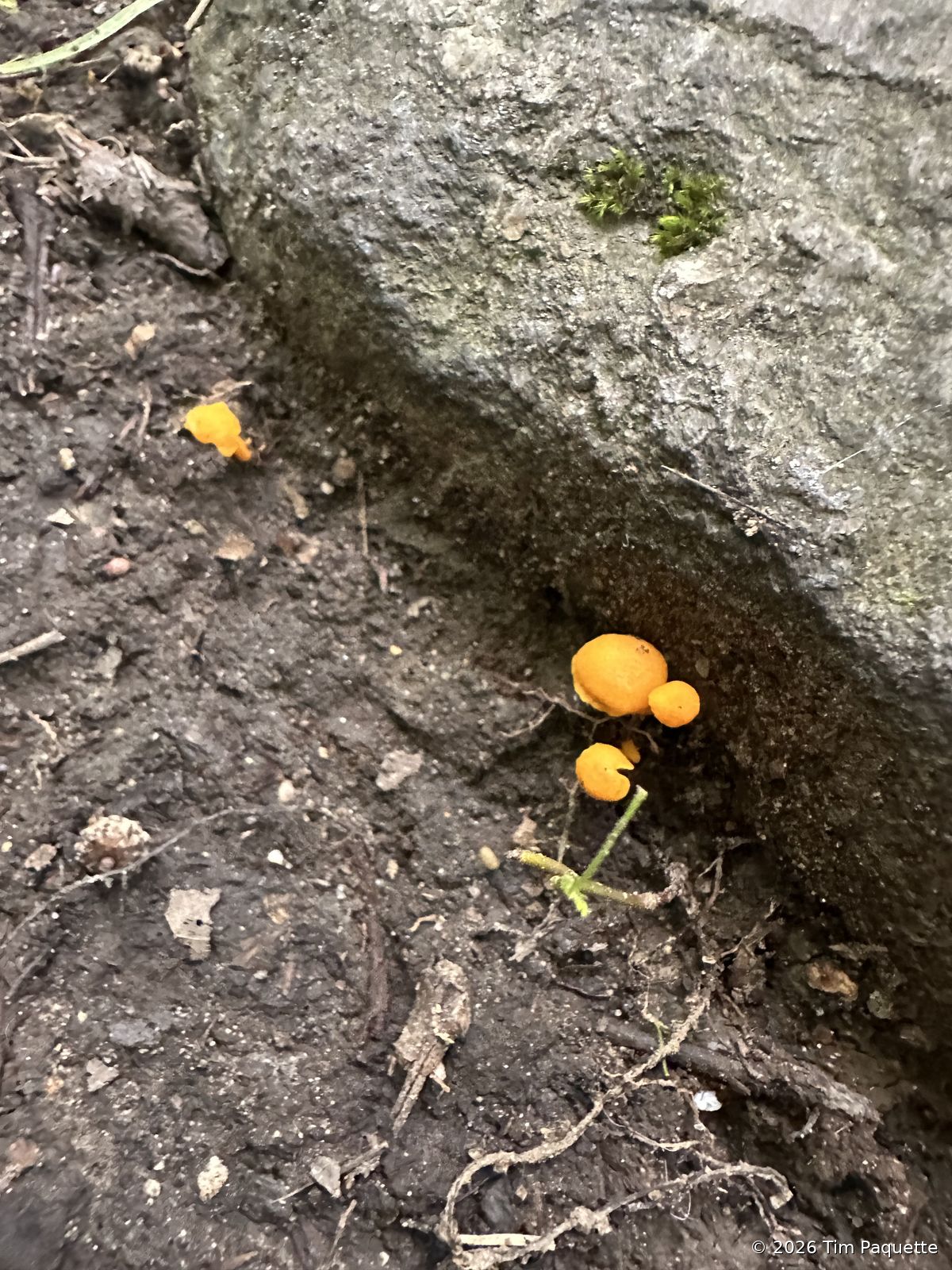 Tiny orange mushrooms at a boulder baseUnidentified small orange agaric · Jul 31Low
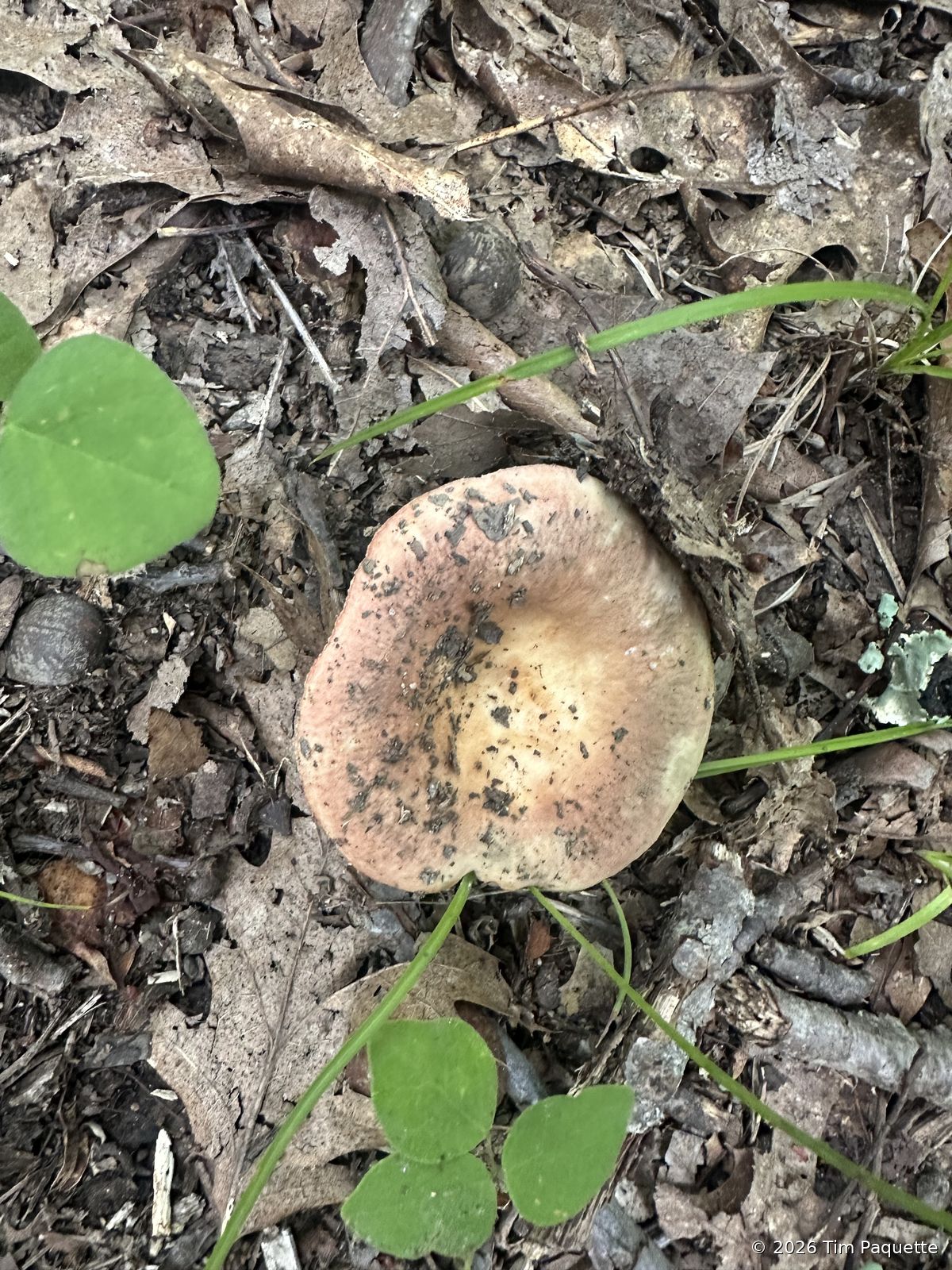 Pink-tan capped agaricUnidentified agaric · Jul 31Low
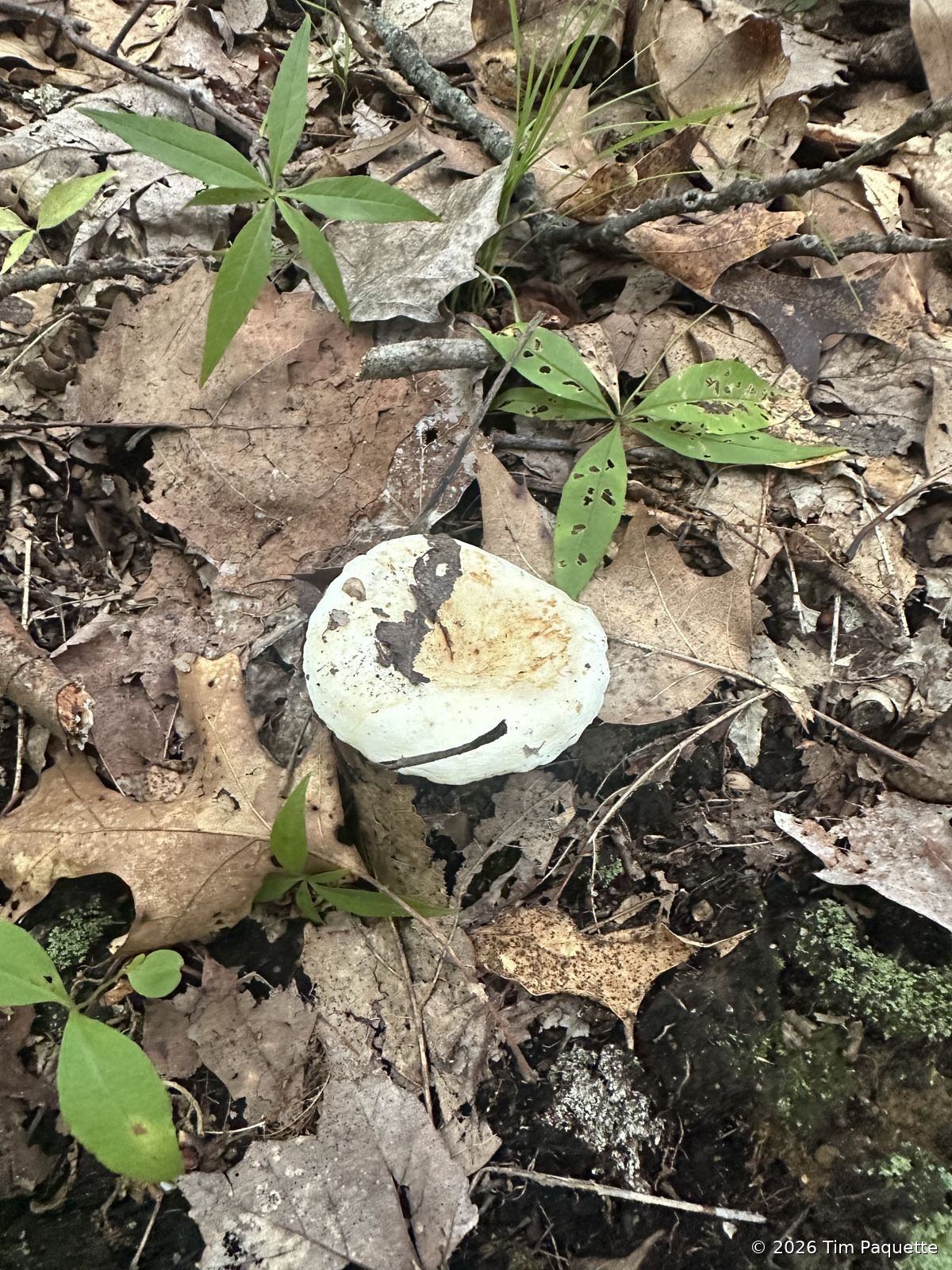 White-capped agaric in litterUnidentified agaric · Jul 31Low
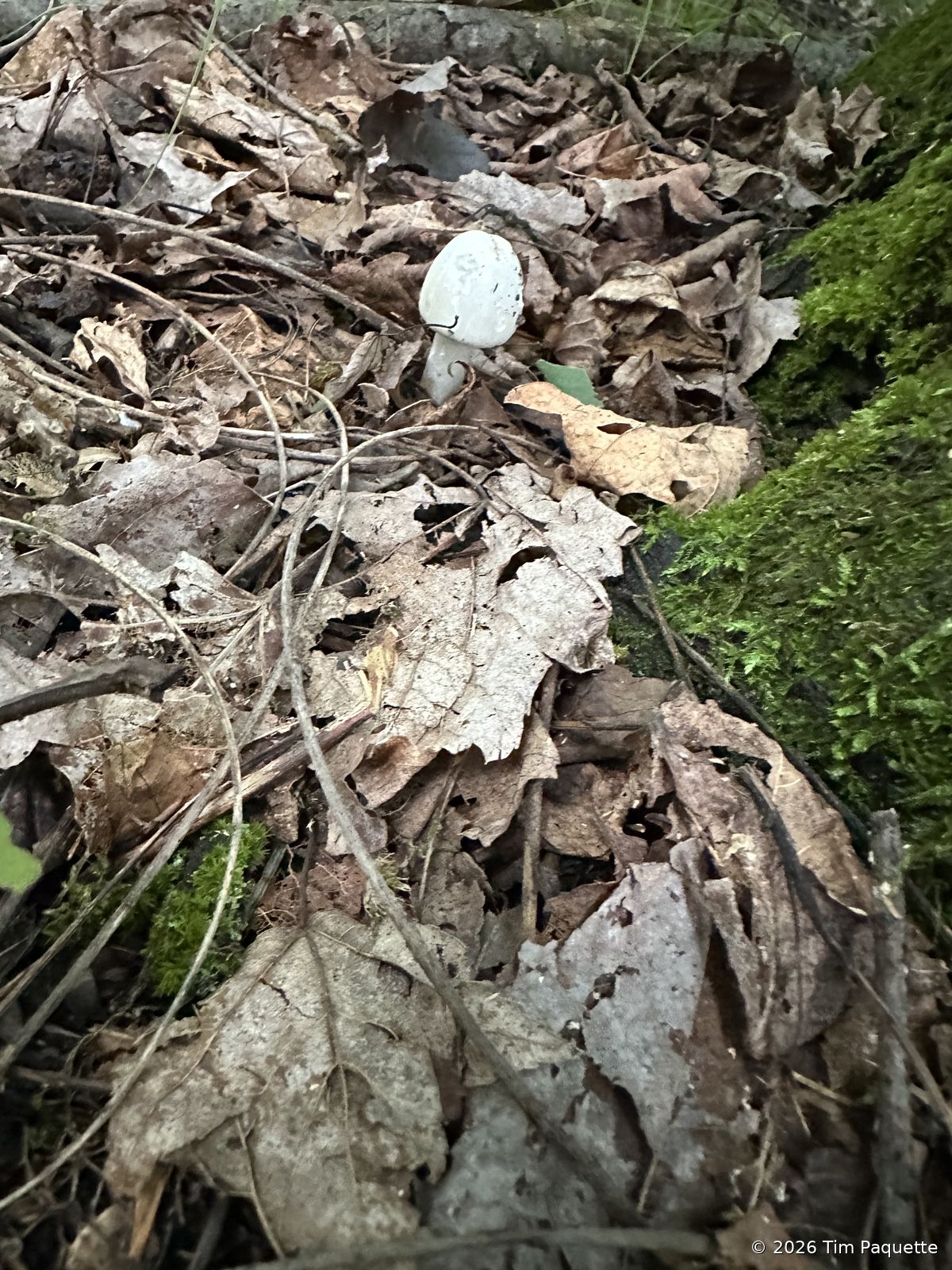 White cap in leaf litterUnidentified agaric · Jul 31Low
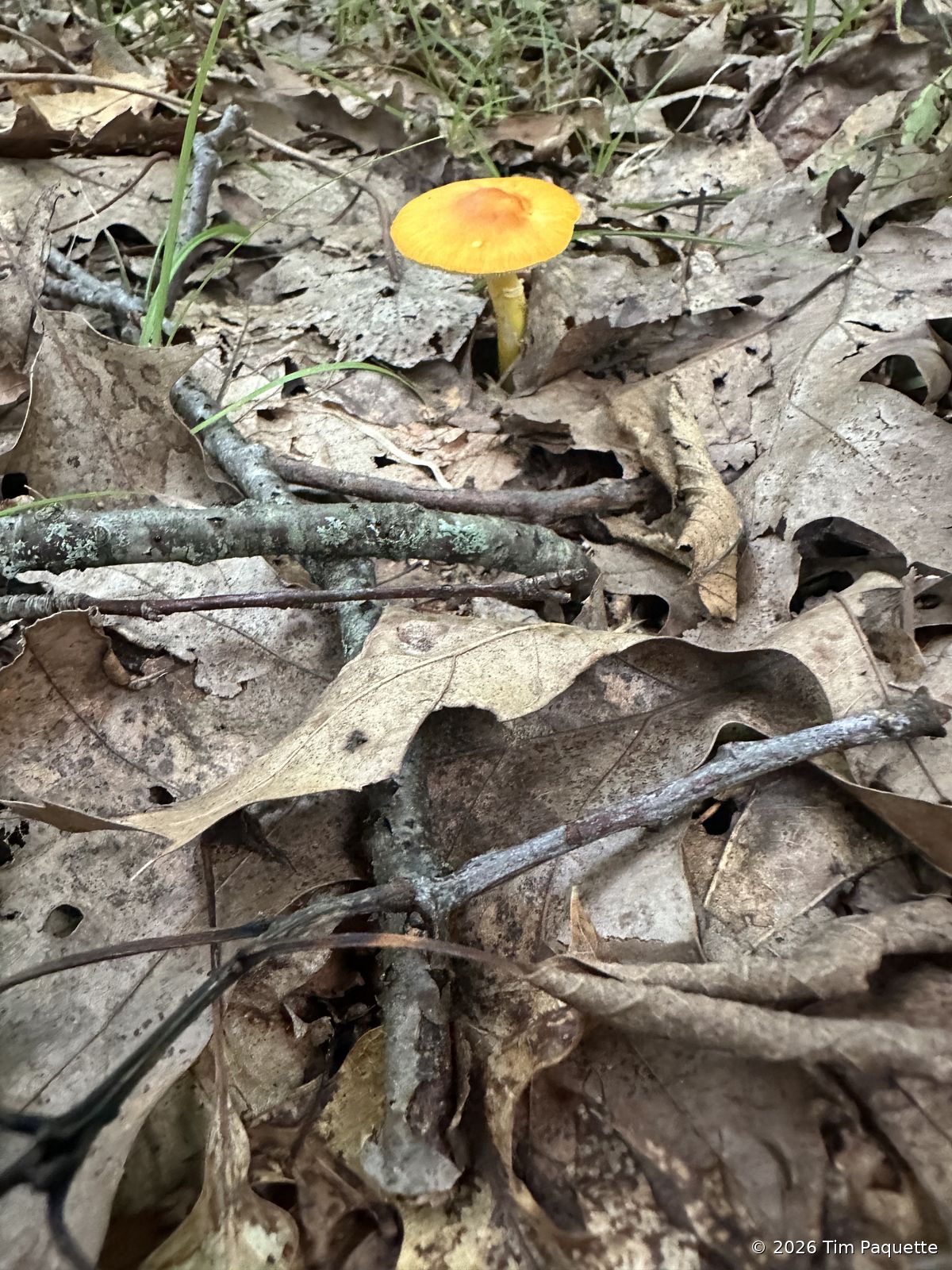 Orange-and-yellow cap in oak litterUnidentified · Aug 1Low–moderate
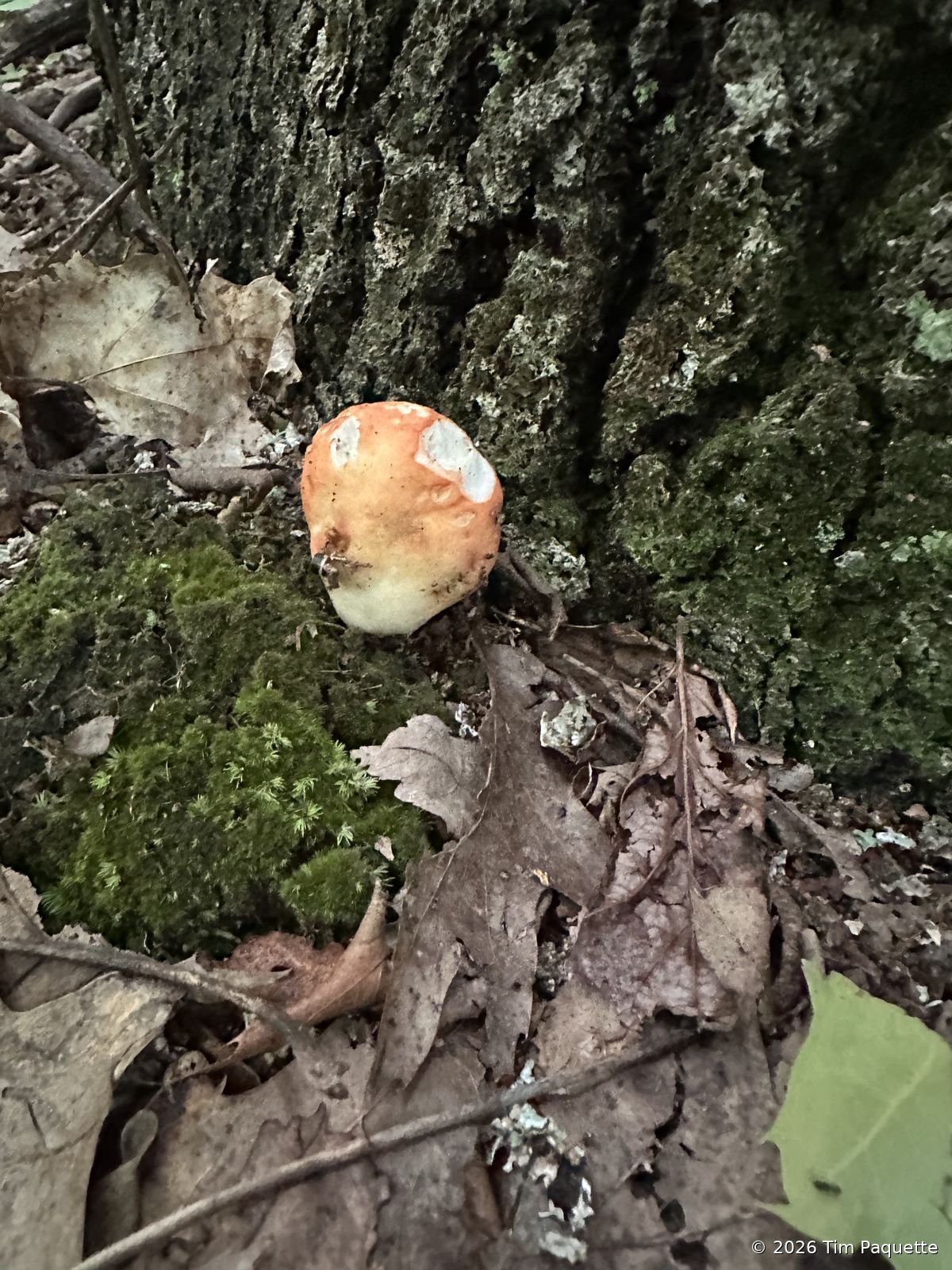 Fly agaric buttonAmanita muscaria var. guessowii · Aug 1High
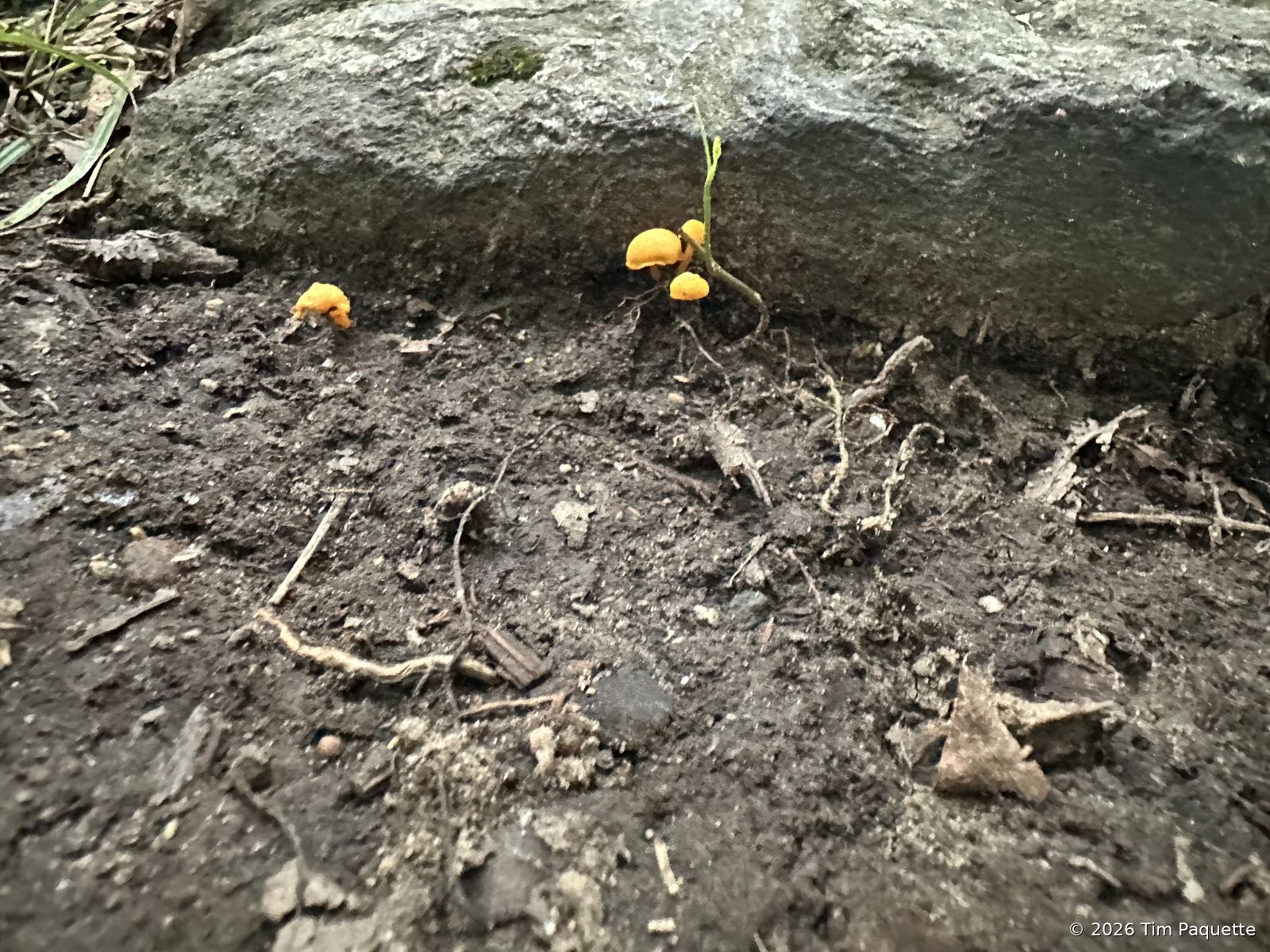 Tiny orange mushrooms at a boulder base — revisitUnidentified small orange agaric · Aug 1Low
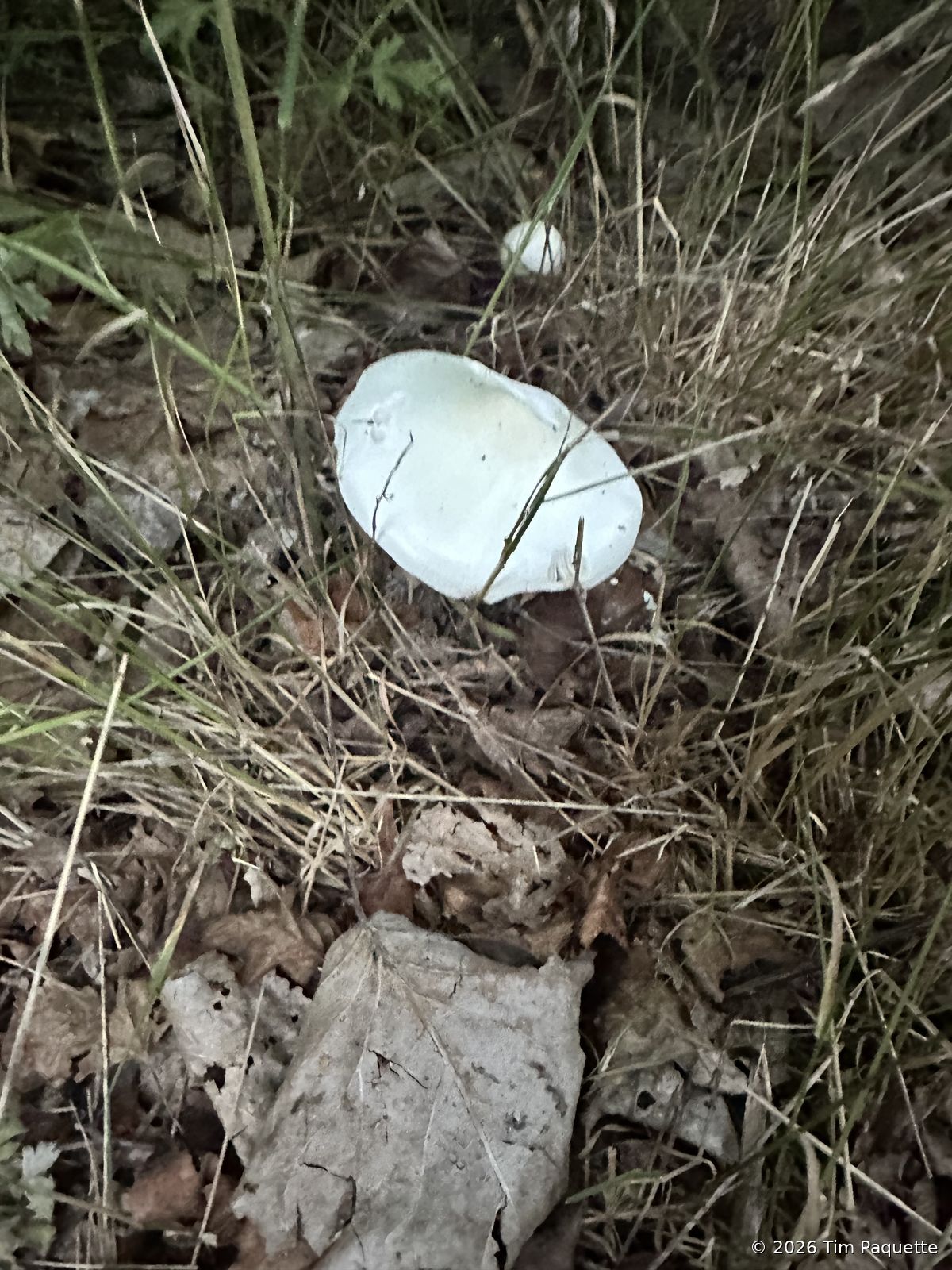 White agaric in grassUnidentified agaric · Aug 1Low